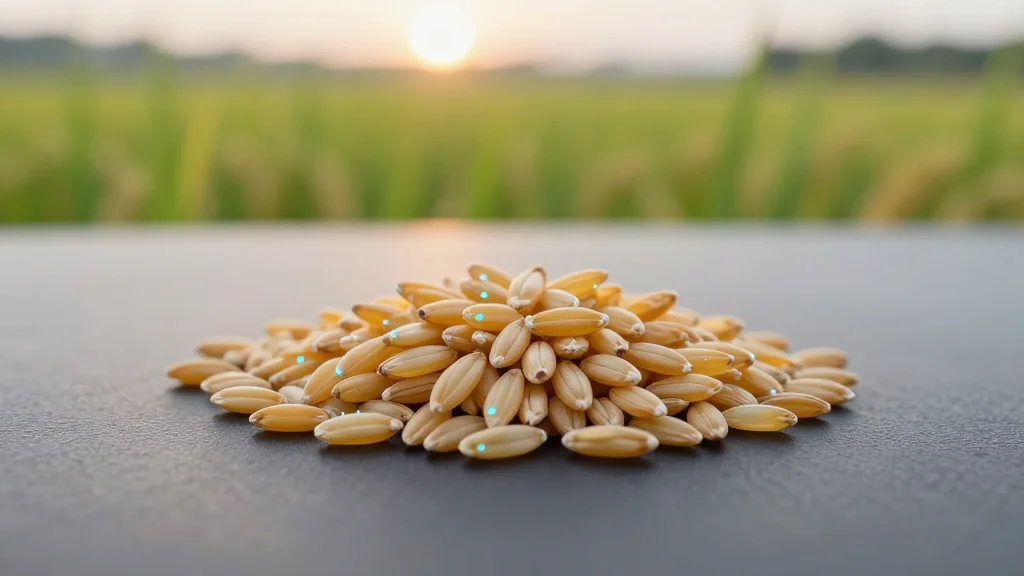
Carbon‑Dot Spray Cuts Rice Cadmium by 46% and Boosts Yield 18%

Why It Matters
Heavy‑metal contamination of staple crops threatens the health of billions and limits the usable acreage of arable land. By delivering a nanotech solution that works at the plant surface yet influences root‑soil interactions, the carbon‑dot spray tackles two critical challenges—food safety and yield loss—in a single, farmer‑friendly step. The technology could reshape how the agricultural sector manages contaminated soils, reducing reliance on expensive remediation and opening marginal lands for productive use. Beyond rice, the underlying principle of leaf‑initiated, microbiome‑mediated defense could be adapted to other crops and stressors, from other toxic metals to drought. Successful commercialization would signal a broader shift toward nano‑enabled, biointeractive inputs that complement traditional breeding and chemical controls, potentially accelerating the transition to resilient, sustainable food systems.
Key Takeaways
- •Foliar application of engineered carbon dots reduced rice grain cadmium by 46% in field conditions.
- •Grain yield increased 18% with the same treatment, maintaining nutritional quality.
- •Study conducted by Beijing Academy of Agriculture and Forestry Sciences and Jiangnan University on moderately contaminated paddy soil.
- •Mechanism involves leaf metabolic reprogramming, enhanced antioxidant defenses, and reshaped root microbiome that strengthens iron plaque barriers.
- •Next steps include tracer studies, testing on other staple crops, and navigating regulatory approval for nano‑agro inputs.
Pulse Analysis
The carbon‑dot spray marks a rare convergence of nanotechnology and agronomy that moves beyond laboratory proof‑of‑concept to a field‑validated, yield‑positive outcome. Historically, nanomaterials in agriculture have struggled to demonstrate clear economic benefits at scale, often remaining confined to controlled environments. This study flips that narrative by delivering measurable gains—both safety and productivity—using a delivery method that fits seamlessly into existing farm workflows.
From a market perspective, the result could catalyze a new segment of nano‑enabled crop protectants. Investors have shown appetite for precision‑ag inputs, but regulatory uncertainty has slowed adoption. The clear, quantifiable reductions in a known toxin, coupled with a modest yield uplift, provide a compelling data package for policymakers and insurers. If the technology clears safety assessments, manufacturers could leverage the results to fast‑track approvals in regions with stringent heavy‑metal standards, such as the EU and Japan, creating a sizable export opportunity for Chinese research institutions.
Looking ahead, the broader implication is a shift toward “biointeractive” nanomaterials that partner with plant physiology and soil microbiomes rather than acting as passive carriers. This paradigm could unlock solutions for a range of abiotic stresses, from salinity to nutrient deficiency, expanding the role of nanotech from a niche research tool to a mainstream component of sustainable agriculture. The key challenge will be ensuring consistent particle quality at scale and establishing transparent risk assessments to gain farmer trust and regulatory clearance.
Carbon‑Dot Spray Cuts Rice Cadmium by 46% and Boosts Yield 18%
Comments
Want to join the conversation?
Loading comments...