Cellulose Nanofibril‐Filled Damping and Lubricating Hydrogels for Mitigating Friction‐Induced Vibration of Polyurethane Composites
•January 25, 2026
0
Companies Mentioned

Why It Matters
Enhanced lubrication and damping directly lower wear, noise, and energy loss in water‑based polymer systems, expanding their viability in automotive, marine, and biomedical applications.
Key Takeaways
- •MCPH hydrogel integrates cellulose nanofibers for reinforcement
- •Hydrogel provides hydration lubrication and energy dissipation
- •TPU/MCPH composite achieves COF 0.109 in water
- •Vibration and noise levels drop markedly with MCPH
- •Reversible bonds enable continuous self‑healing under shear
Pulse Analysis
Water‑lubricated polymer parts, such as seals and bearings, have long struggled with simultaneous demands for low friction and high damping. Conventional additives often sacrifice one property for the other, leading to premature wear or persistent noise. The industry therefore seeks multifunctional modifiers that can operate in aqueous environments without degrading. Recent advances in hydrogel chemistry provide a promising avenue, leveraging the intrinsic softness and water affinity of polymer networks to create a self‑lubricating interface.
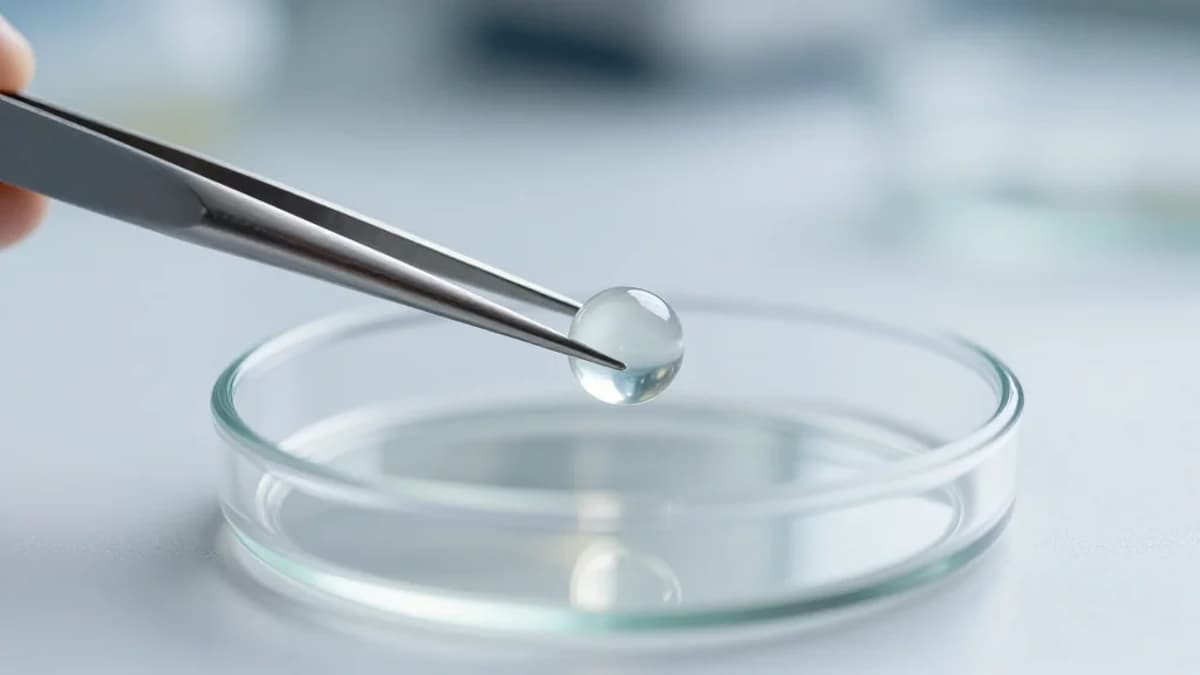
The newly reported multi‑crosslinked PVA hydrogel (MCPH) combines a polyvinyl alcohol matrix with carboxylated cellulose nanofibrils, establishing a dense network of reversible hydrogen bonds, ionic interactions, and physical entanglements. These reversible bonds continuously break and reform under shear, converting kinetic energy into heat and thereby enhancing damping. Simultaneously, the hydrogel’s high hydrophilicity and capacity to absorb and release water generate a hydration layer that dramatically lowers shear resistance at the contact surface. When blended into thermoplastic polyurethane, the MCPH phase distributes uniformly, creating micro‑domains that act as both lubricating reservoirs and energy‑dissipating cushions.
Performance testing confirmed that the TPU/MCPH composite achieves a coefficient of friction of 0.109 in water—a figure competitive with specialized dry lubricants—while cutting vibration amplitudes and acoustic emissions by a significant margin. Such gains translate into longer service life for components exposed to wet conditions, reduced maintenance costs, and quieter operation. The technology is poised for adoption in sectors ranging from automotive power‑train seals to marine propeller bearings and even biomedical implants where fluid‑based friction control is critical. Future work will likely explore scaling the hydrogel synthesis, tailoring nanofiber content, and integrating additional functional groups to further fine‑tune tribological performance.
Cellulose Nanofibril‐Filled Damping and Lubricating Hydrogels for Mitigating Friction‐Induced Vibration of Polyurethane Composites
0
Comments
Want to join the conversation?
Loading comments...