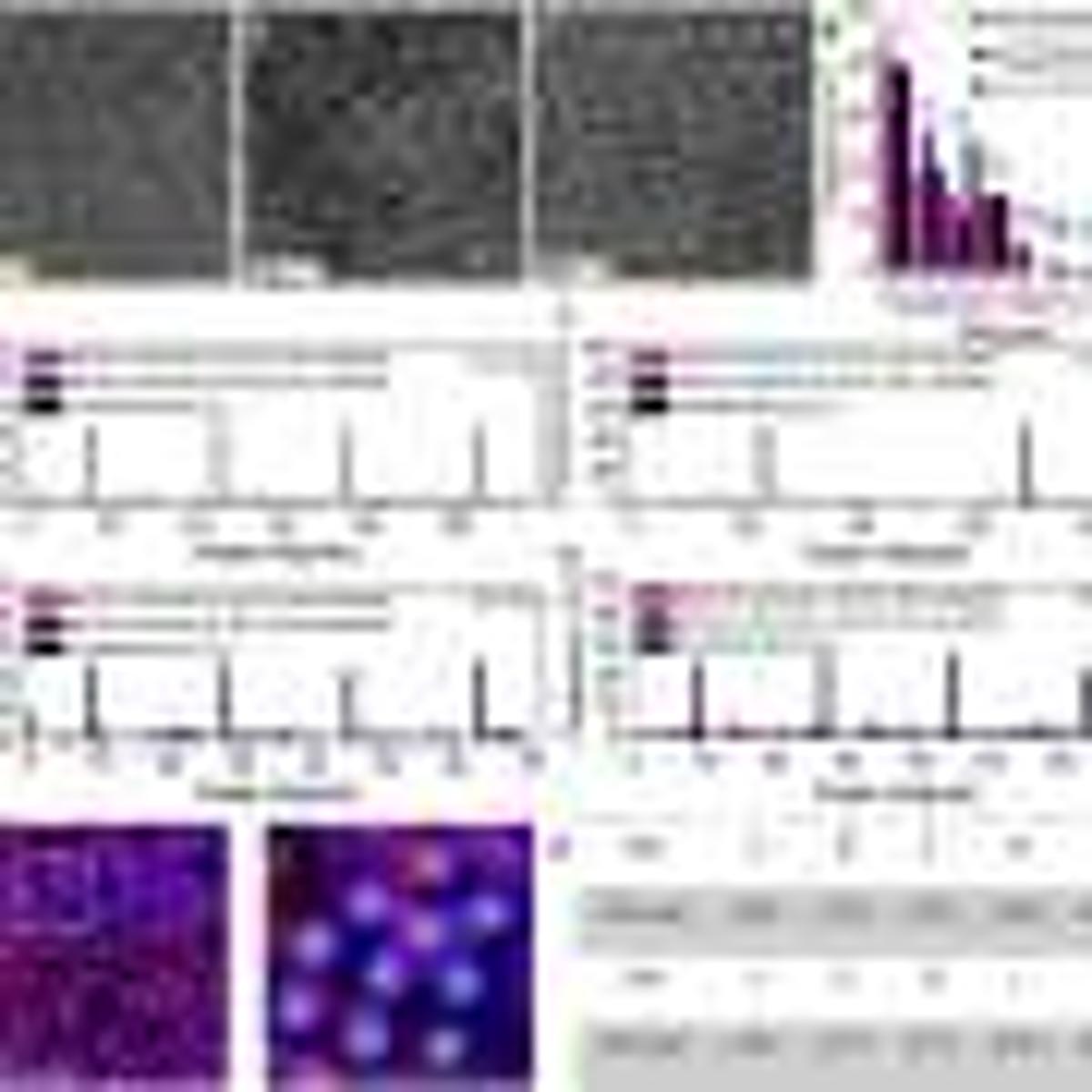
Chaos as a Matter of Direction: Researchers Build Layered Material Where Order and Disorder Coexist
Why It Matters
The discovery proves atomic ordering can be programmed by direction, unlocking anisotropic designs for high‑performance batteries, catalysts and photonic components. It reshapes how scientists approach structure‑property relationships in advanced materials.
Key Takeaways
- •Layers amorphous, stack crystalline—order depends on direction
- •STEM and X‑ray reveal dual diffraction signatures
- •Challenges binary crystal vs. glass classification
- •Enables anisotropic property engineering
- •May improve performance of batteries, catalysts, optics
Pulse Analysis
The conventional view in materials science separates solids into crystalline, with long‑range atomic repetition, and amorphous, lacking any periodicity. The Twente team’s breakthrough demonstrates that this dichotomy is not absolute; by arranging disordered layers in a regular stack, they create a material whose structural description changes with the observation direction. This nuanced perspective forces researchers to reconsider how disorder contributes to bulk behavior, especially in low‑dimensional systems where surface and interface effects dominate.
Advanced microscopy and diffraction techniques were pivotal in confirming the dual nature of the new solid. High‑resolution scanning transmission electron microscopy mapped individual atom positions, while directional X‑ray scattering produced sharp Bragg peaks only along the stacking axis and diffuse halos in the plane of the layers. Such complementary evidence validates the coexistence of order and chaos and provides a methodological template for probing other direction‑dependent structures. The ability to isolate and quantify anisotropic disorder opens avenues for theoretical models that integrate both crystalline and glassy dynamics.
From an industry standpoint, directionally ordered materials could revolutionize components that rely on anisotropic transport or mechanical resilience. For instance, battery electrodes might combine the ionic pathways of amorphous phases with the electronic conductivity of crystalline channels, boosting energy density and cycle life. Similarly, catalysts could exploit disordered active sites while maintaining structural stability through ordered stacking. As the field moves toward designing function‑specific heterostructures, the Twente discovery offers a versatile platform for engineering performance at the atomic level, heralding a new era of tailored material architectures.
Chaos as a matter of direction: Researchers build layered material where order and disorder coexist
Comments
Want to join the conversation?
Loading comments...