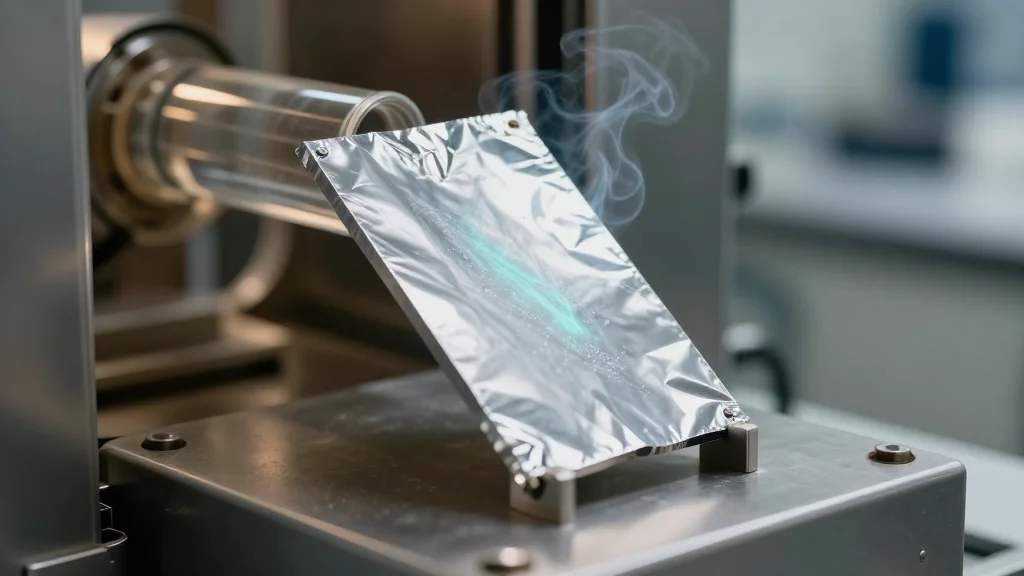
Computational Modeling and Experimental Validation of Variabilities in Chemical Vapor Deposition of Graphene on Metals
Why It Matters
Uniform graphene layers are essential for high‑performance electronics and composites; achieving them by merely adjusting substrate tilt reduces process complexity, cuts costs, and accelerates commercial scale‑up.
Key Takeaways
- •CFD predicts transport heterogeneity across substrate tilt angles
- •21°–33° inclination yields most uniform graphene thickness
- •Steep (45°) tilt creates localized acceleration and wake‑driven segregation
- •Findings guide hot‑wall LPCVD reactor design without hardware redesign
Pulse Analysis
Low‑pressure chemical vapor deposition (LPCVD) remains the workhorse for producing large‑area graphene, yet achieving lateral uniformity across a wafer‑scale substrate is notoriously difficult. The root cause lies in near‑wall transport phenomena: precursor renewal, boundary‑layer development, and shear stress all vary with the flow field inside the hot‑wall quartz tube. Traditional approaches focus on temperature uniformity or gas composition, but recent research shows that the geometric orientation of the substrate itself can dominate these transport mechanisms, reshaping how reactants reach the surface.
In the latest study, engineers coupled a transient three‑dimensional computational fluid dynamics (CFD) model with spatially resolved Raman spectroscopy and scanning electron microscopy. By systematically tilting the substrate at 9°, 21°, 33°, and 45°, they mapped velocity vectors, wall shear stress, and boundary‑layer thickness across the foil. The CFD revealed that shallow angles produce thick, sluggish boundary layers, while steep angles generate intense, localized jets followed by wake‑induced stagnation zones. Only the intermediate angles (21°–33°) balanced surface‑parallel flow and shear, delivering a homogeneous precursor supply that translated into consistent graphene thickness in the experimental runs.
The implications extend beyond academic insight. Manufacturers can now fine‑tune reactor geometry—specifically substrate tilt—to obtain uniform graphene without costly hardware modifications or extensive process redesigns. This simple adjustment improves yield, reduces material waste, and shortens time‑to‑market for graphene‑based sensors, flexible electronics, and composite reinforcements. Moreover, the transport‑centric framework offers a predictive tool for scaling LPCVD to larger substrates, guiding future reactor designs that prioritize flow uniformity alongside temperature control. As the graphene market matures, such process‑level optimizations will be pivotal for achieving the economies of scale required for widespread adoption.
Computational Modeling and Experimental Validation of Variabilities in Chemical Vapor Deposition of Graphene on Metals
Comments
Want to join the conversation?
Loading comments...