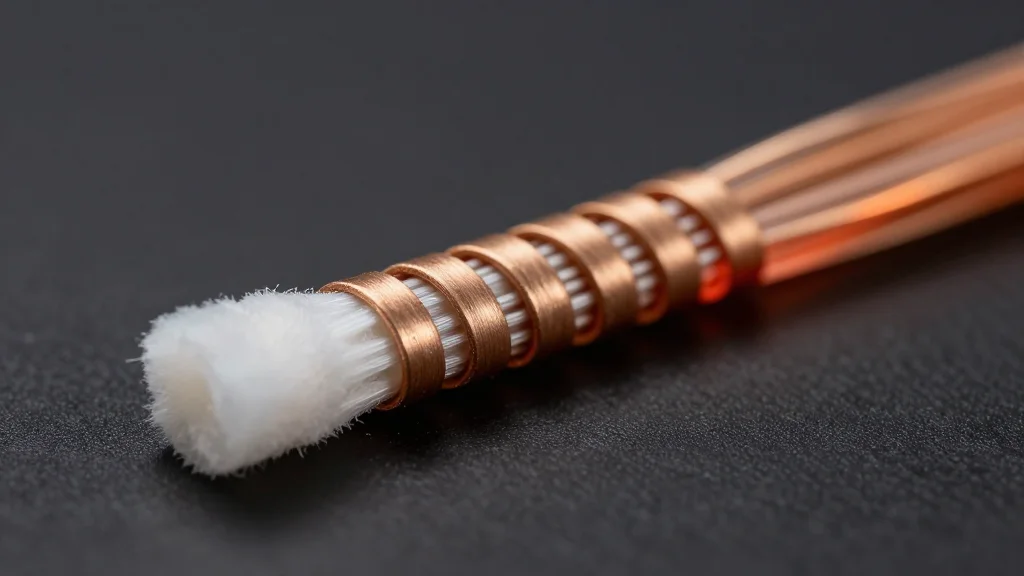
Construction of Ti3C2Tx MXene Composite PI Nanogel Fiber With Excellent Infrared Stealth Performance
Why It Matters
The breakthrough enables effective thermal camouflage without bulky insulation, opening new markets for defense, aerospace, and smart textiles where infrared detection is a vulnerability.
Key Takeaways
- •PI aerogel fibers cut convective heat transfer
- •MXene/TA layer reflects infrared, lowering emissivity to 0.17
- •Composite thermal conductivity reaches 0.084 W·m⁻¹·K⁻¹
- •Maintains performance after 15 days humid heat aging
- •Enables stealth for 200 °C targets, apparent 40.7 °C
Pulse Analysis
The surge in high‑resolution infrared sensors has turned thermal signatures into a strategic liability for military platforms, aerospace components, and even consumer wearables. Conventional countermeasures rely on bulky insulators or active cooling, which add weight and complexity. A new class of integrated stealth fabrics seeks to combine insulation and radiative control in a single lightweight strand. In this context, a research team has engineered a polyimide aerogel fiber coated with a Ti₃C₂Tₓ MXene‑tannic acid composite, delivering simultaneous heat blocking and infrared reflectivity.
The hybrid fiber leverages the porous network of polyimide aerogel to suppress convective heat flow while extending the conductive path along the pore walls, achieving a thermal conductivity of just 0.084 W·m⁻¹·K⁻¹. The MXene component, with its metallic‑like conductivity and layered morphology, reflects the majority of mid‑wave infrared radiation, driving the surface emissivity down to 0.17. Adding tannic acid forms a protective shell that resists oxidation, preserving the low emissivity after two weeks of humid‑heat exposure—a critical advantage for long‑term field deployment.
These performance figures translate into a dramatic reduction of apparent temperature: a 200 °C object appears only 40.7 °C to an infrared camera, outperforming commercial fabrics and standalone PI or MXene films. Such passive thermal camouflage could reshape defense logistics by eliminating power‑hungry cooling units, while also enabling stealthy smart textiles for firefighters or industrial workers. As MXene production scales and polymer‑nanogel processing matures, the market for lightweight, durable infrared‑stealth materials is poised for rapid growth, inviting further investment in R&D and supply‑chain integration.
Construction of Ti3C2Tx MXene Composite PI Nanogel Fiber With Excellent Infrared Stealth Performance
Comments
Want to join the conversation?
Loading comments...