Controlled Preparation of Vanadium Pentoxide Films and Their Multicolor Electrochromic Properties
•February 19, 2026
0
Why It Matters
The controllable, low‑cost V2O5 deposition method expands the commercial viability of multicolor electrochromic devices for smart windows and adaptive displays, offering faster switching and long‑term stability.
Key Takeaways
- •EPD enables precise voltage‑time control for V2O5 films
- •Five‑minute deposition yields uniform, multicolor electrochromic layers
- •Device shows 22.6 cm² C⁻¹ coloration efficiency at 730 nm
- •Color switching completes in 6 s (color) and 4 s (fade)
- •81.79% charge transfer retained after 200 CV cycles
Pulse Analysis
Electrochromic technology, which modulates light transmission under electrical bias, has long relied on materials such as tungsten oxide and nickel oxide. Vanadium pentoxide (V2O5) offers a broader color palette and higher theoretical coloration efficiency, yet scalable, environmentally friendly fabrication methods have been limited. By leveraging electrophoretic deposition—a technique traditionally used for ceramic coatings—researchers introduced a green, solution‑based route that eliminates high‑temperature sintering while delivering fine control over film thickness and morphology.
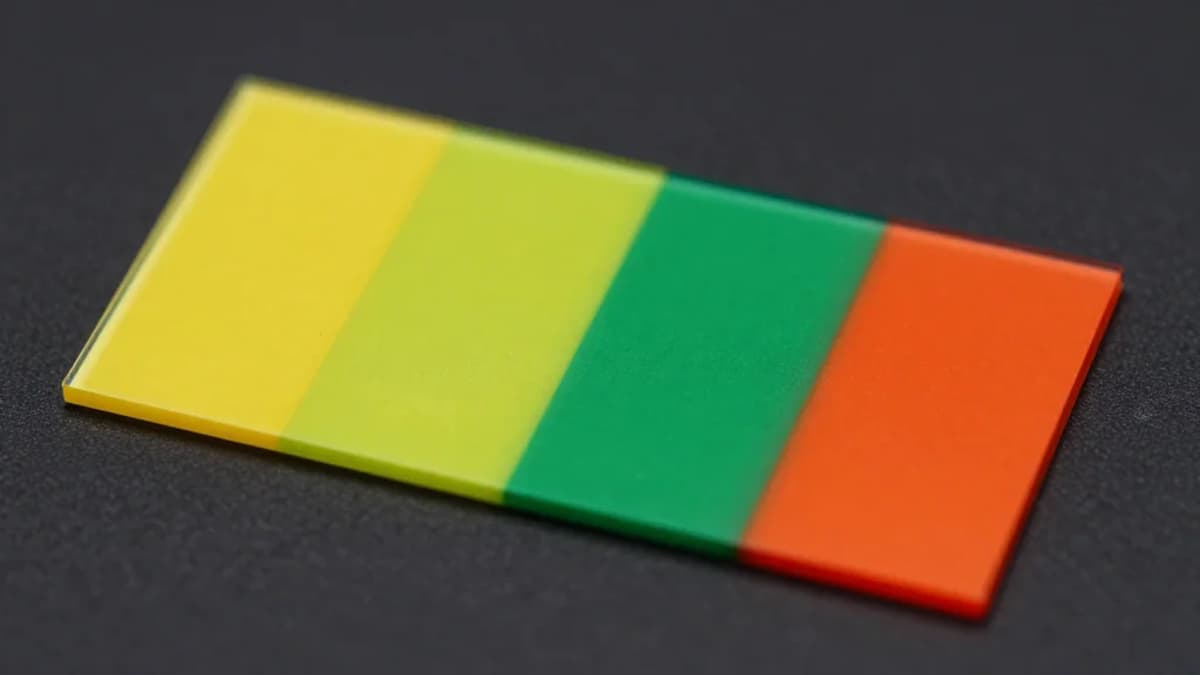
The study pinpointed deposition voltage and time as critical levers for achieving consistent V2O5 layers. At an optimized voltage (specified in the original work) and a five‑minute deposition window, the resulting films exhibited uniform coverage and reproducible multicolor electrochromic behavior, ranging from yellow to orange‑red. Performance metrics underscore the breakthrough: a coloration efficiency of 22.6 cm² C⁻¹ at 730 nm surpasses many conventional oxides, and rapid switching—6 seconds to color, 4 seconds to fade—meets the response times demanded by smart‑window and display applications. Moreover, the films maintained over 80% of their charge‑transfer capability after 200 cyclic voltammetry cycles, indicating robust cycling stability.
For industry stakeholders, this advancement translates into lower manufacturing costs, reduced energy consumption, and expanded design flexibility. The ability to fine‑tune color output without complex layer stacks opens avenues for adaptive architectural glazing, automotive rear‑view mirrors, and low‑power e‑paper displays. Future research will likely explore scaling the EPD process to roll‑to‑roll production and integrating V2O5 layers with transparent conductive polymers to further enhance durability and optical performance, positioning vanadium pentoxide as a cornerstone material in the next generation of electrochromic solutions.
Controlled Preparation of Vanadium Pentoxide Films and Their Multicolor Electrochromic Properties
0
Comments
Want to join the conversation?
Loading comments...