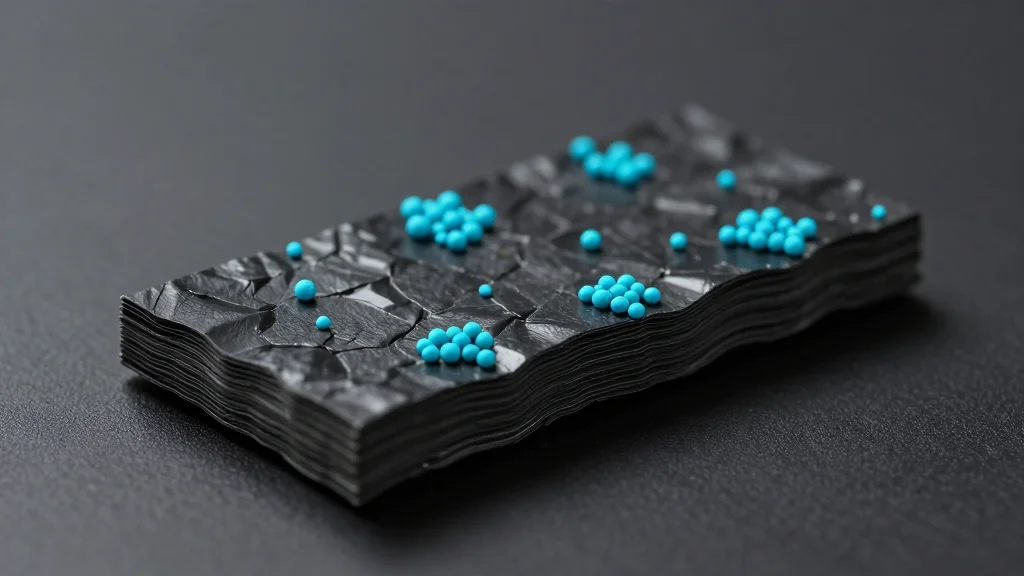
Controlled Triazine‐Based Covalent Functionalization of Black Phosphorus for Degradable Hybrid Materials
Why It Matters
The approach resolves long‑standing limitations in BP surface chemistry, unlocking biodegradable 2D material platforms for antiviral therapeutics and broader nanotechnology applications.
Key Takeaways
- •Scalable triazine functionalization yields high P‑N grafting density
- •Phase‑transfer catalyst improves covalent attachment efficiency on BP
- •Post‑modification via nucleophilic aromatic substitution enables diverse polymer conjugates
- •BP‑polyglycerol sulfate hybrids inhibit RSV and HSV‑1 at sub‑µg/mL levels
Pulse Analysis
Black phosphorus has attracted attention for its unique electronic and optical properties, yet its practical deployment has been hampered by instability and difficulty in achieving reliable surface functionalization. Traditional methods often produce uneven coverage or degrade the material, limiting scalability. By leveraging a mechanochemical synthesis followed by liquid‑phase exfoliation, the new protocol delivers consistent, few‑layer BP sheets ready for covalent modification, addressing a critical bottleneck in 2D material manufacturing.
The core of the innovation lies in a triazine‑based nitrene cycloaddition that forms robust P‑N bonds on the BP surface. The inclusion of a phase‑transfer catalyst dramatically increases grafting density, while the triazine moiety serves as a chemical handle for further nucleophilic aromatic substitution. This modularity permits attachment of a wide array of polymers, dyes, or bioactive molecules without compromising the underlying phosphorus lattice, positioning the technique as a versatile toolbox for researchers seeking tailor‑made BP hybrids.
Beyond materials science, the functionalized BP‑polymer hybrids demonstrate real‑world relevance. Conjugation with linear polyglycerol sulfate yields a biodegradable composite that effectively blocks respiratory syncytial virus and herpes simplex virus 1 at concentrations below one microgram per milliliter. Such antiviral potency, combined with the material’s degradability, suggests promising pathways for safe, high‑performance biomedical coatings, drug‑delivery platforms, and environmental sensors, marking a significant step toward commercializing phosphorus‑based nanomaterials.
Controlled Triazine‐Based Covalent Functionalization of Black Phosphorus for Degradable Hybrid Materials
Comments
Want to join the conversation?
Loading comments...