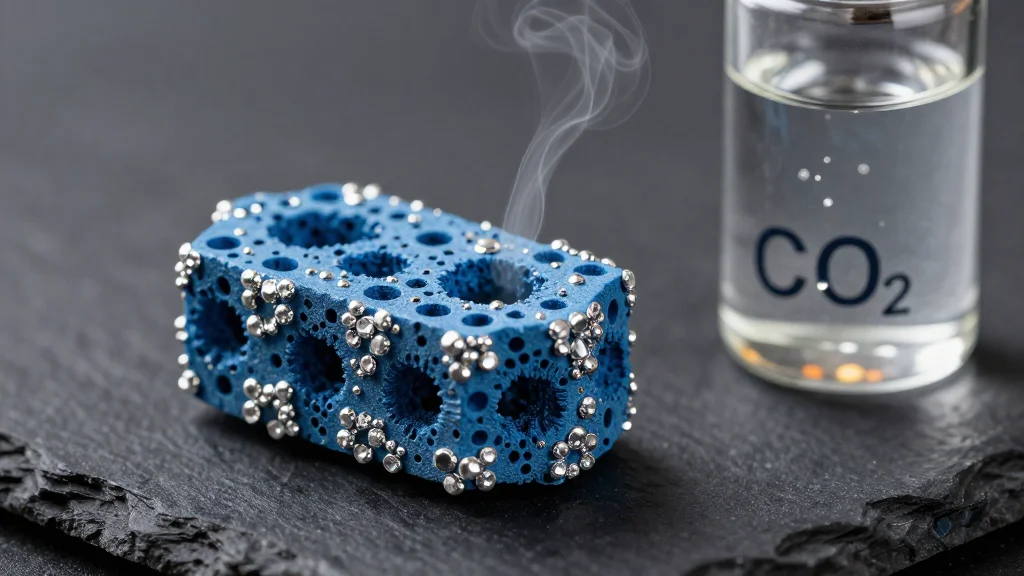
Coordination‐Modulated MOF‐Derived Electrocatalysts for Enhanced C─C Coupling in CO2 to C2H4 and C2H5OH Conversion
Why It Matters
By lowering energy demand and boosting selectivity, MOF catalysts could make renewable ethylene and ethanol economically competitive, reshaping the petrochemical supply chain and supporting climate‑neutral targets.
Key Takeaways
- •MOF catalysts enable lower energy barriers for CO₂ activation.
- •Machine learning accelerates screening of high‑performance MOF structures.
- •Heterobimetallic MOFs provide synergistic sites for C‑C coupling.
- •In‑situ spectroscopy reveals dynamic active sites during CO2RR.
- •Cascade reactors decouple CO₂ activation from product formation.
Pulse Analysis
The global push toward decarbonization has turned electrochemical CO₂ reduction (CO₂RR) into a strategic priority for the chemicals sector. Ethylene and ethanol, which together account for more than $150 billion in annual market value, are traditionally derived from fossil‑based feedstocks. Converting CO₂ into these C₂ products not only cuts greenhouse‑gas emissions but also creates a renewable source of high‑value chemicals. Investors and major petrochemical firms are therefore monitoring catalyst breakthroughs that can lower the energy intensity and improve selectivity of CO₂RR, making the technology economically viable at scale.
Metal‑organic frameworks (MOFs) have emerged as a uniquely tunable platform for CO₂RR electrocatalysis. Their crystalline pores allow precise placement of metal nodes and organic linkers, creating active sites that can stabilize the *CO intermediate and promote proton‑coupled electron transfers essential for C‑C bond formation. Recent studies, as highlighted in the review, combine in‑situ spectroscopy with density‑functional theory to map reaction pathways and quantify energy barriers, revealing that coordination‑modulated MOFs can achieve ethylene faradaic efficiencies above 60 % under laboratory conditions. Such performance marks a significant step toward commercial relevance.
Beyond laboratory metrics, the review points to practical pathways for rapid commercialization. Machine‑learning algorithms now screen thousands of hypothetical MOFs, accelerating the discovery of structures that combine high activity with durability. Heterobimetallic designs introduce synergistic sites that further lower overpotentials, while cascade reactor architectures separate CO₂ activation from downstream C‑C coupling, improving overall system efficiency. For venture capital and corporate R&D, these advances translate into shorter development cycles, reduced capital expenditure, and a clearer route to replace petrochemical feedstocks with a carbon‑neutral alternative.
Coordination‐Modulated MOF‐Derived Electrocatalysts for Enhanced C─C Coupling in CO2 to C2H4 and C2H5OH Conversion
Comments
Want to join the conversation?
Loading comments...