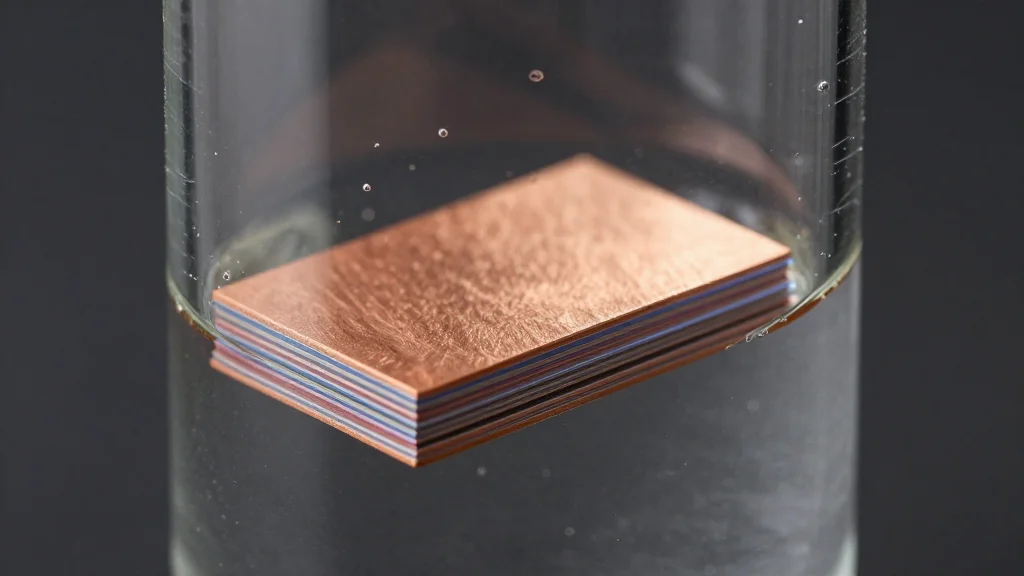
Defect‐Rich RuCu Multilayered Nanosheets for Effective Alkaline Hydrogen Electrocatalysis
Why It Matters
The breakthrough offers a cost‑effective, high‑performance alternative to platinum, accelerating alkaline fuel‑cell and electrolyzer deployment while reducing reliance on scarce noble metals.
Key Takeaways
- •RuCu nanosheets achieve 4.91 A mg⁻¹ mass activity at 50 mV
- •Outperform Pt/C by >15× in alkaline HOR/HER activity
- •Only 20 % performance loss after 3,000 s with 100 ppm CO
- •Require 22.4 mV overpotential for 10 mA cm⁻² HER current
Pulse Analysis
Alkaline water electrolysis and fuel‑cell technologies have long been constrained by the scarcity and cost of platinum‑group catalysts. While alkaline systems tolerate non‑precious metals better than acidic ones, achieving comparable activity and durability remains a challenge. The industry therefore seeks catalysts that combine high intrinsic activity, resistance to common poisons like carbon monoxide, and low overpotential to make large‑scale hydrogen production economically viable.
The RuCu multilayered nanosheets introduced in this study address those needs through a defect‑rich, mesoporous architecture that maximizes exposure of active sites. The synergistic alloying of ruthenium with copper tunes the adsorption energies of hydrogen (*H) and hydroxyl (*OH) intermediates, accelerating both HOR and HER kinetics. Quantitatively, the RuCu MNSs/C delivers 4.91 A mg⁻¹ at 50 mV versus the reversible hydrogen electrode—over fifteen times the activity of commercial Pt/C under identical alkaline conditions. Moreover, its CO tolerance is exceptional; a continuous 3,000‑second test in 0.1 M KOH with 100 ppm CO results in only a 20 % current decline, highlighting robustness for real‑world fuel‑cell feeds.
From a market perspective, replacing platinum with a RuCu alloy could slash catalyst costs by up to 70 % while preserving, or even enhancing, performance. This cost advantage, coupled with the low overpotential of 22.4 mV to achieve 10 mA cm⁻² for HER, positions the material as a strong candidate for next‑generation electrolyzers and alkaline fuel cells. Scaling the synthesis of defect‑rich nanosheets will be the next hurdle, but the demonstrated durability and activity suggest a clear pathway toward commercial adoption, potentially accelerating the global transition to a hydrogen‑based energy economy.
Defect‐Rich RuCu Multilayered Nanosheets for Effective Alkaline Hydrogen Electrocatalysis
Comments
Want to join the conversation?
Loading comments...