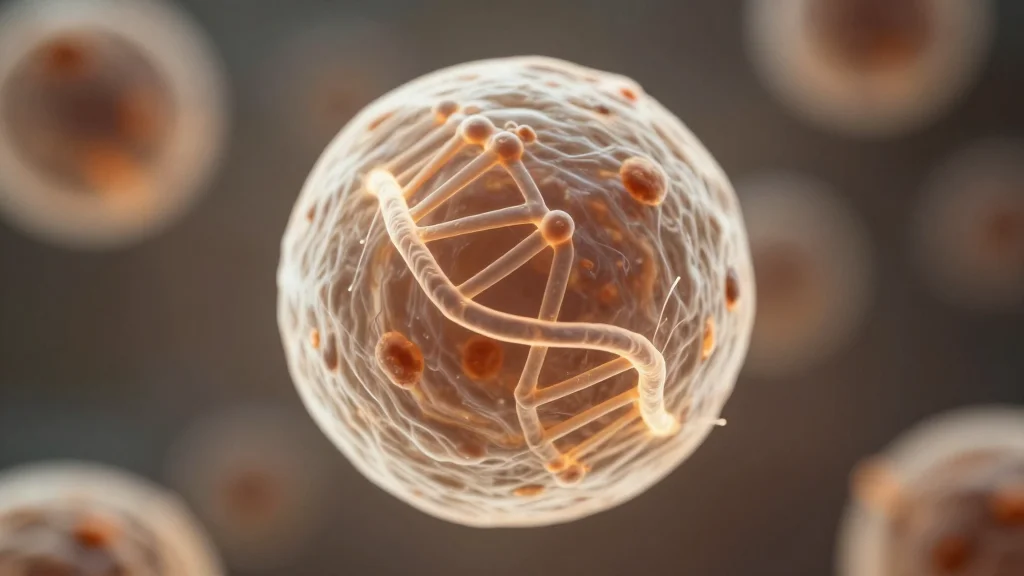
DNA Framework Nucleator‐Enabled Intelligent Hydrogel Interfaces on Living Cells
Why It Matters
The breakthrough enables high‑fidelity, stimulus‑responsive cell interfaces, opening pathways for precise therapeutic delivery and smart diagnostics in biotechnology.
Key Takeaways
- •DFN-guided hydrogels achieve ~90.7% ATP response efficiency
- •Dual-signal AND gate reaches ~98.5% disassembly efficiency
- •Crosstalk remains below ~4%, ensuring high signal fidelity
- •Rigid tetrahedral DNA framework improves nucleation order versus flexible dsDNA
Pulse Analysis
Cell‑surface engineering has long relied on passive coatings, limiting the ability to modulate cellular behavior in real time. Recent advances in DNA nanotechnology, particularly the use of rigid tetrahedral frameworks, provide a scaffold that can be precisely positioned on the plasma membrane. By anchoring DNA framework nucleators (DFNs) to the cell surface, researchers can initiate localized hybridization chain reactions that polymerize into hydrogel layers only where needed, creating an intelligent interface that responds to molecular cues.
The DFN approach dramatically outperforms traditional flexible double‑stranded DNA nucleators. In ATP‑triggered experiments, the DFN‑guided hydrogel achieved a response efficiency of roughly 90.7%, nearly three times higher than the 31% observed with dsDNA. More strikingly, the system incorporates a dual‑signal AND‑gate that requires both ATP and microRNA‑122 to trigger hydrogel disassembly, delivering a 98.5% response with minimal background crosstalk (under 4%). This level of logical control mirrors electronic circuits, enabling programmable cellular actions that were previously unattainable with static encapsulation methods.
The implications for biotech and medicine are significant. Programmable hydrogel interfaces could serve as smart drug‑release platforms that activate only in disease‑specific microenvironments, reducing off‑target effects. They also offer a versatile tool for synthetic biology, where precise, reversible control of cell signaling pathways is essential. As the field moves toward integrating DNA‑based nanostructures with living systems, the DFN‑enabled hydrogel platform positions itself as a cornerstone technology for next‑generation cell‑based therapies and diagnostics.
DNA Framework Nucleator‐Enabled Intelligent Hydrogel Interfaces on Living Cells
Comments
Want to join the conversation?
Loading comments...