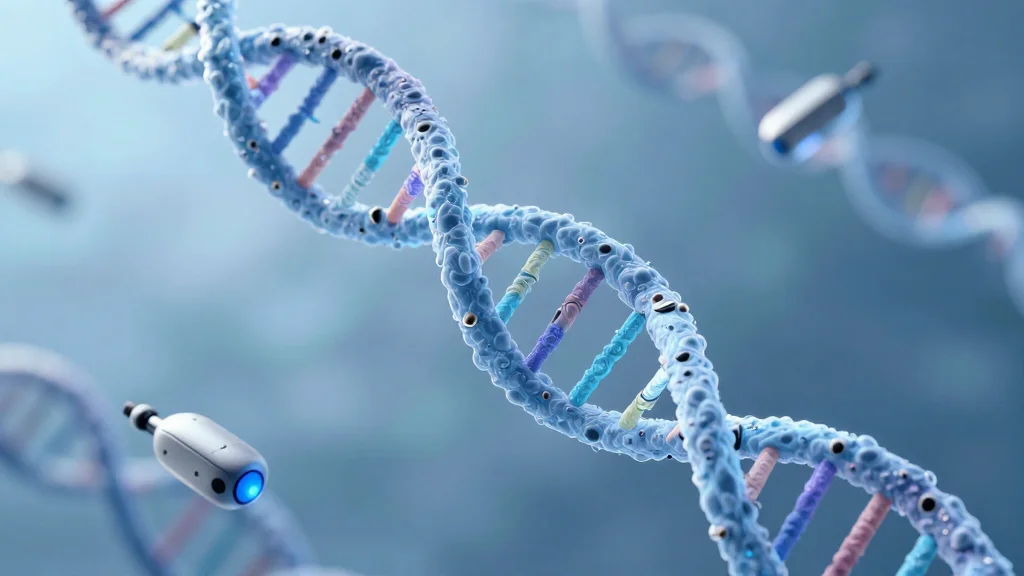
DNA Nanorobots Review Maps Path to Medical and Manufacturing Breakthroughs

Why It Matters
DNA nanorobots sit at the intersection of synthetic biology, nanofabrication and precision medicine. By encoding functional behavior directly into the DNA scaffold, they promise a level of programmability and biocompatibility unmatched by traditional nanomaterials. Successful commercialization could lower the cost of complex biologics, enable on‑demand synthesis of nanostructures, and create a new class of smart therapeutics that respond to disease markers in real time. Beyond the immediate health benefits, the technology could catalyze a broader shift toward molecular‑scale engineering. Industries ranging from electronics to energy storage rely on ever‑smaller components; DNA‑guided assembly offers a bottom‑up route that bypasses the physical limits of top‑down lithography. The review’s roadmap therefore signals not just a medical breakthrough but a potential foundation for a new manufacturing paradigm.
Key Takeaways
- •Harbin Institute of Technology released a review on March 22, 2026 outlining three DNA nanorobot design strategies.
- •Control methods include DNA strand displacement and external triggers such as electric, magnetic and light fields.
- •Key challenges cited are Brownian motion, static prototypes, and the absence of comprehensive DNA mechanical property databases.
- •Targeted‑therapy market projected to exceed $30 billion by 2030 could be reshaped by precise DNA‑based drug delivery.
- •Pilot clinical trials for DNA‑based drug carriers are planned for 2029, marking a critical step toward commercialization.
Pulse Analysis
The Harbin Institute review crystallizes a field that has long been fragmented across chemistry, robotics and bioengineering. By cataloguing design motifs and control schemes in a single document, it provides a lingua franca that could accelerate cross‑disciplinary collaboration. Historically, breakthroughs in nanotech have hinged on standardization—consider the impact of the silicon wafer roadmap on microelectronics. A comparable roadmap for DNA nanorobotics could lower entry barriers for startups and enable larger firms to invest with clearer risk assessments.
From a market perspective, the most immediate value lies in oncology, where precision delivery can dramatically improve therapeutic indices. However, the review’s emphasis on external triggers suggests a future where clinicians could modulate nanorobot activity non‑invasively, opening possibilities for on‑demand dosing and adaptive treatment regimens. This capability could differentiate early adopters and create a premium segment within the broader biotech landscape.
Looking ahead, the decisive factor will be the development of scalable synthesis and reliable simulation tools. Current DNA origami methods are labor‑intensive and costly; breakthroughs in enzymatic assembly or automated chip‑based synthesis could bring unit costs down to a level compatible with commercial drug manufacturing. Simultaneously, integrating real‑time sensing—perhaps via embedded fluorescent reporters—will be essential for regulatory approval. If these infrastructure gaps close, DNA nanorobots could transition from academic curiosities to a cornerstone of next‑generation therapeutics and nanomanufacturing.
DNA Nanorobots Review Maps Path to Medical and Manufacturing Breakthroughs
Comments
Want to join the conversation?
Loading comments...