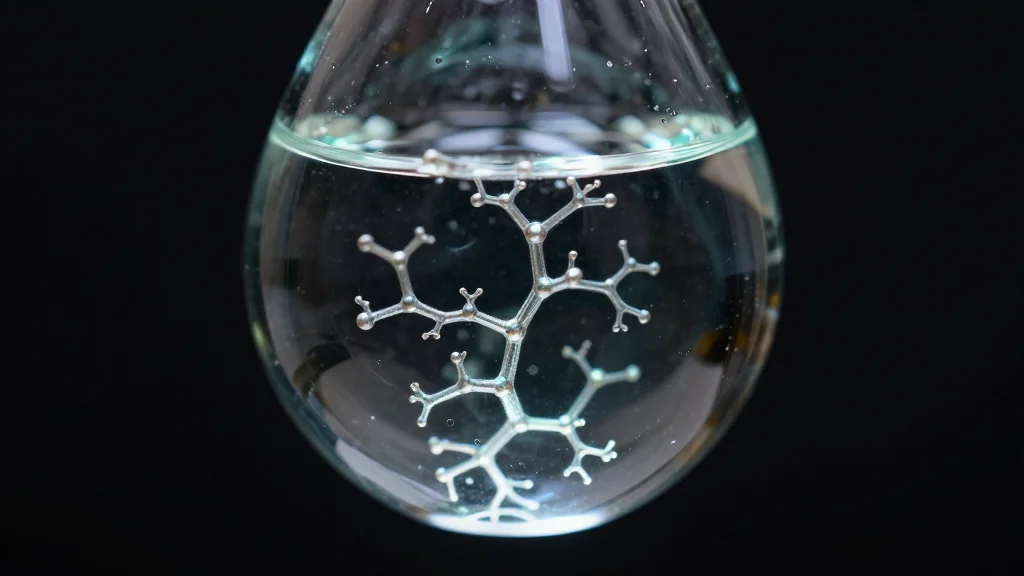
Dynamic CoOOH@Co Reconstruction Activates Laser‐Decorated Pd Sites for High‐Selectivity Nitrate‐to‐Ammonia Electrocatalysis and Zn–Nitrate Batteries
Why It Matters
The work demonstrates that in‑situ catalyst reconstruction can simultaneously boost selective ammonia synthesis from nitrate pollutants and power high‑performance zinc‑nitrate batteries, addressing both environmental remediation and renewable energy storage.
Key Takeaways
- •Pulsed laser creates Pd‑decorated Co nanodendrites in liquid phase.
- •Catalyst reaches 92.35% Faradaic efficiency for NH3 at –0.1 V vs RHE.
- •NH3 yield peaks at 9.03 mg h⁻¹ cm⁻² under –0.4 V.
- •Zn‑nitrate battery delivers 1.506 V open‑circuit voltage, 68.78% FE.
- •Dynamic Pd/CoOOH@Co reconstruction stabilizes performance over 500 h.
Pulse Analysis
The emergence of laser‑engineered Pd/Co nanodendrites marks a shift in electrocatalyst design, where rapid, scalable synthesis in liquid media yields highly dispersed palladium atoms anchored on a conductive cobalt scaffold. Under alkaline nitrate reduction conditions, the catalyst undergoes a reversible surface reconstruction, forming a Pd/CoOOH@Co heterostructure that isolates Pd active sites and modifies the electronic environment. This dynamic behavior not only prevents Pd aggregation but also creates synergistic interfaces that lower the energy barrier for nitrate adsorption and hydrogenation, a mechanism corroborated by in‑situ spectroscopy and density‑functional calculations.
Performance data underscore the breakthrough: the reconstructed catalyst achieves a Faradaic efficiency above 92% for ammonia at a modest overpotential of –0.1 V versus RHE, and delivers a record ammonia flux of 9.03 mg h⁻¹ cm⁻² at –0.4 V. Compared with conventional metal‑oxide catalysts, the Pd/Co system offers superior selectivity, minimizing competing hydrogen evolution. Theoretical modeling attributes these gains to optimal binding energies on the Pd sites and rapid electron transfer facilitated by the underlying metallic cobalt, confirming that the surface reconstruction is the key driver of activity.
Beyond chemical synthesis, the Pd/Co catalyst integrates seamlessly into a zinc‑nitrate flow battery, where nitrate serves as the cathodic reactant. The cell produces an open‑circuit voltage of 1.506 V and sustains a nitrate‑to‑ammonia Faradaic efficiency of 68.78% at 4 mA cm⁻², with durability exceeding 500 hours. This dual‑function platform couples waste‑to‑resource conversion with energy storage, offering a scalable route to mitigate nitrate pollution while generating renewable power. As industries seek circular‑economy solutions, such dynamically reconfigurable electrocatalysts could become central to sustainable ammonia production and next‑generation battery technologies.
Dynamic CoOOH@Co Reconstruction Activates Laser‐Decorated Pd Sites for High‐Selectivity Nitrate‐to‐Ammonia Electrocatalysis and Zn–Nitrate Batteries
Comments
Want to join the conversation?
Loading comments...