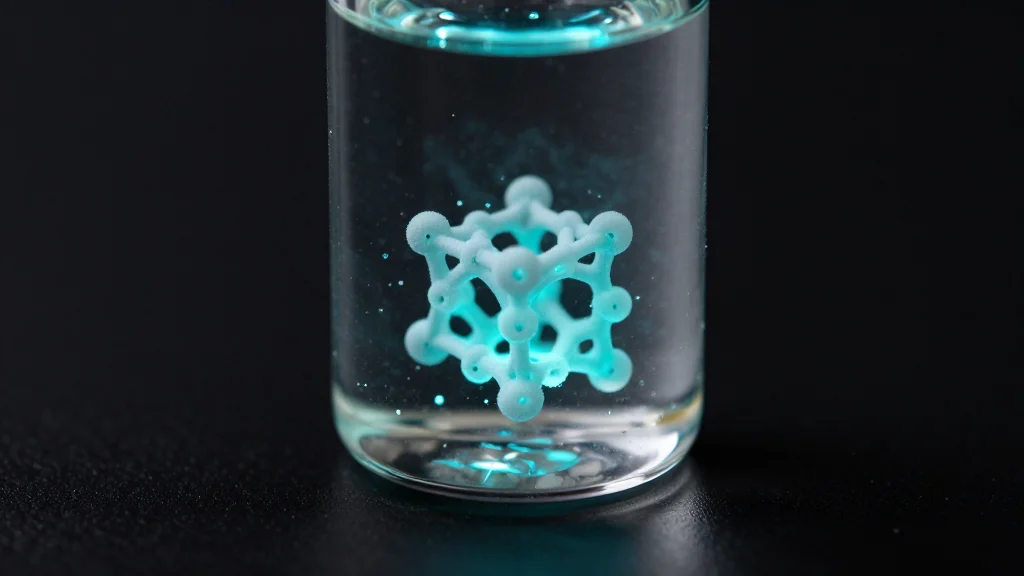
Electrochemiluminescent COFs and HOFs as Porous Material Engineering Systems for Bioanalysis and Environmental Monitoring
Why It Matters
Boosting ECL with COFs and HOFs can cut detection limits and response times for health and environmental threats, positioning point‑of‑care diagnostics for rapid market adoption. Sustainable, scalable manufacturing will dictate the technology’s commercial trajectory.
Key Takeaways
- •COFs increase ECL efficiency via high surface area and π‑conjugation
- •HOFs enable flexible, biocompatible sensors for pathogens and metals
- •Luminophore and co‑reactant design drive signal amplification
- •Scalable, green synthesis remains a major hurdle for commercialization
- •Integration with AI‑driven platforms promises smarter, real‑time monitoring
Pulse Analysis
Electrochemiluminescence has become a cornerstone of modern biosensing because it combines optical readout with electrochemical control, delivering low background and high sensitivity. Traditional ECL emitters, however, suffer from limited stability and modest signal output, prompting researchers to explore porous crystalline scaffolds. COFs and HOFs answer this need by furnishing ordered, tunable channels that host luminophores and co‑reactants in close proximity, dramatically improving charge injection and photon generation. Their modular chemistry also permits precise tailoring of pore size, surface functionality and electronic conjugation, which translates directly into lower limits of detection for a range of analytes.
Within the COF family, extended π‑conjugated backbones act as conductive highways, facilitating rapid electron transfer to the luminophore. Recent studies report detection limits for pesticide residues in the sub‑nanomolar range, outperforming conventional ECL platforms by an order of magnitude. HOFs, on the other hand, leverage reversible hydrogen bonding to create flexible, water‑stable matrices that can be processed into thin films or coatings without harsh solvents. This adaptability makes HOF‑based sensors especially attractive for on‑site pathogen screening and heavy‑metal ion tracking, where biocompatibility and rapid deployment are paramount. Advances in nanostructuring—such as embedding metallic nanoparticles or quantum dots—further amplify the ECL signal, while co‑reactant optimization reduces the required driving voltage.
The path to commercial adoption hinges on three fronts: scalable synthesis, environmental stewardship, and intelligent integration. Current COF/HOF production often relies on solvothermal methods that are costly and generate hazardous waste, prompting a push toward greener, room‑temperature routes. Simultaneously, coupling these porous frameworks with AI‑enabled data analytics can transform raw luminescent outputs into actionable insights, enabling real‑time monitoring across healthcare, food safety and environmental regulation. As the industry converges on sustainable manufacturing and smart sensor ecosystems, COF‑ and HOF‑based ECL platforms are poised to become the next generation of point‑of‑care diagnostic tools.
Electrochemiluminescent COFs and HOFs as Porous Material Engineering Systems for Bioanalysis and Environmental Monitoring
Comments
Want to join the conversation?
Loading comments...