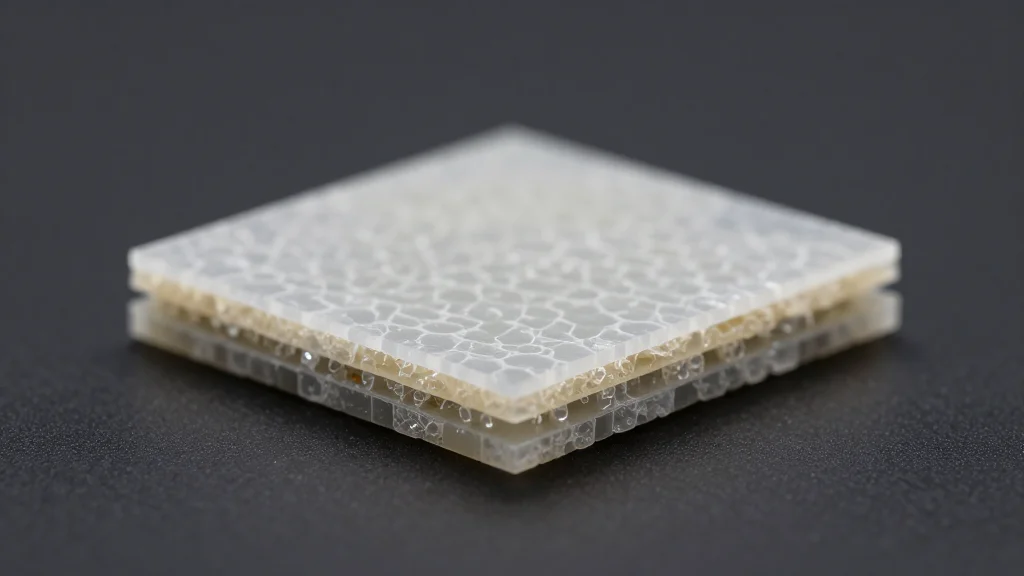
Electronic Devices Based on Heterostructures of 2D Materials and Self‐Assembled Monolayers
Why It Matters
Integrating 2DMs with SAMs offers a scalable path to ultra‑compact, multifunctional electronics, accelerating innovation in next‑generation consumer and industrial devices.
Key Takeaways
- •Vertical tunneling devices exploit atomically thin 2DM‑SAM barriers for fast switching
- •Horizontal conductors integrate SAMs to modulate charge transport across 2D channels
- •Hybrid superlattices combine layered 2DMs and SAMs for multifunctional optoelectronics
- •Performance can be tuned via external stimuli like electric field or light
- •Scalable van der Waals assembly promises low‑cost manufacturing of nanoscale circuits
Pulse Analysis
The convergence of two‑dimensional materials and self‑assembled monolayers is reshaping the landscape of nanoscale electronics. 2DMs such as graphene, MoS₂, and phosphorene bring exceptional carrier mobility and optical responsiveness, while SAMs contribute chemically programmable interfaces only a few atoms thick. By stacking these layers through van der Waals forces, researchers achieve heterojunctions that retain the intrinsic properties of each component yet unlock new functionalities unattainable by either material alone. This synergy enables device footprints that approach the ultimate limit of atomic thickness, a critical advantage for flexible displays, wearable sensors, and high‑density integration.
Device architectures fall into three primary categories. Vertical tunneling structures use SAMs as ultra‑thin insulating barriers, allowing electrons to quantum‑tunnel with low resistance and high speed—ideal for memory and logic switches. Horizontal conducting platforms embed SAMs alongside 2DM channels to fine‑tune charge carrier density and mobility, offering a versatile toolkit for transistors and interconnects. Hybrid superlattice stacks alternate multiple 2DM and SAM layers, creating periodic potentials that support novel optoelectronic phenomena such as exciton‑polariton coupling and wavelength‑selective photodetection. Across all formats, external stimuli—electric fields, light, or chemical exposure—provide dynamic control over device performance, paving the way for reconfigurable circuits.
Looking ahead, the scalability of van der Waals assembly positions 2DM‑SAM heterostructures as a cost‑effective alternative to conventional semiconductor fabrication. Challenges remain in achieving uniform large‑area SAM coverage and reliable layer alignment, but advances in roll‑to‑roll processing and in‑situ characterization are rapidly closing the gap. As industries demand ever‑smaller, more adaptable components, the ability to engineer electronic behavior at the molecular level could drive a new wave of products ranging from ultra‑thin solar cells to neuromorphic processors, cementing the commercial relevance of this emerging technology.
Electronic Devices Based on Heterostructures of 2D Materials and Self‐Assembled Monolayers
Comments
Want to join the conversation?
Loading comments...