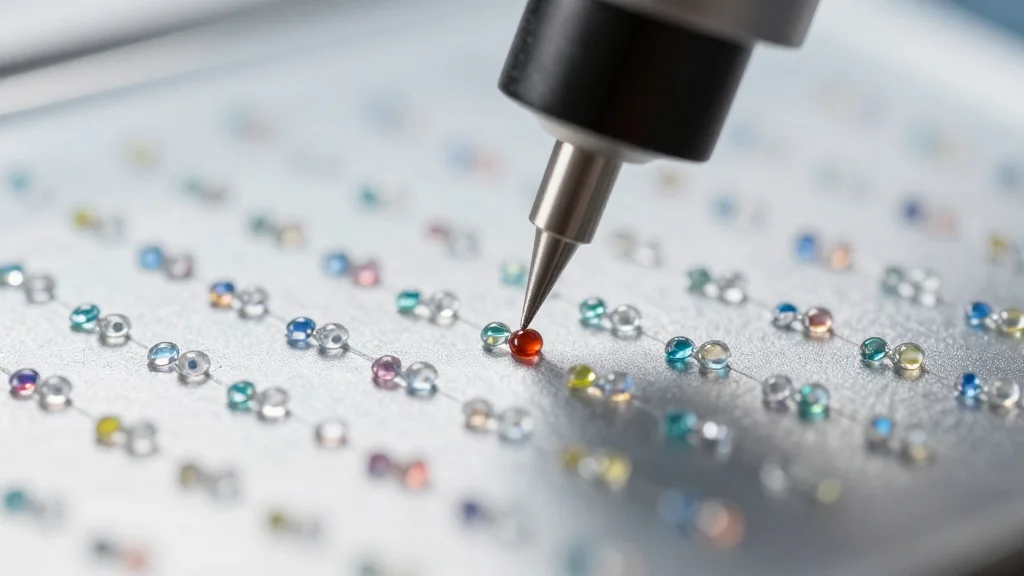
Electronic Structure Modulation via Composition‐Preserving Phase Transformations in Metal–Organic Assemblies on the Surface (Small 23/2026)
Why It Matters
The ability to modulate electronic characteristics without changing composition opens pathways for more reliable, scalable nano‑electronic and catalytic interfaces, accelerating material design cycles in high‑tech sectors.
Key Takeaways
- •Phase transformation retains molecular composition while altering electronic bands
- •Electronic structure tuned via controlled surface rearrangements on Ag(111)
- •Findings deepen understanding of metal‑organic interface interactions
- •Method enables property engineering without chemical synthesis changes
- •Potential to accelerate development of nano‑electronics and catalysts
Pulse Analysis
Metal‑organic assemblies (MOAs) on conductive substrates have emerged as a versatile platform for tailoring surface chemistry and electronic behavior. Traditionally, adjusting electronic properties required altering the molecular constituents or introducing dopants, which can compromise stability and reproducibility. By focusing on the Ag(111) surface—a model platform for surface science—researchers can isolate the impact of structural reorganization, offering clearer insight into the fundamental physics governing interfacial charge transfer.
In the Small 2026 article, Kazuma, Lee, Kim and colleagues demonstrate a stepwise phase transition where the same metal‑organic units reorganize into distinct lattice arrangements without any change in stoichiometry. Using scanning tunneling microscopy, angle‑resolved photoemission spectroscopy, and density‑functional theory, they map how band dispersion and work function shift across each phase. The systematic correlation between geometric ordering and electronic modulation provides a reproducible toolkit for fine‑tuning surface states, a capability previously limited to trial‑and‑error chemical modifications.
The broader implication for industry lies in the ability to engineer interfaces with predictable electronic profiles while preserving material integrity. This could accelerate the design of high‑performance catalysts, where precise energy level alignment dictates reaction efficiency, and enable next‑generation nano‑electronic components that demand stable, tunable contacts. As the semiconductor and renewable‑energy sectors seek scalable, atomically precise solutions, composition‑preserving phase control may become a cornerstone of commercial surface‑engineering strategies. Continued research will likely explore other substrates and MOA chemistries, expanding the toolbox for tailored interfacial functionality.
Electronic Structure Modulation via Composition‐Preserving Phase Transformations in Metal–Organic Assemblies on the Surface (Small 23/2026)
Comments
Want to join the conversation?
Loading comments...