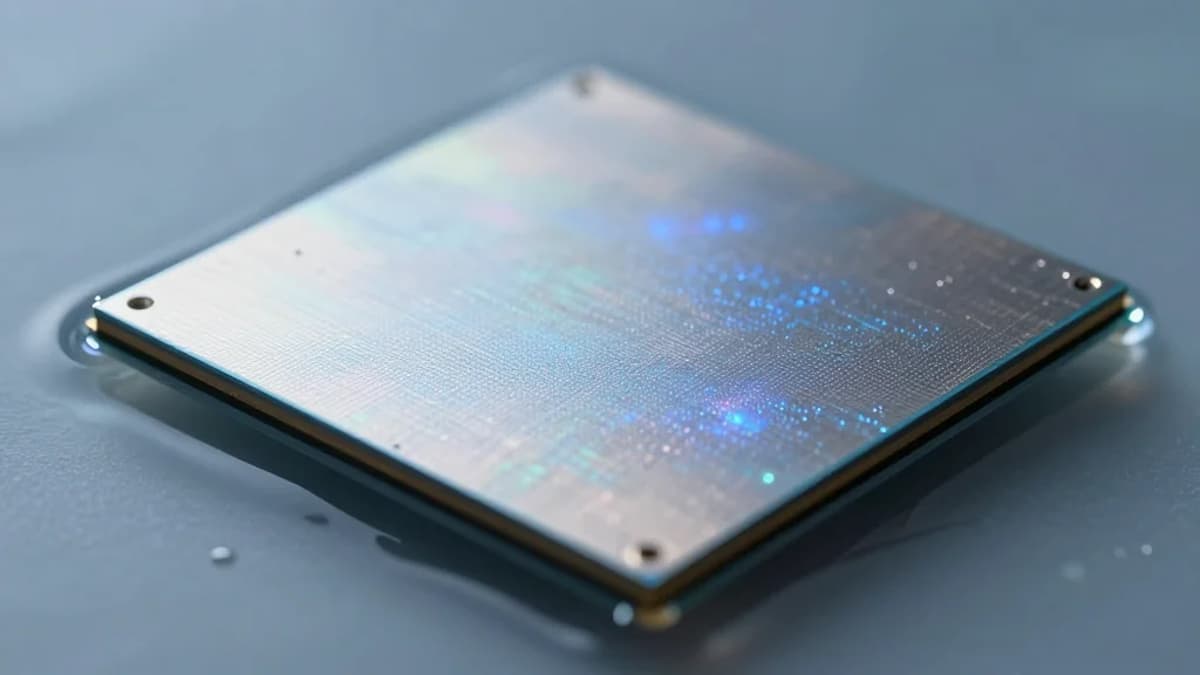
Encapsulated PbS Quantum Dots Boost Solar Water Splitting without Sacrificial Agents
•February 7, 2026
0
Why It Matters
Eliminating sacrificial chemicals while achieving durable, high‑efficiency performance removes a major cost and environmental barrier for green hydrogen, positioning chalcogenide quantum dots as practical components in renewable energy systems.
Key Takeaways
- •Ni and Field’s metal encapsulation prevents PbS corrosion
- •Record photocurrent density reaches 18.6 mA cm⁻²
- •Device retains 90 % performance after 24 hours
- •UV‑blocking design enables >100 hour stability
- •Sacrificial‑agent‑free operation lowers hydrogen production costs
Pulse Analysis
The global push for carbon‑free fuels has placed photoelectrochemical (PEC) water splitting at the forefront of renewable‑energy research. Quantum‑dot semiconductors such as PbS are prized for their strong visible‑light absorption and rapid charge transport, yet their susceptibility to oxidation in aqueous environments has limited real‑world deployment. Overcoming this stability gap is essential for scaling green‑hydrogen technologies that can compete with fossil‑derived alternatives.
The UNIST team’s breakthrough hinges on a dual‑metal encapsulation strategy. A nickel foil serves both as a physical barrier and an efficient water‑splitting catalyst, while a layer of Field’s metal creates a hermetic seal that blocks moisture ingress. An inverted layer design further absorbs harmful UV photons in the outer PbS shell, protecting internal charge‑transfer pathways. These engineering choices translate into a record‑high photocurrent density of 18.6 mA cm⁻² and sustained operation beyond 100 hours without performance loss—metrics that rival or exceed many existing PEC systems that rely on expensive sacrificial agents.
By demonstrating sacrificial‑agent‑free durability, the research lowers operational costs and simplifies system integration, accelerating the path toward commercial solar hydrogen plants. The encapsulation concept can be adapted to other chalcogenide or perovskite photoelectrodes, potentially broadening the material palette for next‑generation renewable‑energy devices. Investors and policymakers should watch for pilot‑scale deployments that could validate the economic case and drive down the levelized cost of hydrogen, reinforcing the role of quantum‑dot technologies in the emerging clean‑energy economy.
Encapsulated PbS quantum dots boost solar water splitting without sacrificial agents
0
Comments
Want to join the conversation?
Loading comments...