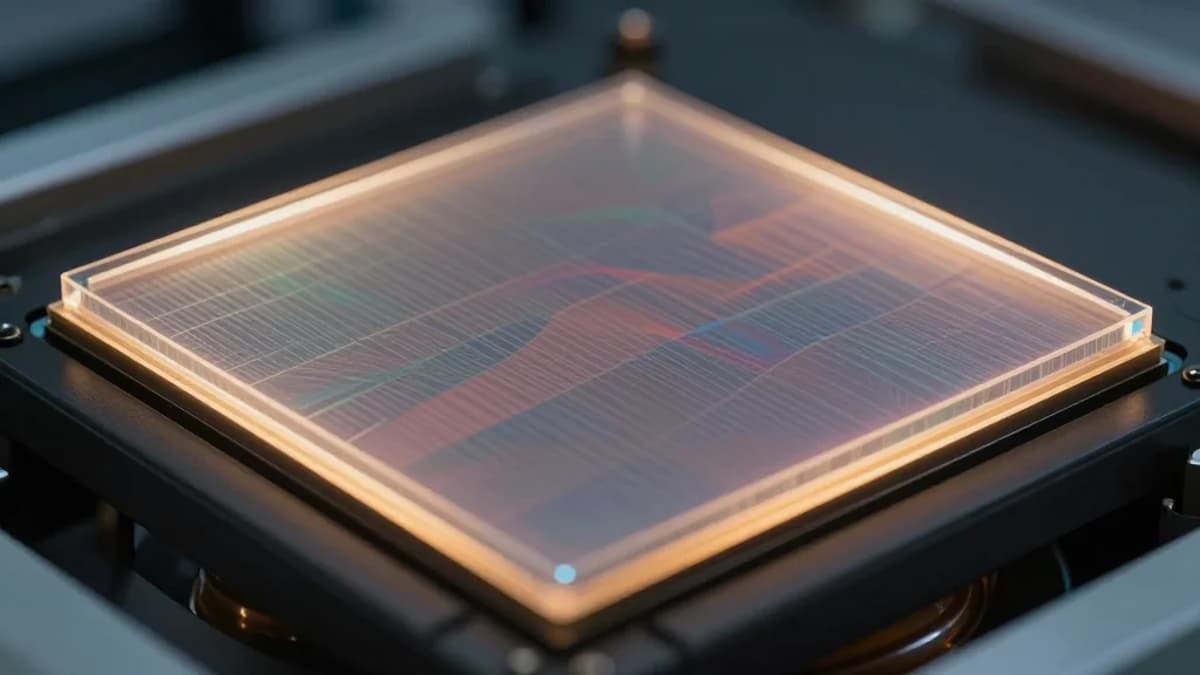
Engineering Metastability in Atomic Layer Deposition: Polymorph and Valence Control
•January 25, 2026
0
Companies Mentioned

Why It Matters
Enabling metastable phases expands the functional palette of ALD‑grown films, unlocking performance gains for advanced devices and catalysts. This capability bridges the gap between low‑temperature processing and high‑energy material properties, a critical need across semiconductor and energy sectors.
Key Takeaways
- •ALD can stabilize high-energy polymorphs via temperature control
- •Substrate lattice matching reduces energy barriers for metastable phases
- •Doping and solid solutions enable selective phase formation
- •Precursor design influences valence state control in ALD films
- •Post‑deposition treatments unlock new electronic and catalytic functionalities
Pulse Analysis
Metastable phases—materials that reside in higher‑energy configurations—offer unique electronic, catalytic, and energy‑storage properties not found in their equilibrium counterparts. Traditional synthesis routes often require high temperatures or extreme pressures, which clash with the low‑thermal‑budget nature of atomic layer deposition (ALD). By confronting this mismatch, researchers can leverage ALD’s atomic‑scale precision and conformality while still accessing the functional advantages of metastable states, a combination that promises to accelerate innovation in thin‑film technologies.
To overcome the intrinsic thermodynamic constraints, the review highlights several polymorph‑control tactics. Fine‑tuning deposition temperature can tip the balance toward a desired crystal structure, while selecting substrates with lattice parameters that closely match the target phase reduces interfacial strain and nucleation barriers. Grain‑size refinement through rapid cycling, intentional doping, and the creation of solid‑solution alloys further lower the activation energy required for phase transformation. These approaches collectively enable the selective stabilization of otherwise elusive polymorphs, expanding the material library available to semiconductor manufacturers and catalyst designers.
Beyond structural control, valence‑state engineering emerges as a complementary pathway. Choosing precursors with tailored redox potentials, adjusting reaction temperatures, and applying post‑deposition anneals or plasma treatments allow precise manipulation of oxidation states. Such valence tuning directly influences carrier concentration, band alignment, and catalytic active sites, translating into higher device efficiencies and longer lifetimes. As industries seek ever‑more performant thin‑film solutions, the ability to program both crystal structure and electronic valence within ALD processes positions the technique at the forefront of next‑generation material development.
Engineering Metastability in Atomic Layer Deposition: Polymorph and Valence Control
0
Comments
Want to join the conversation?
Loading comments...