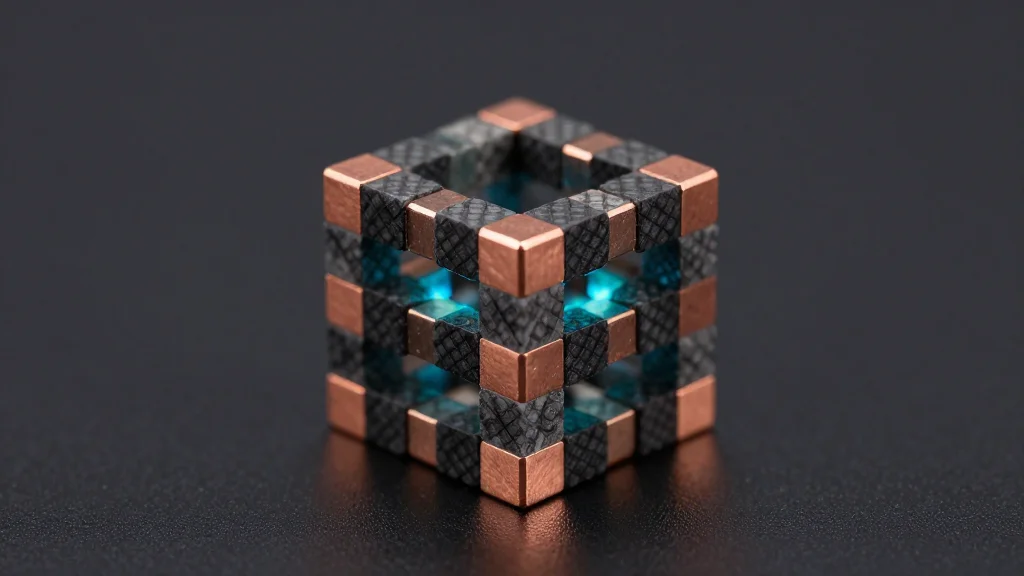
Engineering of Multiple Heterointerfaces in N, S‐Codoped Hollow Cu/Cu2S/C Nanoboxes for Superior Electromagnetic Attenuation
Why It Matters
The breakthrough demonstrates a scalable route to ultra‑lightweight, high‑performance EMW absorbers, addressing the growing demand for compact shielding in 5G, aerospace, and defense applications. By leveraging heterointerface engineering, the design offers a template for next‑generation materials that combine minimal thickness with broadband attenuation.
Key Takeaways
- •Hollow Cu/Cu2S/C nanoboxes achieve -62.21 dB reflection loss.
- •Multi-heterointerfaces boost interfacial polarization and charge transfer.
- •N,S co‑doping creates dipoles, enhancing dielectric loss.
- •Effective absorption bandwidth reaches 4.8 GHz at 1.64 mm thickness.
Pulse Analysis
Electromagnetic interference (EMI) has become a critical challenge as wireless technologies proliferate, prompting a race for materials that can absorb waves without adding bulk. Traditional absorbers often rely on heavy metals or thick composites, compromising device miniaturization. Recent advances highlight the promise of hollow nanostructures, which reduce density while increasing surface area for wave interaction. By introducing multiple heterointerfaces—junctions where distinct phases meet—researchers can amplify interfacial polarization, a key mechanism that converts electromagnetic energy into heat.
The newly reported H‑Cu/Cu2S@NSC nanoboxes exemplify this strategy. Starting from Cu2O nanoboxes, a self‑sacrificial process yields a hollow core surrounded by concentric layers of copper, copper sulfide, and carbon, each forming distinct Cu/Cu2S, Cu/C, and Cu2S/C interfaces. Nitrogen and sulfur atoms are co‑doped into the outer carbon shell, generating permanent dipoles that further increase dielectric loss. Density functional theory simulations reveal that electrons readily redistribute across these interfaces, creating localized charge accumulations that enhance polarization under incident EM fields. The result is a record‑low reflection loss of –62.21 dB and a broad 4.8 GHz absorption window at a mere 1.64 mm thickness—metrics that rival or surpass many bulkier counterparts.
For industries ranging from 5G telecommunications to aerospace, such lightweight, high‑efficiency absorbers could transform design constraints. Compact shielding panels, stealth coatings, and integrated circuit protection can now be envisioned without sacrificing performance. Moreover, the templated synthesis approach is adaptable to other metal‑sulfide or carbon‑based systems, opening pathways for customized absorbers tuned to specific frequency bands. As regulatory pressure mounts on electromagnetic emissions, materials like H‑Cu/Cu2S@NSC are poised to become foundational components in next‑generation EMI mitigation solutions.
Engineering of Multiple Heterointerfaces in N, S‐Codoped Hollow Cu/Cu2S/C Nanoboxes for Superior Electromagnetic Attenuation
Comments
Want to join the conversation?
Loading comments...