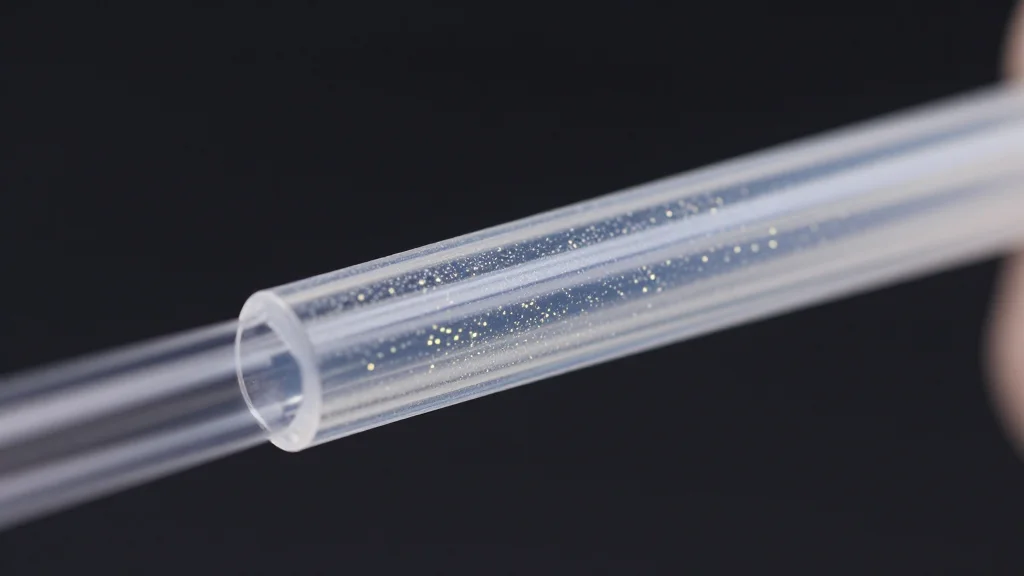
Enhanced Mechanical Strength and Controlled Degradation of PLA/ZnO Nanoparticle Composites for Biodegradable Implants
Why It Matters
The enhanced strength and tunable degradation of PLA/ZnO composites address critical performance gaps in resorbable medical devices, potentially reducing revision surgeries and expanding implant applications.
Key Takeaways
- •PLA/ZnO nanosphere composites achieve 25.20 MPa tensile strength
- •Nanorod‑filled PLA shows slightly lower strength at 22.98 MPa
- •ZnO addition speeds PLA degradation to up to 13.48 %
- •Both composites exhibit no cytotoxic effects in vitro
Pulse Analysis
Polylactic acid (PLA) has become a cornerstone of biodegradable medical devices because of its biocompatibility and FDA‑approved status. However, its relatively low mechanical strength and slow, unpredictable degradation limit use in load‑bearing implants such as orthopedic screws or cardiovascular scaffolds. Adding zinc oxide (ZnO) nanoparticles offers a dual advantage: ZnO’s inherent antimicrobial properties and its ability to act as a reinforcing filler, improving stiffness without compromising the polymer’s inherent bio‑resorbability.
The recent study compared two ZnO morphologies—nanospheres and nanorods—embedded in a PLA matrix. Energy‑dispersive X‑ray spectroscopy and X‑ray diffraction confirmed uniform dispersion, while tensile testing demonstrated that nanosphere‑filled composites reach 25.20 MPa, surpassing the nanorod version’s 22.98 MPa. Degradation profiling showed a pronounced acceleration: nanosphere composites degraded 13.48 % over the test period, nanorods 9.97 %, versus only 2.97 % for pure PLA. Importantly, cell viability assays indicated no toxic response, confirming that ZnO incorporation does not jeopardize biocompatibility.
These findings have immediate relevance for manufacturers of resorbable implants. Enhanced strength enables thinner, lighter devices that can still meet load‑bearing requirements, while controllable degradation allows clinicians to tailor implant lifespan to specific healing timelines. The antimicrobial edge of ZnO further mitigates infection risk, a persistent challenge in implant surgery. As the market for biodegradable orthopedic and cardiovascular devices expands, PLA/ZnO composites could become a preferred material platform, prompting further investment in scalable production and regulatory pathways.
Enhanced Mechanical Strength and Controlled Degradation of PLA/ZnO Nanoparticle Composites for Biodegradable Implants
Comments
Want to join the conversation?
Loading comments...