Enhancing the Chemical Reactivity of Graphene Through Substrate Engineering
Why It Matters
Enhanced graphene reactivity expands its utility across high‑value sectors, accelerating commercialization of functionalized graphene products.
Key Takeaways
- •Strain from nanoparticles or polymers raises graphene’s covalent functionalization rate
- •Metal crystal orientation‑dependent charge transfer boosts graphene’s chemical activity
- •Oxide‑induced charge puddles increase reactivity; alkyl layers diminish it
- •Substrate‑engineered graphene shows promise for next‑gen optoelectronic devices
Pulse Analysis
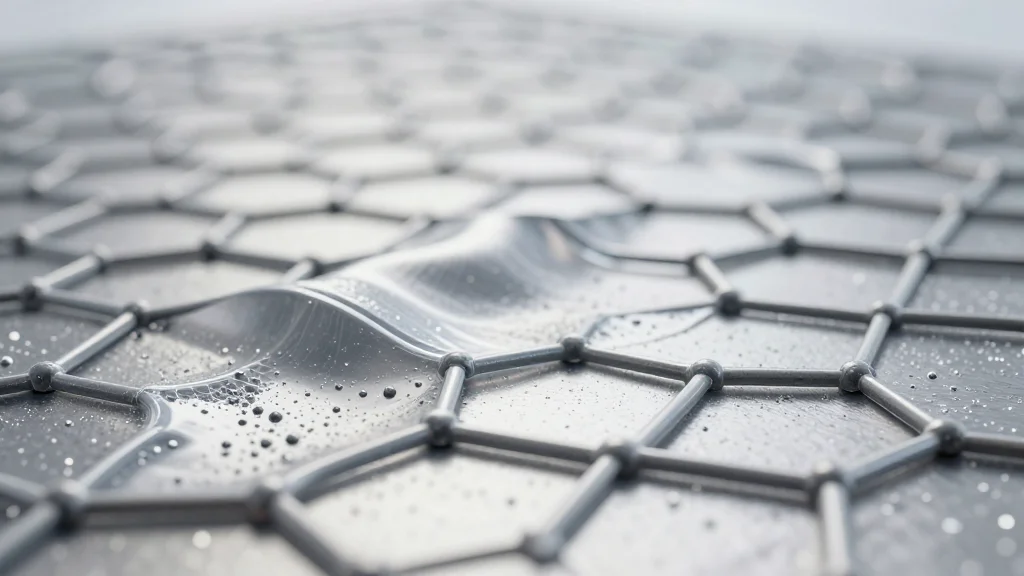
Substrate engineering has emerged as a powerful lever to overcome graphene’s intrinsic chemical inertness. By deliberately imposing mechanical strain—through nanoparticle arrays, metal substrates with specific crystal facets, or elastomeric polymers—researchers can distort the carbon lattice, opening up reactive sites that readily engage in covalent bonding. Parallelly, charge doping strategies such as orbital hybridization with transition metals or the creation of charge puddles on oxide surfaces inject electrons or holes, further lowering activation barriers for functionalization reactions. Together, these approaches provide a tunable toolkit for tailoring graphene’s surface chemistry without compromising its exceptional electronic properties.
The ability to modulate graphene’s reactivity has direct implications for several high‑growth markets. In optoelectronics, functional groups introduced via strained or doped substrates enable precise band‑gap engineering, paving the way for flexible photodetectors and transparent electrodes. Biomedical applications benefit from covalently attached biomolecules that improve biocompatibility and sensor specificity. Environmental and energy sectors see gains as functionalized graphene excels in catalysis, pollutant adsorption, and battery electrode design. By aligning substrate‑driven chemistry with end‑use performance metrics, companies can accelerate product development cycles and differentiate offerings in competitive landscapes.
Despite the promise, challenges remain in scaling substrate‑engineered processes. Uniform strain distribution across wafer‑scale graphene and reproducible charge‑doping levels demand advanced deposition and patterning techniques. Moreover, integrating these engineered layers into existing manufacturing lines requires compatibility with standard lithography and transfer methods. Ongoing research focuses on in‑situ characterization tools—such as Raman mapping and scanning probe microscopy—to monitor reactivity gradients in real time. As these hurdles are addressed, substrate‑engineered graphene is poised to transition from laboratory curiosity to a cornerstone material for next‑generation technologies.
Enhancing the Chemical Reactivity of Graphene through Substrate Engineering
Comments
Want to join the conversation?
Loading comments...