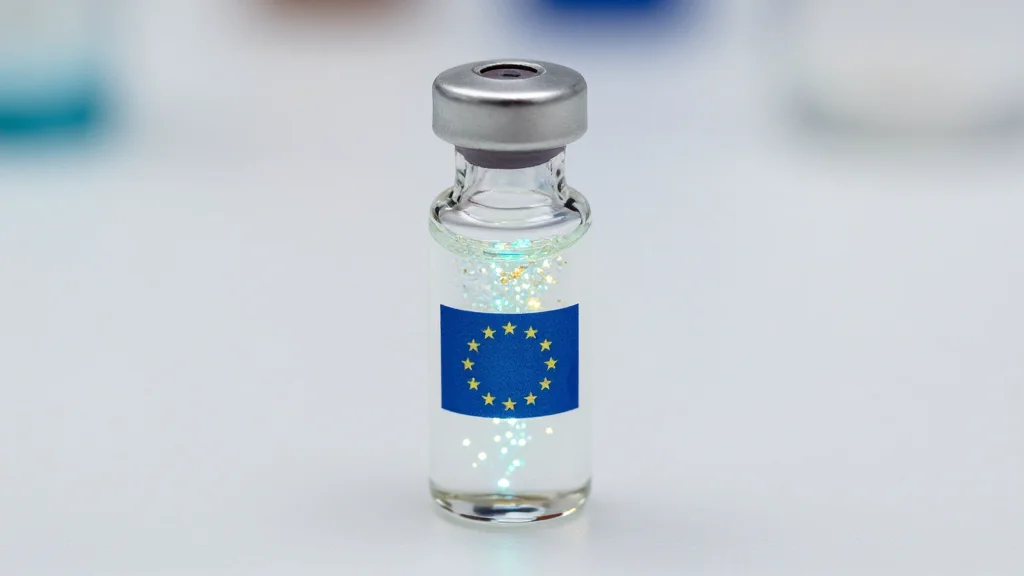
EU Hands Over Advanced Materials Advice to Commissioner Zaharieva, Spotlighting Nanotech Policy

Why It Matters
The EU’s Advanced Materials Act could become the most comprehensive regulatory framework for nanotechnology worldwide, influencing global standards for safety, sustainability and market access. By aligning research funding, regulatory pathways and industrial strategy, Europe seeks to reduce reliance on external supply chains for critical nanomaterials, a move that could reshape trade flows and geopolitical leverage. For nanotech startups and established firms alike, the Act promises clearer rules and faster market entry, potentially unlocking billions in investment and accelerating the deployment of nanomaterial‑enabled solutions in energy, health and digital infrastructure. Conversely, any delays or overly restrictive provisions could push innovators toward more permissive jurisdictions, weakening Europe’s competitive edge.
Key Takeaways
- •April 22, 2026: Scientific Advice Mechanism hands over advanced materials advice to Commissioner Ekaterina Zaharieva
- •Two key documents released: SAPEA Evidence Review Report and GCSA Scientific Opinion
- •Proposed €1.2 billion Horizon Europe funding for nanotech research
- •Fast‑track nanomaterial approval could cut regulatory timelines by up to 30 %
- •Advanced Materials Act expected to be debated in EU Parliament and Council in late 2026
Pulse Analysis
Europe’s decision to embed nanotechnology within a broader Advanced Materials Act reflects a strategic pivot from fragmented, sector‑specific regulations to a holistic, technology‑driven approach. Historically, EU nanotech policy has been cautious, emphasizing precautionary principles after early safety concerns. The new framework, however, signals confidence that rigorous scientific assessment can coexist with accelerated commercialization. By coupling fast‑track approval mechanisms with substantial Horizon Europe funding, the Commission aims to close the innovation gap that has traditionally favored the United States and China, where market‑driven pathways dominate.
The policy also addresses a critical supply‑chain vulnerability: many high‑performance nanomaterials—such as rare‑earth‑free catalysts and graphene‑based conductors—are currently sourced from outside Europe. By fostering domestic R&D and scaling up production through the proposed European Innovation Hub, the EU hopes to secure a self‑sufficient pipeline for next‑generation technologies. This could have downstream effects on sectors like automotive electrification and quantum computing, where nanomaterials are essential.
Nevertheless, the success of the Advanced Materials Act will hinge on the Commission’s ability to reconcile divergent national interests. Member states with strong nanotech clusters (e.g., Germany, France, the Netherlands) are likely to champion rapid implementation, while others may prioritize stringent safety checks. The upcoming public consultation will be a litmus test for stakeholder alignment. If the EU can deliver a balanced, transparent regime, it may set a global benchmark that other regions emulate, reinforcing Europe’s claim to strategic autonomy in the nanotech era.
EU Hands Over Advanced Materials Advice to Commissioner Zaharieva, Spotlighting Nanotech Policy
Comments
Want to join the conversation?
Loading comments...