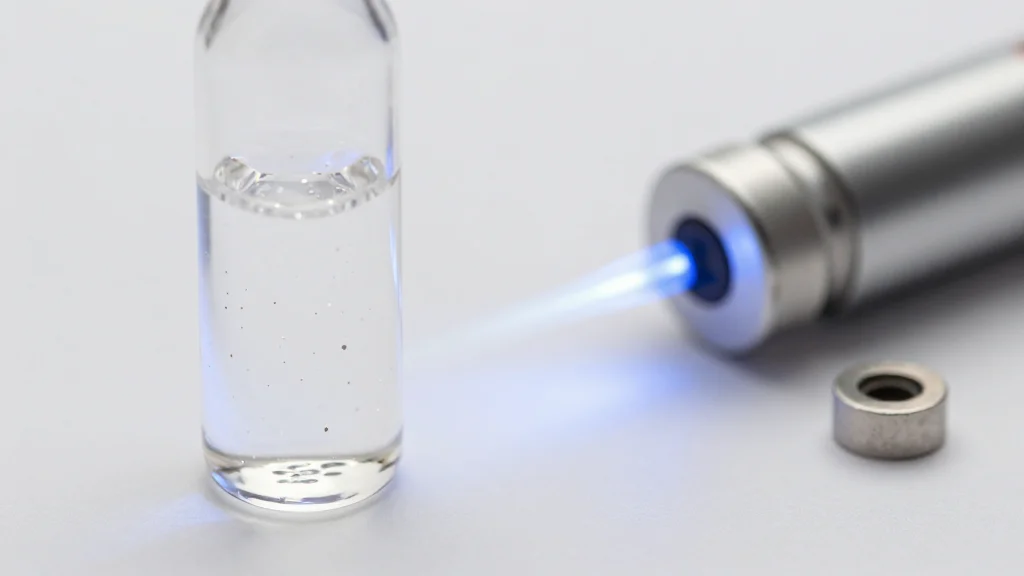
External Stimuli‐Activable Single‐Atom Nanozymes for Bioapplications
Why It Matters
Stimuli‑activable SANs promise enzyme‑level specificity with controllable activity, opening new pathways for precision medicine and advanced diagnostics. Their ability to boost catalytic efficiency on command could accelerate the adoption of nanozyme‑based therapeutics across the biotech sector.
Key Takeaways
- •Single-atom nanozymes expose 100% of metal active sites.
- •Light, ultrasound, magnetic fields tune SAN electronic structures.
- •Stimuli activation boosts reactive oxygen species generation for cancer therapy.
- •SANs enable ultrasensitive biosensors with rapid response times.
- •Challenges include scalable synthesis and precise stimulus control.
Pulse Analysis
Single‑atom nanozymes represent a paradigm shift in catalytic science, marrying the atom‑level precision of heterogeneous catalysts with the selectivity of natural enzymes. By anchoring isolated metal atoms on tailored supports, SANs achieve maximal active‑site exposure, eliminating the diffusion barriers that plague bulk nanomaterials. This structural advantage, however, only unlocks its full potential when paired with external triggers that can modulate the electronic environment in real time, a concept that is rapidly gaining traction in biomedical research.
When illuminated, subjected to ultrasound, or placed within a magnetic field, SANs undergo rapid changes in charge distribution and surface energy. These alterations accelerate electron transfer to substrates, intensify reactive oxygen species production, and enable spatially resolved activation—critical for targeting tumor microenvironments without harming surrounding tissue. Recent studies have leveraged photo‑activated SANs for on‑demand tumor ablation, while ultrasound‑responsive variants have powered deep‑tissue biosensors that report biomarker fluctuations within seconds. The versatility of stimulus‑driven catalysis thus expands the therapeutic window and improves diagnostic sensitivity.
Despite the promise, commercializing stimuli‑activable SANs faces practical obstacles. Large‑scale synthesis must preserve atomic dispersion while remaining cost‑effective, and integrating reliable stimulus delivery systems into clinical workflows demands rigorous safety validation. Nonetheless, the convergence of nanomaterial engineering, photonics, and medical imaging positions SANs at the forefront of next‑generation biotech solutions. Investors and R&D teams are watching closely as breakthroughs in scalable production and multifunctional device design could translate into a new class of smart therapeutics and point‑of‑care diagnostics.
External Stimuli‐Activable Single‐Atom Nanozymes for Bioapplications
Comments
Want to join the conversation?
Loading comments...