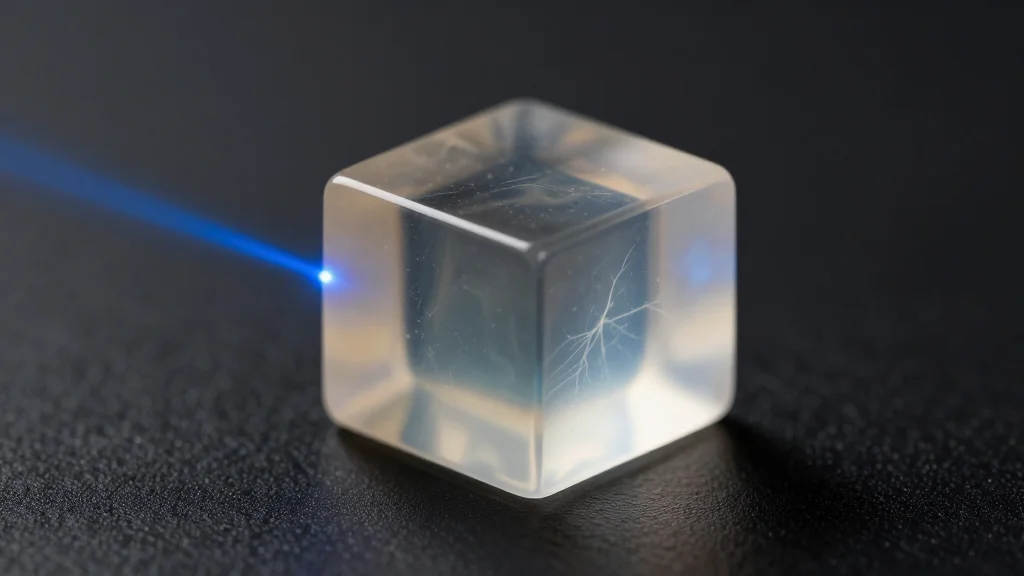
FAU Researchers Unveil Light‑Responsive Polymer That Acts Like Artificial Muscle

Why It Matters
The FAU breakthrough demonstrates that molecular machines can be assembled into bulk materials that perform useful work, a long‑standing goal of nanotechnology. By converting light energy directly into mechanical motion, the approach sidesteps the inefficiencies and safety concerns of high‑voltage electro‑actuators, potentially accelerating the adoption of soft‑robotic systems in manufacturing, healthcare and consumer devices. Moreover, the programmable nature of the polymer suggests a new class of adaptive materials that can be reconfigured on the fly, expanding design possibilities for engineers. If the technology can be scaled and made cost‑effective, it could reshape markets ranging from prosthetic limbs—where lightweight, low‑power actuation is essential—to micro‑assembly lines that require precise, wireless control. The ability to embed actuation directly into structural components also opens pathways for self‑healing or shape‑changing architecture, aligning with emerging trends in responsive infrastructure.
Key Takeaways
- •FAU team led by Prof. Dr. Henry Dube linked hundreds of thousands of molecular machines into a 3D polymer.
- •Material changes shape, stiffness and color when exposed to specific light wavelengths.
- •Demonstrated observable mechanical work by lifting a small weight using light alone.
- •Potential applications include soft‑robotic actuators, biomedical implants and reconfigurable displays.
- •Next steps: prototype soft‑robotic arm integration and biocompatibility testing.
Pulse Analysis
The FAU achievement represents a pivotal shift from proof‑of‑concept nanomachines to functional, bulk‑scale actuators. Historically, molecular machines have been celebrated for their elegance but criticized for lacking practical output. By aggregating these components into a polymer that can generate measurable force, the researchers have addressed the power‑density gap that has limited commercial interest. This mirrors the trajectory of early semiconductor research, where individual transistors gave way to integrated circuits that could perform real work.
From a market perspective, the timing is favorable. Soft robotics is projected to exceed $10 billion in annual revenue by 2030, driven by demand for compliant grippers, wearable exosuits and minimally invasive surgical tools. Light‑controlled actuation could carve out a niche within this growth, especially for applications where electrical isolation is paramount. However, challenges remain: scaling the synthesis of the polymer, ensuring uniform light penetration in thicker structures, and establishing long‑term durability under repeated cycling.
Looking ahead, the most compelling question is whether the technology can transition from laboratory demonstrations to manufacturable components. If FAU can partner with materials manufacturers to produce the polymer at scale and integrate it with existing soft‑robotic platforms, the nanotech sector could see a new wave of investment. Conversely, if the light‑control mechanism proves too energy‑intensive or the material degrades under physiological conditions, the promise may remain confined to niche research labs. Stakeholders should monitor upcoming pilot projects and regulatory filings, as they will signal the material’s readiness for real‑world deployment.
FAU Researchers Unveil Light‑Responsive Polymer That Acts Like Artificial Muscle
Comments
Want to join the conversation?
Loading comments...