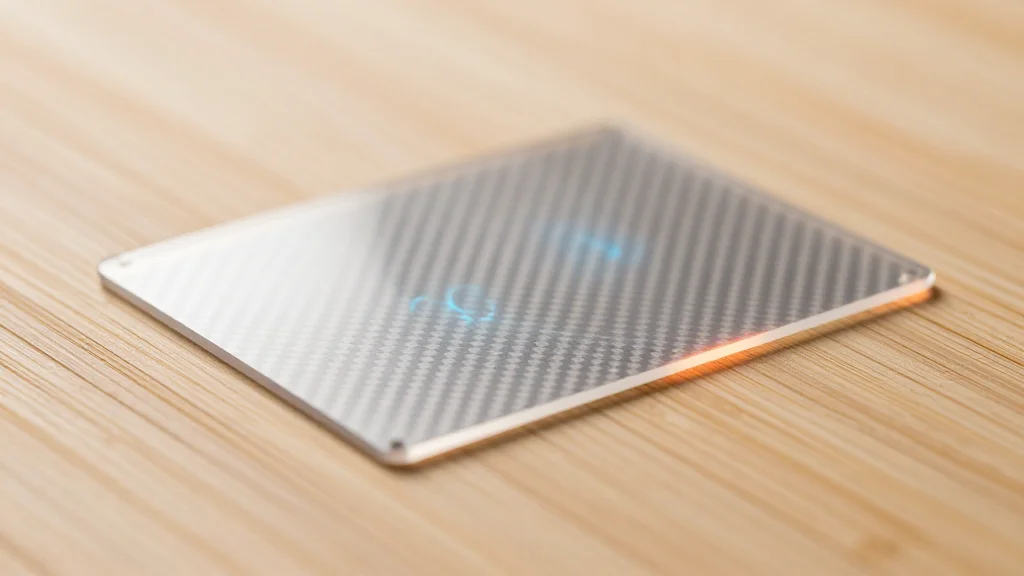
FeMn‐MOF@Bamboo Carbon Synergy: Lightweight Composites for Versatile and High‐Efficiency Electromagnetic Protection
Why It Matters
The breakthrough offers a dramatically thinner, lighter shield for 5G and IoT devices, reducing material costs while adding heating functionality, a rare combination in the EMI‑shielding market.
Key Takeaways
- •46.3 dB EMI shielding achieved at only 0.18 mm thickness.
- •Normalized SSE/t reaches 9,166.7 dB·cm²·g⁻¹, among highest reported.
- •Bamboo-derived carbon skeleton provides hierarchical porosity and conductivity.
- •FeMn magnetic nanocages create abundant EM coupling networks.
- •1 V drives surface temperature to 65.4 °C for heating applications.
Pulse Analysis
The rapid rollout of 5G and the proliferation of connected electronics have intensified demand for electromagnetic interference (EMI) shielding that does not add bulk or weight. Traditional metal foils and alloys provide protection but are heavy, costly, and difficult to integrate into modern form factors. Carbon‑based composites, especially those derived from renewable feedstocks, are emerging as viable alternatives, offering conductivity, corrosion resistance, and design flexibility.
In the new FeMn@C/BC composite, researchers leveraged bamboo’s natural cellular architecture as a carbon scaffold, then in‑situ grew iron‑manganese Prussian‑blue analogue nanocages that were carbonized into magnetic FeMn carbon cages. This hierarchical porous network creates abundant electromagnetic coupling pathways, delivering an unprecedented 46.3 dB shielding effectiveness at just 0.18 mm thickness and a normalized SSE/t of 9,166.7 dB·cm²·g⁻¹—metrics that outperform many existing lightweight shields. The hot‑pressing and carbonization steps also preserve structural integrity, making the material robust for industrial handling.
Beyond shielding, the composite’s electro‑thermal capability—reaching 65.4 °C with a 1 V input—opens doors for integrated heating in smart building panels, architectural décor, and portable devices. By coupling EMI protection with low‑power heating, manufacturers can consolidate components, lower assembly costs, and improve energy efficiency. The use of bamboo, a fast‑growing, renewable resource, further enhances the sustainability profile, positioning FeMn@C/BC as a compelling candidate for next‑generation, eco‑friendly electronic enclosures and interior design solutions.
FeMn‐MOF@Bamboo Carbon Synergy: Lightweight Composites for Versatile and High‐Efficiency Electromagnetic Protection
Comments
Want to join the conversation?
Loading comments...