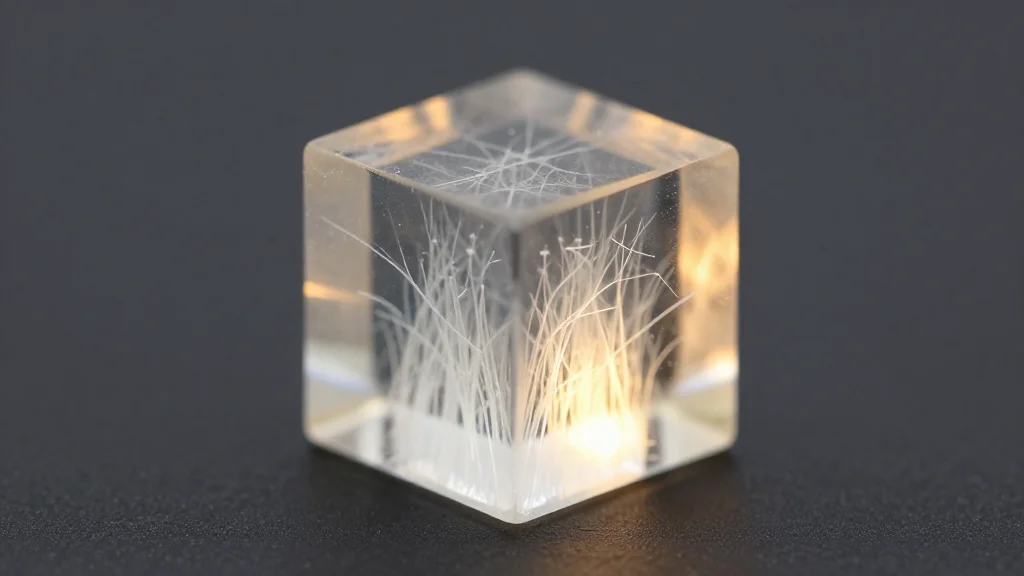
Georgia Tech and NCKU Show Alumina Nanowires Boost TIM Conductivity 452% Over Neat Epoxy

Why It Matters
Thermal management is the most pressing barrier to scaling 2.5D/3D semiconductor packages, where dense interconnects generate heat that can degrade performance and reliability. By delivering a 452% conductivity boost without sacrificing the processability of epoxy TIMs, the ULANW approach offers a practical route to keep chips cooler while maintaining mechanical integrity. This could enable higher power densities in AI accelerators, data‑center processors, and emerging quantum‑control chips, extending the economic life of advanced nodes. Beyond immediate performance gains, the technology showcases how nanostructured fillers can rewrite the rules of composite design. If the scalable fabrication claims hold, the industry may see a broader shift toward nanowire‑based additives across thermal, electrical, and mechanical domains, accelerating the adoption of nanotech solutions in mainstream semiconductor manufacturing.
Key Takeaways
- •Researchers at Georgia Tech and NCKU report 0.78 W/(m·K) thermal conductivity at 28 wt % Al₂O₃ nanowire loading
- •The composite delivers a 72.1% improvement over particle‑filled Al₂O₃ TIMs and 452.6% versus neat epoxy
- •ULANWs feature millimeter‑scale lengths and 100–1,000 nm diameters, giving an aspect ratio of ~1,000
- •Vertically oriented nanowire sheets lower junction density, enabling continuity‑dominated phonon transport
- •Potential market impact: up to $200 million of new TIM spend within three years as data‑center and AI chip makers adopt the technology
Pulse Analysis
The ULANW breakthrough arrives at a moment when the semiconductor industry is wrestling with thermal ceilings that threaten the economics of advanced packaging. Historically, engineers have relied on high‑loading ceramic fillers to push conductivity, but the resulting viscosity spikes force costly redesigns of deposition equipment. By achieving comparable or superior conductivity with a modest 28 wt % loading, the nanowire composite sidesteps those trade‑offs, positioning itself as a drop‑in replacement for existing epoxy TIM formulations.
From a competitive standpoint, the technology pits traditional ceramic‑particle suppliers against a new class of nanomaterial providers. Companies that have built supply chains around Al₂O₃ powders will need to either acquire nanowire production capabilities or partner with specialized manufacturers. The claim of a scalable, roll‑to‑roll process could democratize access, but the cost curve remains uncertain. Early adopters—likely large‑scale packaging houses such as ASE Technology and Amkor—will test whether the performance gains justify any premium.
Looking ahead, the real test will be integration at volume. If the nanowire composites can survive the thermal cycling and mechanical stresses of high‑volume manufacturing without degradation, they could become the de‑facto standard for next‑generation TIMs. Moreover, the hierarchical design philosophy—combining random dispersion with vertically aligned sheets—offers a template for hybrid fillers that blend thermal, electrical, and mechanical functions. In a market where every milliwatt of heat matters, the ability to engineer composites at the nanoscale could become a decisive competitive advantage, reshaping the supply chain for thermal management across the entire electronics ecosystem.
Georgia Tech and NCKU Show Alumina Nanowires Boost TIM Conductivity 452% Over Neat Epoxy
Comments
Want to join the conversation?
Loading comments...