German Researchers Unveil Heat‑Resistant Polyamide That Emits White Light Dye‑Free

Why It Matters
The ability to generate white light directly from a polymer matrix removes a major bottleneck in the production of sustainable lighting devices. By forgoing rare‑earth phosphors and organic dyes, manufacturers can lower material costs, reduce hazardous waste, and simplify supply chains—factors that are increasingly scrutinized by regulators and environmentally conscious consumers. Beyond lighting, the material’s high thermal stability expands its applicability to sectors where heat is a limiting factor, such as high‑power laser systems, automotive headlamps, and flexible wearables. The convergence of structural strength, heat resistance, and photonic functionality could spur a new wave of multifunctional products that blend mechanical and optical performance in a single component.
Key Takeaways
- •German team replaces flexible polyamide backbones with rigid diamantane units
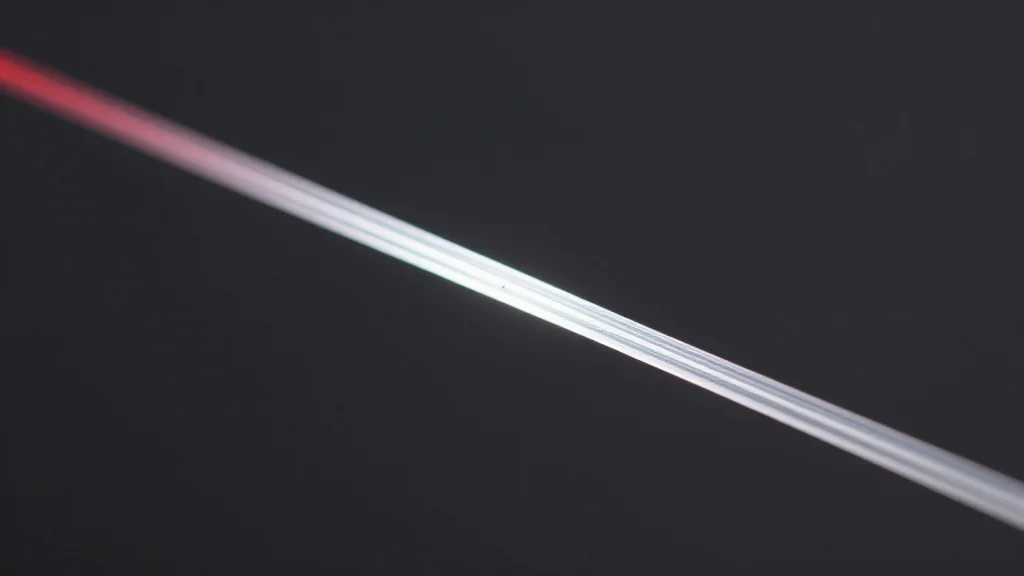
- •Material emits broad‑spectrum white light under near‑infrared laser without dyes or dopants
- •Thermal stability exceeds 400 °C, outperforming nylon‑6 and nylon‑66
- •Eliminates need for rare‑earth phosphors and organic dyes, reducing cost and environmental impact
- •Prototype LED modules and automotive applications slated for testing later in 2026
Pulse Analysis
The breakthrough reflects a broader shift toward integrating photonic functions directly into structural polymers, a trend that could disrupt the traditional separation between mechanical substrates and light‑emitting layers. Historically, LEDs have depended on inorganic semiconductors and external phosphor coatings, creating complex, multi‑material assemblies. By embedding luminescence at the molecular level, the new polyamide sidesteps these interfaces, potentially improving reliability and enabling thinner form factors.
From a market perspective, the timing is advantageous. Global LED lighting revenue is projected to exceed $120 billion by 2028, while the wearable electronics segment is expected to surpass $70 billion. Both markets are under pressure to reduce reliance on scarce rare‑earth elements and to meet stricter sustainability standards. A polymer that can simultaneously serve as a structural component and a light source offers a compelling value proposition, especially for manufacturers seeking to differentiate through eco‑friendly design.
Looking ahead, the key challenges will be scaling the diamantane synthesis and integrating the polymer into existing manufacturing lines without compromising its optical purity. If the research team can demonstrate consistent performance in commercial‑scale prototypes, the technology could trigger a cascade of partnerships across automotive lighting, smart textiles, and consumer electronics, reshaping supply chains and prompting incumbents to reevaluate their material strategies.
German Researchers Unveil Heat‑Resistant Polyamide That Emits White Light Dye‑Free
Comments
Want to join the conversation?
Loading comments...