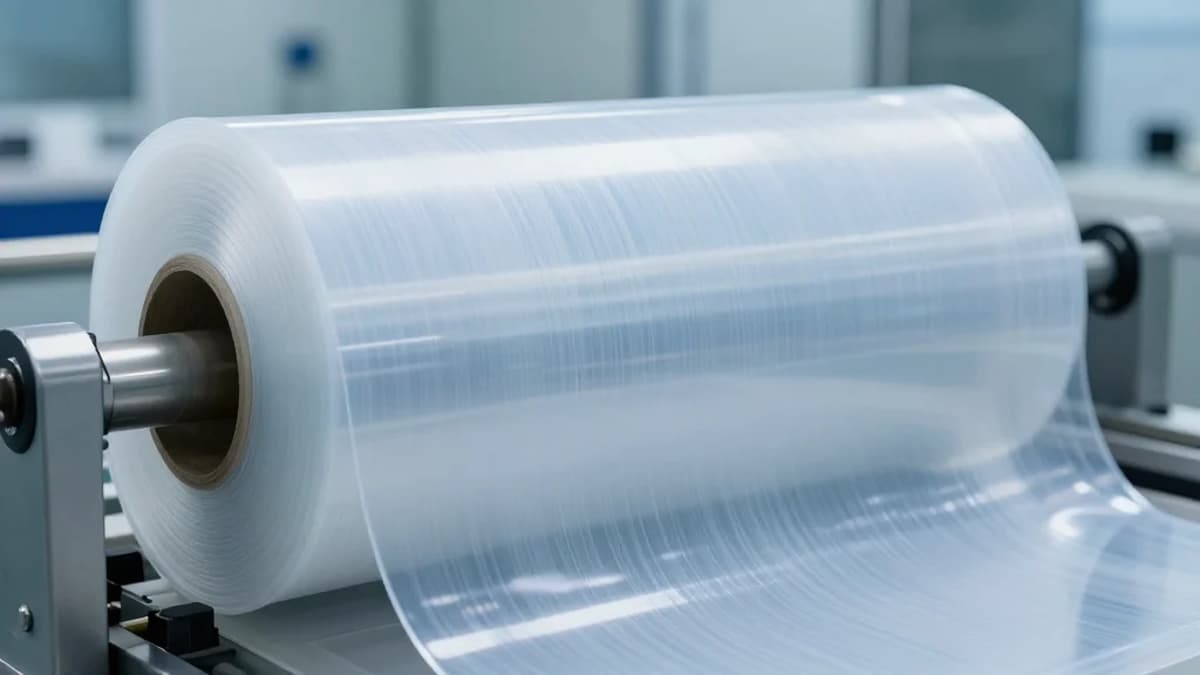
Graphene Square Completes Its Graphene Mass-Production Plant in Korea
•December 28, 2025
0
Why It Matters
Lower‑cost, high‑volume graphene films could accelerate commercialization of thermal‑management solutions, positioning Korea as a global supplier in a fast‑growing materials market.
Key Takeaways
- •First Korean plant for continuous large‑area graphene film
- •Production capacity 300,000 ㎡ annually, scaling to mass delivery 2026
- •Unit cost reduced to one‑sixth of pilot stage
- •Focus on heating, cooling, and thermal dissipation markets
- •Investment totals exceed 77 billion won across rounds
Pulse Analysis
The graphene industry has long been hampered by the gap between laboratory‑scale synthesis and true factory‑floor output. Graphene Square’s new plant leverages a proprietary chemical vapor deposition (CVD) process that runs continuously, a departure from the batch‑oriented pilots that dominate the market. This shift not only improves equipment utilization but also aligns with South Korea’s broader push to nurture advanced materials hubs, drawing on regional incentives and a skilled research ecosystem anchored at institutions like Seoul National University.
Cost dynamics are at the heart of graphene’s commercial promise. By spreading fixed overhead across a larger production footprint and automating logistics, inspection, and handling, Graphene Square claims a unit‑cost reduction to about one‑sixth of its pilot line. While price transmission to customers may lag due to certification and early‑stage demand constraints, the lowered cost barrier is expected to stimulate adoption in sectors where thermal performance is critical. Heating elements that emit uniform warmth and high‑efficiency heat spreaders for data centers exemplify applications where the economics can quickly become favorable.
Looking ahead, the plant’s 300,000 ㎡ annual capacity positions it to meet emerging demand from electronics, automotive, and renewable‑energy markets. Competitors worldwide are racing to scale their own CVD lines, but Graphene Square’s early mover advantage in Korea—combined with substantial Series B and pre‑IPO capital—provides a runway to refine yields and expand product portfolios. If the company can translate its cost advantages into competitive pricing, it could reshape supply chains, attract multinational OEMs, and cement Korea’s role as a pivotal node in the global graphene value chain.
Graphene Square completes its graphene mass-production plant in Korea
0
Comments
Want to join the conversation?
Loading comments...