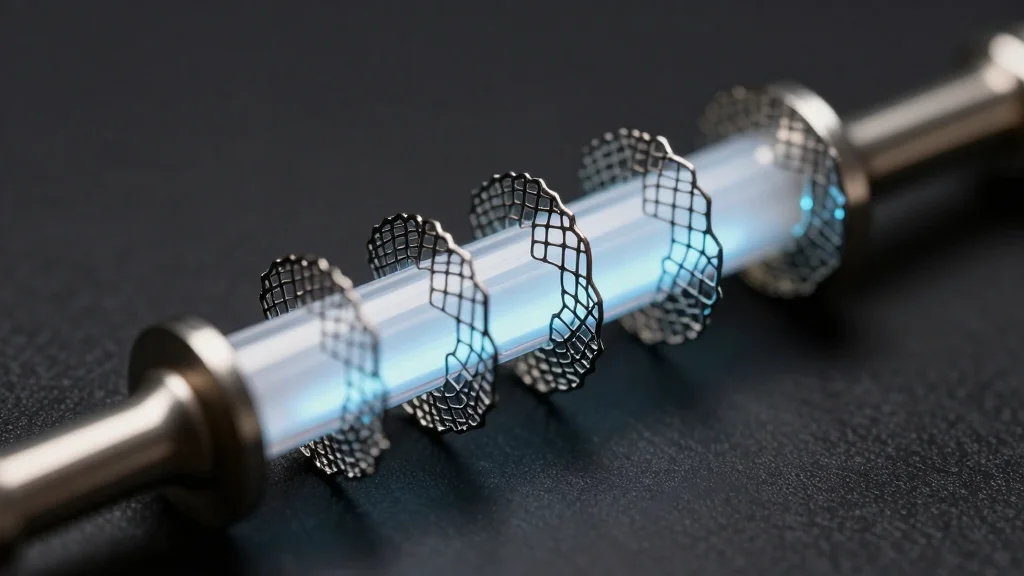
Graphene‑Enhanced Microtube Resonators Reach Q‑Factor of 2,008

Why It Matters
The new resonator design tackles three persistent hurdles in nanophotonics: footprint, optical loss, and electrical readout. By delivering a Q‑factor above 2,000 in a sub‑micron tube, the technology enables tighter frequency references essential for high‑precision timing in 5G/6G networks and emerging quantum processors. Its high photoresponsivity and polarization discrimination further broaden application spaces, from hyperspectral imaging to secure optical communication, where detecting subtle polarization changes can encode additional data streams. If the fabrication process can be industrialized, the lobe‑structured microtube could become a building block for heterogeneous integration, allowing silicon photonics, graphene electronics, and nanomechanical sensors to coexist on a single chip. This convergence would reduce system complexity, lower power consumption, and accelerate the development of ultra‑compact, high‑speed devices that are currently limited by planar resonator footprints.
Key Takeaways
- •Q‑factor of ~2,008 achieved via lobe‑shaped geometry in SiNx microtubes
- •Graphene integration yields 2.80 A W⁻¹ photoresponsivity
- •Polarization ratio of ~4.3 enables TE/TM mode discrimination
- •Design reduces resonator footprint compared with planar microrings
- •Team targets wafer‑scale production within 12‑18 months
Pulse Analysis
The lobe‑engineered microtube represents a strategic shift from planar to three‑dimensional resonator architectures, echoing the broader industry move toward volumetric integration to overcome lithographic scaling limits. Historically, high Q‑factors have been the domain of bulky whispering‑gallery resonators; achieving comparable performance in a rolled‑up nanomembrane suggests that nanomechanical strain engineering can rival traditional fabrication routes while delivering a dramatically smaller footprint.
From a market perspective, the convergence of graphene’s electrical conductivity with SiNx’s optical confinement could catalyze a new class of optoelectronic modules. Companies focused on data‑center photonics, such as Lumentum and Infinera, have long sought ways to embed detection and modulation directly into resonators to cut latency. The reported polarization sensitivity adds a multiplexing dimension that could be exploited for secure communication protocols, an area of growing interest for defense and telecom operators.
Looking ahead, the primary barrier will be manufacturing consistency. The self‑rolling process must reliably produce identical lobe dimensions across wafers, and graphene transfer must avoid contamination that would degrade Q‑factor. If these hurdles are cleared, the technology could underpin next‑generation timing chips for autonomous vehicles and edge AI, where nanosecond‑level stability translates directly into safety and performance gains.
Graphene‑Enhanced Microtube Resonators Reach Q‑Factor of 2,008
Comments
Want to join the conversation?
Loading comments...