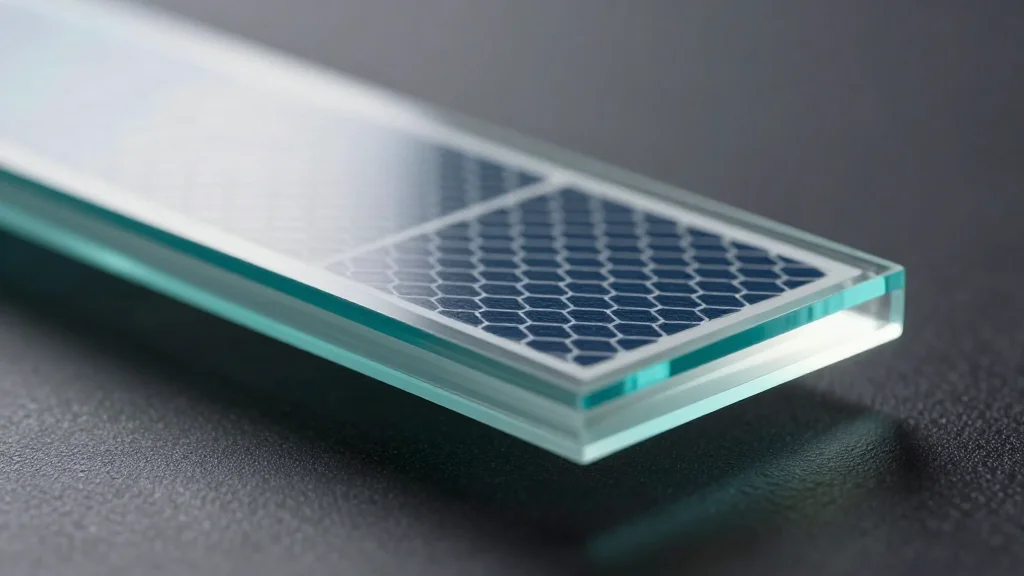
Graphene‑ITO Hybrid Electrodes Boost Nanoscale Current by 60% for Space Solar Cells

Why It Matters
Spacecraft rely on photovoltaic arrays as their primary power source, and any improvement in cell efficiency directly translates into reduced launch mass, lower cost, and greater mission flexibility. By addressing the brittleness and conductivity shortfalls of conventional ITO, graphene‑ITO hybrids could enable lighter, more resilient solar panels that survive the thermal cycling and radiation of orbit. This advancement also aligns with the growing ambition of lunar and Martian habitats, where in‑situ power generation will be critical. Beyond aerospace, the hybrid electrode concept could ripple into terrestrial applications that demand both high transparency and mechanical durability, such as flexible displays, smart windows, and wearable electronics. The study’s scalable fabrication approach suggests that the technology could be adopted across multiple industries, accelerating the commercialization of graphene‑based nanomaterials.
Key Takeaways
- •Graphene‑ITO hybrid electrodes raise nanoscale tunneling current by ~60% versus bare ITO
- •Current space solar cells achieve ~30% efficiency; hybrid electrodes aim to boost this figure
- •Fabrication uses cold‑wall CVD graphene transferred via thermal‑release tape onto 100 nm ITO glass
- •Hybrid electrodes promise lighter, more durable panels for spacecraft, reducing launch mass
- •Full solar‑cell performance testing and AM0 validation are pending
Pulse Analysis
The graphene‑ITO hybrid represents a strategic inflection point for the space‑photovoltaics market, which has been constrained by the trade‑off between electrode conductivity and mechanical robustness. Historically, the industry has relied on thick ITO layers to meet conductivity requirements, sacrificing weight and flexibility—critical parameters for launch economics. By inserting a monolayer of graphene, the researchers effectively decouple these constraints, leveraging graphene’s superior carrier mobility without compromising optical transparency.
From a market perspective, the timing is auspicious. NASA’s Artemis program, commercial lunar landers, and private ventures like SpaceX’s Starlink constellation are all scaling up power demands. A modest efficiency uplift could free up several hundred kilograms of mass per satellite, a non‑trivial saving when launch costs hover around $2,500 per kilogram. This creates a clear commercial incentive for aerospace OEMs to adopt the hybrid electrodes, provided the technology can be qualified for spaceflight.
Nevertheless, challenges remain. Graphene production at wafer scale still incurs high costs, and transfer processes can introduce defects that erode performance gains. The study’s reliance on a thermal‑release tape method is promising for scalability, but yield rates and defect densities must be quantified in a production environment. Moreover, the lack of full‑device testing means that system‑level benefits are still speculative. Investors and manufacturers will likely demand demonstrable power‑conversion improvements under AM0 conditions before committing to large‑scale integration.
If these hurdles are cleared, the graphene‑ITO hybrid could catalyze a broader shift toward nanomaterial‑enhanced aerospace components, spurring a new wave of funding for CVD graphene facilities and advanced thin‑film deposition lines. The ripple effect could also accelerate the adoption of graphene in other high‑performance sectors, reinforcing the material’s position as a cornerstone of next‑generation nanotechnology.
Graphene‑ITO Hybrid Electrodes Boost Nanoscale Current by 60% for Space Solar Cells
Comments
Want to join the conversation?
Loading comments...