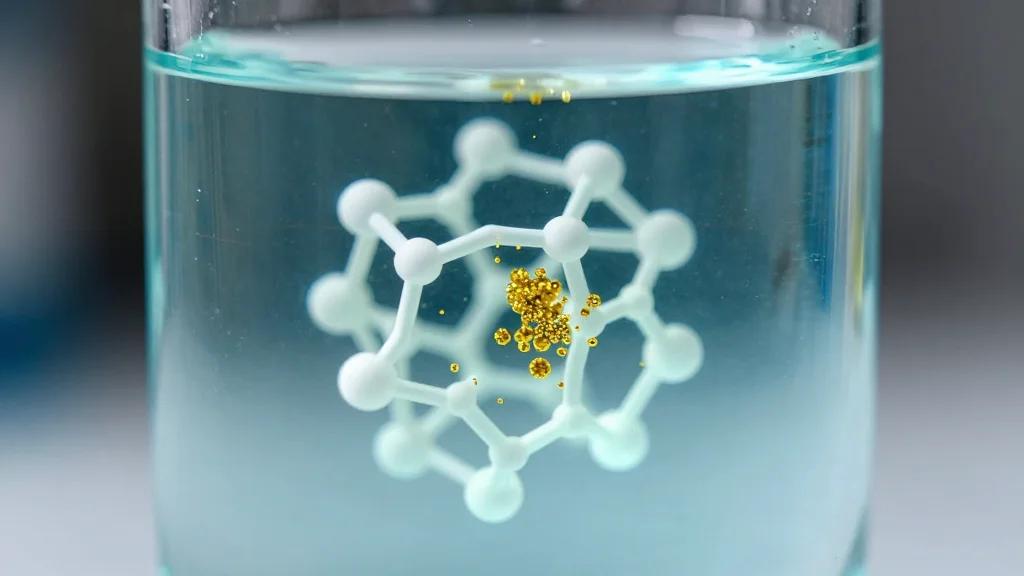
Hainan University’s COF Captures 99% of Gold From E‑Waste in Hours

Why It Matters
Recovering gold from electronic waste addresses two pressing global challenges: resource scarcity and environmental pollution. By offering a high‑efficiency, low‑energy alternative to traditional extraction, the COF could dramatically lower the carbon intensity of gold production and reduce hazardous waste streams associated with acid leaching and smelting. In addition, the ability to capture gold at near‑complete rates from mixed‑metal streams could make e‑waste recycling financially viable for a broader range of facilities, accelerating the transition toward a circular electronics economy. The breakthrough also showcases the power of nanomaterial design—specifically, covalent organic frameworks—to solve real‑world problems. As the industry seeks scalable, tunable platforms for selective metal capture, the Hainan University study provides a template for tailoring electronic structures to target other valuable or hazardous metals, potentially expanding the impact beyond gold to include palladium, platinum, or rare‑earth elements.
Key Takeaways
- •TAPP‑TZ‑OMe‑COF captures ~99.9% of gold from real CPU leachate in four hours under light.
- •Selectivity stems from methoxy‑enhanced electron density on thiazole units, favoring Au(III) binding.
- •Photocatalytic reduction converts Au(III) to metallic gold, enabling low‑energy recovery.
- •Global e‑waste projected to hold 1,568 tons of gold by 2025, 80‑100× ore concentrations.
- •Researchers aim for pilot‑plant trials in 2026 to validate industrial scalability.
Pulse Analysis
The Hainan University COF represents a paradigm shift in metal recovery, moving the field from batch‑wise chemical leaching toward continuous, light‑driven processes. Historically, gold extraction from e‑waste has been dominated by cyanide leaching or high‑temperature smelting, both of which carry significant environmental and safety liabilities. By leveraging a crystalline, organic scaffold that can be regenerated, the new approach aligns with the broader sustainability agenda driving the nanotech sector.
From a market perspective, the technology could compress the value chain for precious‑metal recyclers. Current profit margins are squeezed by the cost of reagents, energy, and waste treatment. A 99% recovery rate achieved in hours translates into higher throughput and lower operating expenses, potentially making smaller recyclers competitive against large, vertically integrated firms. Moreover, the modular nature of COFs means that the same synthetic platform could be adapted to capture other high‑value metals, creating a suite of nanomaterials that collectively address the full spectrum of e‑waste constituents.
Looking ahead, the key to commercial success will be scaling the COF synthesis without sacrificing the precise donor‑acceptor architecture that underpins its performance. If the team can demonstrate consistent batch quality and integrate the material into existing leaching circuits, the technology could attract investment from both the recycling sector and strategic metal producers seeking to diversify supply. In a world where electronic consumption is only accelerating, a high‑efficiency, low‑impact gold recovery method could become a cornerstone of responsible resource stewardship.
Hainan University’s COF Captures 99% of Gold from E‑Waste in Hours
Comments
Want to join the conversation?
Loading comments...