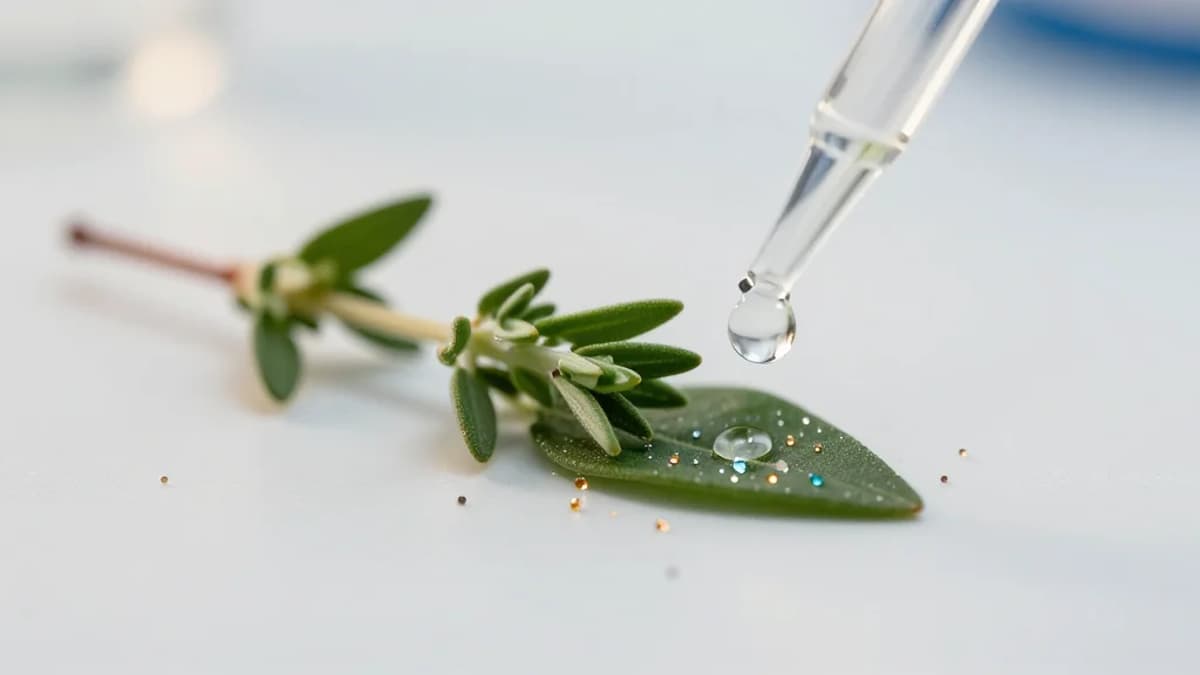
Harnessing the Medicinal Benefits of Thyme Extract via Nanodosing
•January 13, 2026
0
Why It Matters
Accurate nanodosing unlocks therapeutic potential of volatile botanicals while minimizing side effects, opening new revenue streams for nutraceutical and pharma markets.
Key Takeaways
- •Microfluidic chip creates thyme‑gelatin nanodroplets.
- •Encapsulation prevents evaporation and irritation.
- •Dose size controlled via oil flow rate.
- •Technique applicable to other botanical extracts.
- •AI vision could enable real‑time dosing control.
Pulse Analysis
The demand for plant‑derived actives has surged as consumers seek natural alternatives to synthetic drugs. Thyme, rich in thymol, carvacrol, and rosmarinic acid, offers anti‑inflammatory and antimicrobial benefits, yet its volatility and irritant potential have limited large‑scale adoption. Traditional extraction methods struggle to deliver consistent, low‑dose formulations, creating a gap that advanced delivery technologies aim to fill.
Microfluidic droplet generation addresses this gap by forming core‑shell nanodroplets where a thyme‑gelatin mixture is sheathed in a controllable oil layer. The technique, detailed in *Physics of Fluids*, leverages a dual‑jet chip that aligns aqueous and alginate streams before a perpendicular oil jet fragments them into uniform capsules. Because the oil flow rate dictates droplet diameter, manufacturers can fine‑tune the active dose without complex downstream processing. The resulting nanodoses are self‑regulating, reducing dose variability and protecting the volatile compounds from premature evaporation, which is critical for oral capsule development and food‑grade fortification.
Looking ahead, the platform’s versatility extends beyond thyme to a broad spectrum of aqueous botanical extracts, positioning it as a cornerstone for next‑generation nutraceuticals and precision medicines. Integration of machine‑vision and artificial‑intelligence algorithms promises real‑time monitoring and adaptive control, enhancing batch consistency and scaling potential. As regulatory bodies increasingly scrutinize botanical drug quality, such reproducible nanodosing methods could accelerate approvals and market entry, driving growth in the functional‑food and specialty‑pharma sectors.
Harnessing the medicinal benefits of thyme extract via nanodosing
0
Comments
Want to join the conversation?
Loading comments...