High-Purity Palladium Recovery Using Nanosheet Technology
•December 31, 2025
0
Why It Matters
The breakthrough cuts energy use and carbon emissions by up to 80%, offering a low‑cost, environmentally friendly solution to palladium supply insecurity and waste streams. It also creates a closed‑loop resource model that can lessen dependence on imported precious metals.
Key Takeaways
- •99.9% palladium recovery in 30 minutes
- •No toxic chemicals or electricity required
- •1,983 mg/g adsorption capacity
- •Retains ~90% efficiency after 10+ cycles
- •Recovered palladium serves as hydrogen evolution catalyst
Pulse Analysis
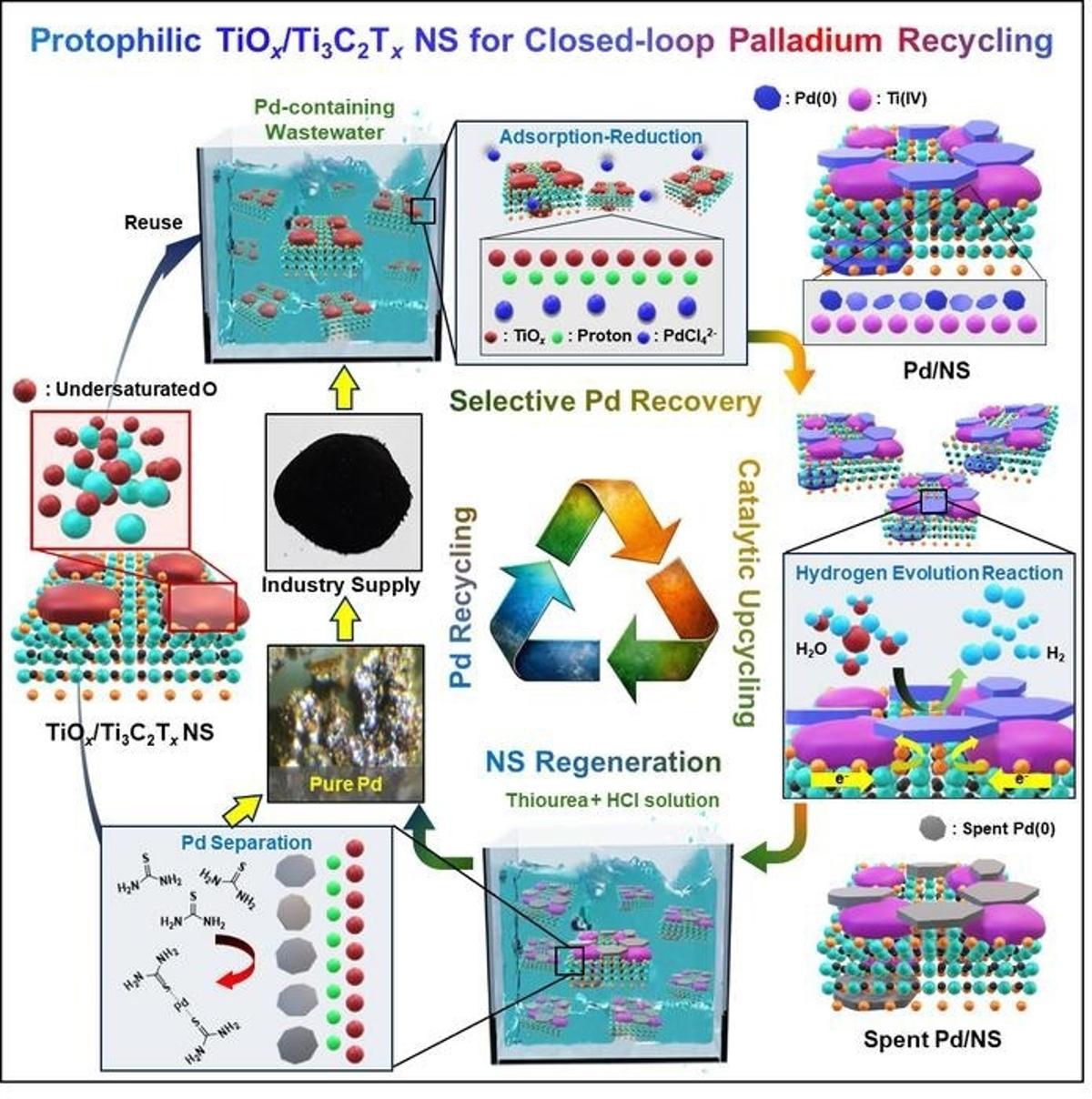
Palladium’s role as a high‑performance catalyst spans smartphones, semiconductor fabs, and hydrogen fuel cells, yet its supply is geographically concentrated and volatile. Traditional recovery relies on strong acids, high temperatures, and energy‑intensive steps that generate hazardous waste. KIST’s TiOₓ/Ti₃C₂Tₓ nanosheet platform disrupts this paradigm by operating at ambient conditions, eliminating the need for corrosive reagents or external power, and delivering near‑perfect metal purity. This aligns with growing corporate mandates for greener supply chains and regulatory pressure to reduce carbon footprints.
The nanocluster architecture features unsaturated oxygen sites that bind palladium ions with an adsorption capacity of 1,983 mg per gram of material. Within half an hour, the bound palladium reduces spontaneously to its metallic state, allowing filtration‑based separation that slashes processing time and energy demand. The system’s closed‑loop design enables the nanosheets to be regenerated and reused over ten cycles while maintaining roughly 90% of their original efficiency. By converting the recovered palladium into a hydrogen evolution catalyst, the technology creates a value‑adding loop that supports clean‑energy applications and reduces waste.
Commercially, the low‑cost, electricity‑free process promises rapid adoption across refining, petrochemical, automotive, and electronics recycling sectors. Its scalability could bolster Korea’s strategic autonomy in precious‑metal resources and inspire similar platforms for platinum, gold, and silver. As industries pursue circular‑economy models, the nanosheet technology offers a compelling blend of environmental stewardship, economic upside, and technical performance, positioning it as a potential standard for next‑generation metal recycling.
High-Purity Palladium Recovery Using Nanosheet Technology
0
Comments
Want to join the conversation?
Loading comments...