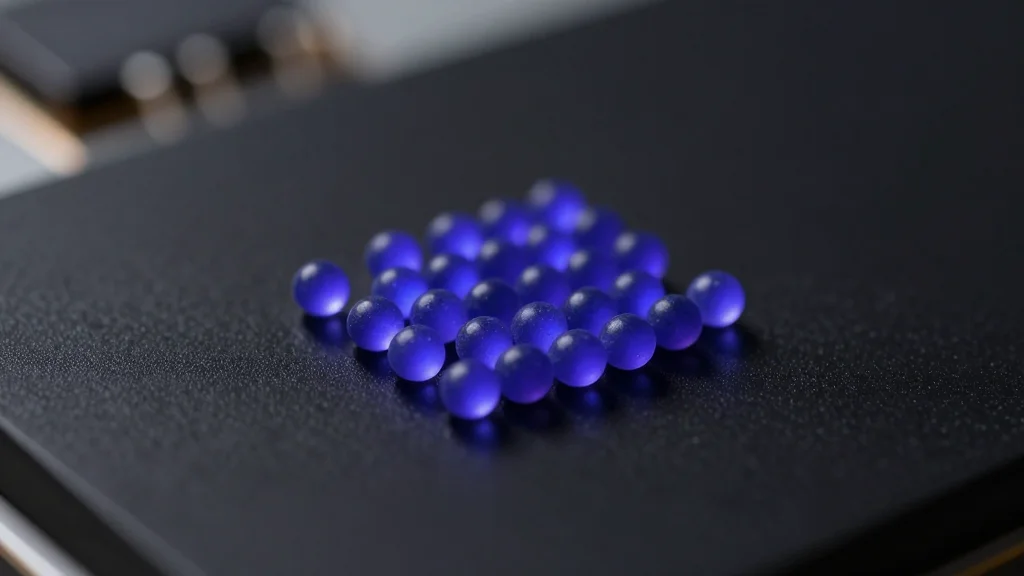
Highly Reproducible Synthesis of PbS Quantum Dots With In Situ Halide Passivation for Short‐Wave Infrared Imaging Chips
Why It Matters
The breakthrough lowers production variability and boosts detector efficiency, accelerating adoption of cost‑effective SWIR imaging in security, automotive, and medical markets.
Key Takeaways
- •Ethyl ziram enables self‑terminated PbS quantum dot growth
- •Synthesized QDs achieve >30% photoluminescence quantum yield
- •Dark current reduced by half compared to prior methods
- •External quantum efficiency exceeds 60% in SWIR detectors
- •Monolithic integration yields high‑resolution short‑wave infrared imaging
Pulse Analysis
The new synthesis route addresses a long‑standing bottleneck in colloidal quantum dot manufacturing: achieving consistent particle size while simultaneously protecting the surface from trap states. By employing ethyl ziram, a zinc‑based organometallic compound, researchers create a stable ligand environment that halts growth once the desired dimensions are reached. This self‑terminating behavior eliminates the need for precise timing or temperature ramps, dramatically improving batch‑to‑batch reproducibility—a critical factor for scaling quantum‑dot production to volume‑manufactured imaging modules.
Beyond manufacturing consistency, the resulting PbS quantum dots exhibit markedly enhanced optical properties. Photoluminescence quantum yields surpass 30%, a substantial improvement over conventional cation‑exchange methods, while the in‑situ halide passivation suppresses non‑radiative recombination. In photodetector tests, these dots deliver external quantum efficiencies above 60% across the 1.0‑1.6 µm SWIR window and dark currents that are roughly 50% lower than legacy designs. Such performance gains translate directly into higher signal‑to‑noise ratios and lower power consumption for imaging chips, making them attractive for battery‑operated platforms.
The technology’s impact extends to system‑level integration. By embedding the high‑quality PbS quantum dots directly onto read‑out integrated circuits, manufacturers can produce monolithic SWIR imaging chips without intermediate packaging steps. This streamlined architecture reduces cost, improves pixel density, and enables compact form factors suitable for autonomous vehicles, facial recognition, and point‑of‑care diagnostics. As demand for SWIR sensing grows, the combination of reproducible quantum‑dot synthesis and seamless chip integration positions this approach as a compelling alternative to traditional epitaxial detectors.
Highly Reproducible Synthesis of PbS Quantum Dots With In Situ Halide Passivation for Short‐Wave Infrared Imaging Chips
Comments
Want to join the conversation?
Loading comments...