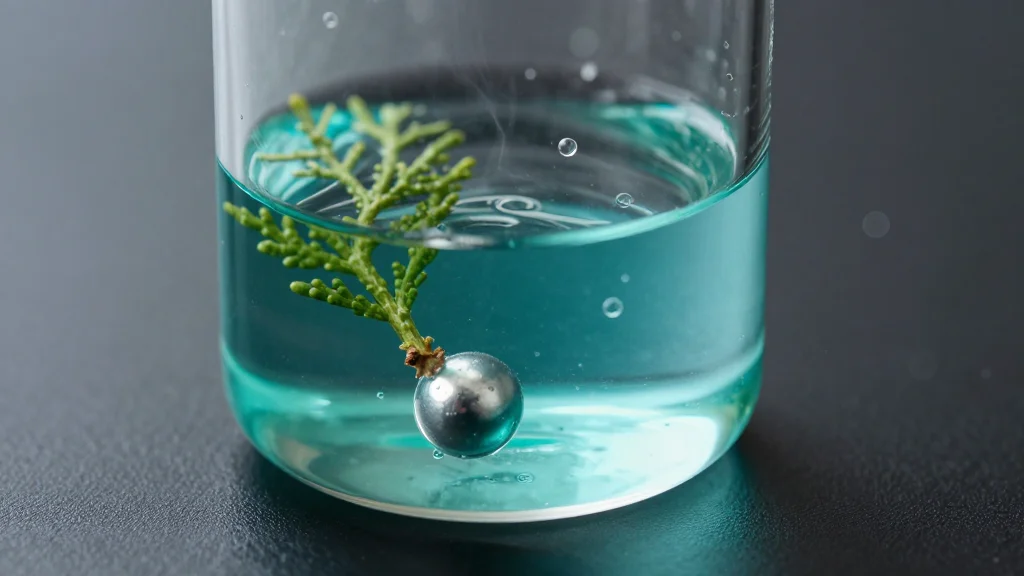
High‐Performance Electrocatalytic Carbon Dioxide Reduction to Formic Acid on Cypress‐Like Enzyme‐Antimony‐Bismuth Biohybrid
Why It Matters
The breakthrough demonstrates that enzyme‑metal biohybrids can overcome CO2 delivery and selectivity limits, moving electrocatalytic CO2 conversion closer to commercial viability and supporting decarbonization goals.
Key Takeaways
- •Enzyme layer concentrates CO2 directly on catalyst surface
- •Antimony modifies adsorption energy of H* and HCOO* intermediates
- •Achieves 93.41% Faradaic efficiency at –1.3 V
- •100% selectivity for formic acid, suppresses hydrogen evolution
Pulse Analysis
The integration of carbonic anhydrase with a metal‑based electrocatalyst marks a paradigm shift in CO2 reduction technology. By leveraging the enzyme’s natural ability to hydrate and bind CO2, the biohybrid creates a localized high‑concentration environment that accelerates the rate‑limiting step of CO2 delivery. This approach sidesteps the diffusion constraints that plague conventional solid‑state electrodes, offering a scalable pathway for higher current densities without sacrificing efficiency.
Antimony’s role in the catalyst architecture is equally critical. First‑principles DFT calculations reveal that antimony atoms adjust the binding strength of hydrogen (*H) and formate (*HCOO) intermediates, steering the reaction pathway toward formic acid while inhibiting the competing hydrogen evolution reaction. This fine‑tuning of surface energetics translates into a remarkable 93.41% Faradaic efficiency and absolute selectivity for HCOOH at a relatively low overpotential of –1.3 V, metrics that rival or exceed many state‑of‑the‑art metal catalysts.
Beyond the laboratory, the biohybrid concept holds promise for industrial CO2 utilization. Its enzyme‑driven CO2 capture could be paired with renewable electricity to produce formic acid—a versatile chemical feedstock and potential hydrogen carrier—at scale. The demonstrated suppression of side reactions reduces downstream separation costs, improving overall process economics. As policymakers and investors seek tangible routes to carbon neutrality, such enzyme‑metal hybrids could become a cornerstone of the emerging carbon‑negative value chain.
High‐Performance Electrocatalytic Carbon Dioxide Reduction to Formic Acid on Cypress‐Like Enzyme‐Antimony‐Bismuth Biohybrid
Comments
Want to join the conversation?
Loading comments...