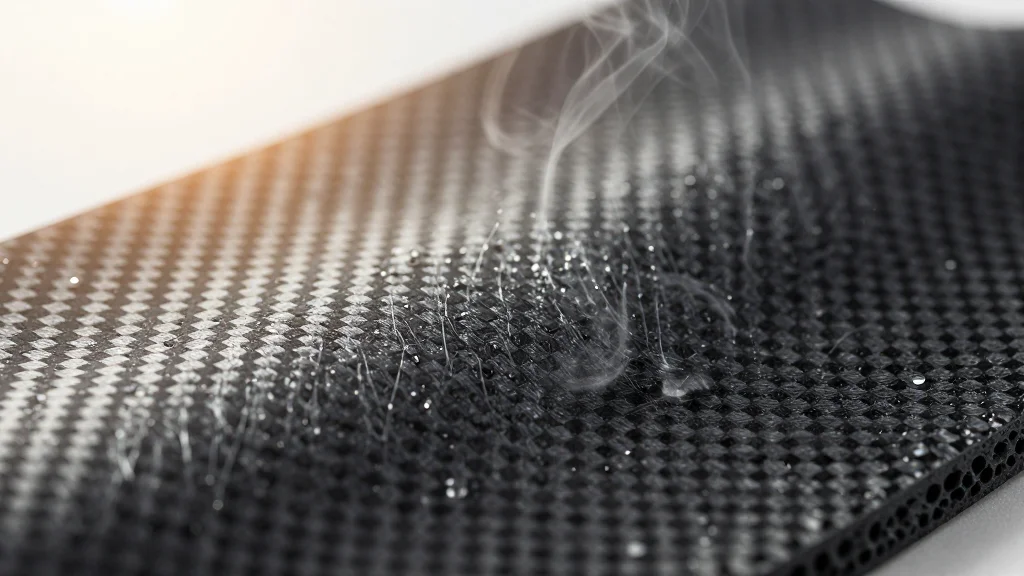
High‐Performance Flexible Porous Solar Evaporator via High Internal Phase Emulsion Templating Method With In Situ Polymerized Carboxylated Carbon Nanotubes
Why It Matters
The technology delivers high‑efficiency, flexible desalination that can be mass‑produced, lowering costs and expanding access to clean water in remote or off‑grid settings.
Key Takeaways
- •High internal phase emulsion templating creates flexible porous scaffold.
- •Carboxylated carbon nanotubes boost broadband light absorption.
- •Evaporation rate reaches 3.14 kg m⁻² h⁻¹ under 1 sun.
- •Salt can be removed by mechanical squeezing, enabling reuse.
- •Outdoor test shows 1.40 kg m⁻² h⁻¹ at 460 W m⁻² sunlight.
Pulse Analysis
Solar‑driven interfacial evaporation has emerged as a low‑energy pathway to desalinate seawater, yet commercial adoption stalls because many prototypes are rigid, difficult to manufacture, or lose efficiency at scale. The new study tackles these barriers by leveraging a high internal phase emulsion (HIPE) templating technique that yields a lightweight, flexible porous matrix. By copolymerizing styrene with 2‑ethylhexyl acrylate, the researchers obtain a polymer network that can be rolled or folded without compromising structural integrity, opening doors for modular water‑production units.
The inclusion of carboxylated carbon nanotubes (CCNTs) during in‑situ polymerization is a pivotal innovation. CCNTs form hydrogen bonds with the polymer, ensuring uniform dispersion and dramatically widening the absorption spectrum across the solar band. The resulting open‑cell architecture maximizes light scattering, provides thermal insulation, and creates capillary channels for continuous water supply. Performance metrics are compelling: under standard 1 sun illumination (≈1 kW m⁻²) the evaporator delivers 3.14 kg m⁻² h⁻¹, surpassing many rigid counterparts, while an outdoor trial at 460 W m⁻² still achieves 1.40 kg m⁻² h⁻¹.
From a market perspective, a flexible, high‑rate evaporator could reshape decentralized desalination, especially in off‑grid communities, disaster zones, and maritime platforms where conventional reverse‑osmosis plants are impractical. The ability to mechanically squeeze out accumulated salt eliminates the need for complex brine‑management systems, reducing operational costs and environmental footprint. Moreover, the HIPE‑based fabrication is compatible with roll‑to‑roll processing, suggesting a path to mass production at modest capital expense. As water scarcity intensifies, such scalable, energy‑efficient technologies are poised to become integral components of resilient water‑security strategies.
High‐Performance Flexible Porous Solar Evaporator via High Internal Phase Emulsion Templating Method With In Situ Polymerized Carboxylated Carbon Nanotubes
Comments
Want to join the conversation?
Loading comments...