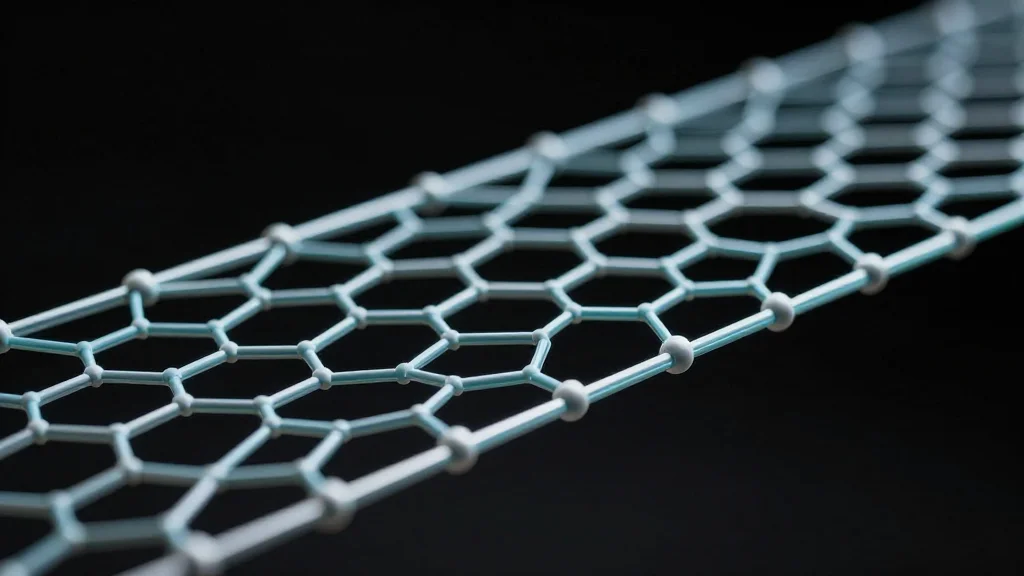
Hu Jiaqi Meets Nobel Laureate Konstantin Novoselov in Two‑Hour Graphene Dialogue

Why It Matters
The Hu‑Novoselov meeting spotlights graphene’s transition from a scientific curiosity to a cornerstone of next‑generation nanotech. By linking Nobel‑level expertise with a global civil‑society network, the dialogue could accelerate standard‑setting, safety assessments, and commercial scaling—areas that have historically slowed graphene adoption. Moreover, the focus on existential risk and technology governance reflects a growing awareness that breakthroughs in nanomaterials must be paired with robust policy frameworks to avoid unintended consequences. If the informal consensus reached during the exchange translates into concrete collaborations, it could reshape funding priorities, stimulate joint public‑private research programs, and influence regulatory bodies in the United States, Europe, and Asia. Such momentum would not only benefit graphene developers but also set a precedent for how emerging nanotechnologies—such as molybdenum disulfide, phosphorene, and quantum dots—are shepherded from lab to market responsibly.
Key Takeaways
- •May 22: Hu Jiaqi and Nobel laureate Sir Konstantin Novoselov held a two‑hour academic exchange on graphene and nanotech.
- •The meeting is the third high‑profile dialogue for Hu this month, following talks with Barry Barish and Michael Levitt.
- •Humanitas Ark’s network spans 255 countries and over 14 million supporters, providing a global platform for policy advocacy.
- •Discussion covered graphene breakthroughs, technology‑induced existential risk, AI, and nuclear weapons governance.
- •No formal partnership announced, but both parties pledged to continue dialogue and explore joint research and policy initiatives.
Pulse Analysis
The Hu‑Novoselov encounter illustrates a strategic shift in how nanotech leadership is being cultivated. Historically, graphene research has been driven by isolated academic labs and a handful of corporate pilots, leading to fragmented standards and slow market penetration. By pairing a Nobel‑level scientist with a globally networked advocacy organization, the dialogue creates a bridge between cutting‑edge science and mass‑scale public engagement. This model could become a template for other emerging materials, where credibility and outreach are equally essential.
From a market perspective, graphene’s valuation has hovered around $2‑3 billion in projected revenues for the next five years, but scaling hurdles have kept investors cautious. A coordinated effort that produces clear safety guidelines and a unified regulatory stance could de‑risk the technology, encouraging venture capital and corporate R&D to commit larger sums. The involvement of Humanitas Ark, with its 14 million‑strong supporter base, also adds a political dimension: policymakers may feel pressure to act when a movement of that size signals public interest.
Looking forward, the real test will be whether the informal consensus materializes into tangible outputs—joint white papers, funded research consortia, or policy proposals submitted to bodies like the International Organization for Standardization. If successful, the partnership could accelerate graphene’s entry into high‑value sectors such as flexible electronics, next‑gen batteries, and biomedical implants, reshaping the nanotech landscape and setting a precedent for responsible innovation in other two‑dimensional materials.
Hu Jiaqi Meets Nobel Laureate Konstantin Novoselov in Two‑Hour Graphene Dialogue
Comments
Want to join the conversation?
Loading comments...