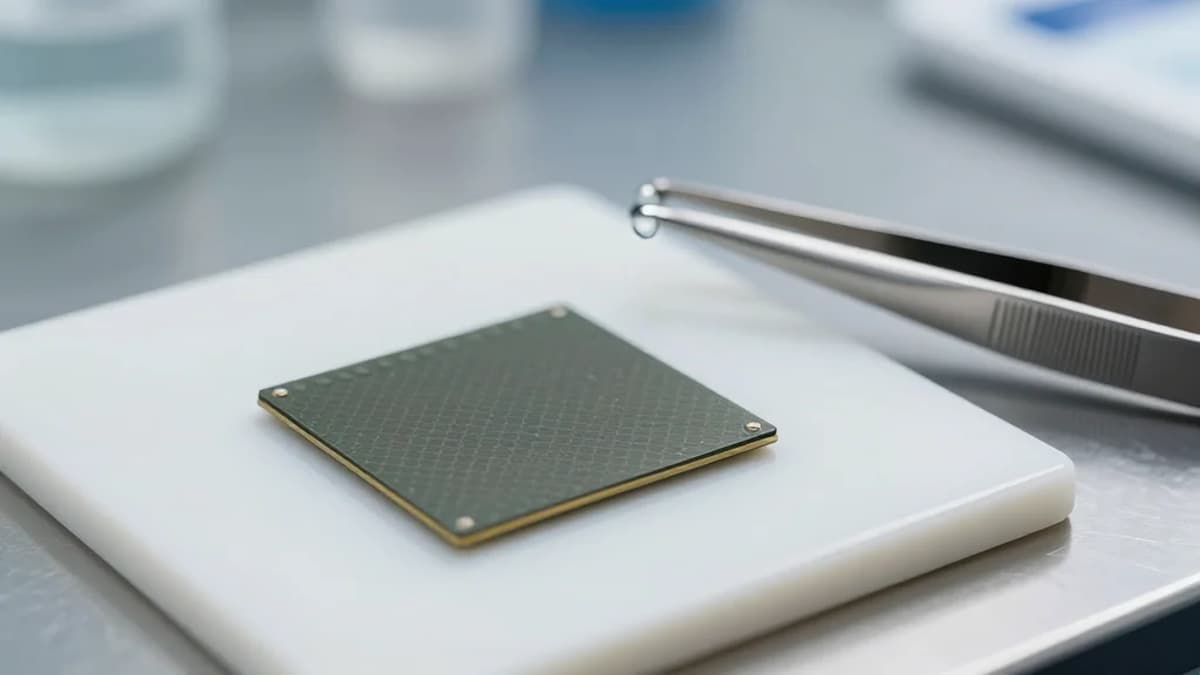
In Situ Crosslinked Diallylammonium‐Functionalized Poly(Biphenyl Alkylene) for High‐Performance Anion Exchange Membranes
•January 22, 2026
0
Why It Matters
The breakthrough decouples high ion conductivity from mechanical weakness, enabling cheaper, durable AEM water electrolyzers that can accelerate green hydrogen production.
Key Takeaways
- •IEC tunable 2.32–3.39 meq g⁻¹ via comonomer ratio.
- •Conductivity reaches 152 mS cm⁻¹ at 80 °C.
- •Peak current density 12.39 A cm⁻² at 2 V non‑PGM.
- •350 h alkaline stability 98.7% retention.
- •Voltage degradation 1.2 µV h⁻¹ over 1,000 h.
Pulse Analysis
Anion exchange membrane water electrolyzers (AEMWEs) have emerged as a promising route to low‑cost hydrogen, but their commercial viability has been hampered by the classic trade‑off between ion conductivity and mechanical robustness. Traditional high‑IEC polymers swell excessively, compromising dimensional stability, while heavily crosslinked structures often sacrifice conductivity. The new approach leverages in‑situ free‑radical cyclopolymerization to embed diallylammonium groups within a poly(biphenyl alkylene) backbone, creating a tightly knit network that can be fine‑tuned for IEC without degrading structural integrity.
Performance data underscore the material’s relevance: hydroxide conductivity peaks at 152.4 mS cm⁻¹ at 80 °C, and swelling is limited to 24.2%, preserving membrane thickness under operation. Alkaline durability tests show 98.7% retention after 350 hours, indicating resistance to degradation in harsh KOH environments. When integrated into a membrane‑electrode assembly, the membrane delivers a record‑setting 12.39 A cm⁻² at 2 V with a non‑platinum‑group‑metal anode, and sustains a voltage degradation rate of just 1.2 µV h⁻¹ over 1,000 hours, highlighting both efficiency and longevity.
The implications extend beyond laboratory metrics. By eliminating reliance on precious‑metal catalysts and offering a scalable, stable membrane platform, this technology could lower capital expenditures for electrolyzer stacks and accelerate the rollout of green hydrogen infrastructure. Future work will likely focus on scaling synthesis, integrating the membrane into commercial cell designs, and exploring its compatibility with renewable‑driven electricity sources, positioning it as a cornerstone for the emerging hydrogen economy.
In Situ Crosslinked Diallylammonium‐Functionalized Poly(Biphenyl Alkylene) for High‐Performance Anion Exchange Membranes
0
Comments
Want to join the conversation?
Loading comments...