In Situ Preparation of Bismuth Nanoparticles Encapsulated in Porous Carbon Spheres on Graphite Felt Electrodes for Vanadium Redox Flow Batteries
•January 27, 2026
0
Companies Mentioned

Why It Matters
The enhanced catalytic activity and durability directly address the key limitations of conventional graphite felt electrodes, enabling higher power and longer life for large‑scale energy storage. This breakthrough could accelerate commercial adoption of vanadium redox flow batteries in grid‑scale applications.
Key Takeaways
- •Bi@NC/GF boosts VRFB energy efficiency to 79.22%.
- •Multicore‑shell design prevents Bi nanoparticle aggregation.
- •N‑doped carbon shell enhances electron transport and surface area.
- •Peak power density reaches 1254 mW cm⁻² at 300 mA cm⁻².
- •Stable over 1000 cycles with minimal decay.
Pulse Analysis
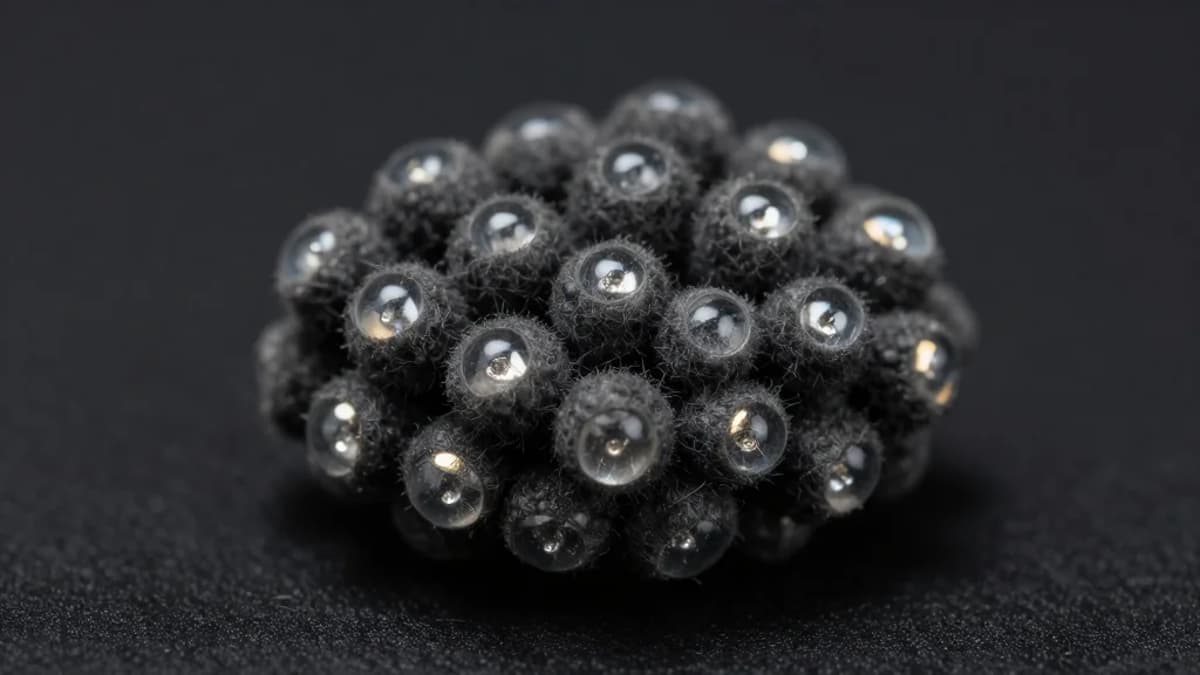
Vanadium redox flow batteries (VRFBs) have emerged as a leading candidate for grid‑scale energy storage because of their independent scaling of power and energy. However, the commercial viability of VRFBs is hampered by the modest catalytic activity and limited surface area of the standard graphite felt (GF) electrodes, which translate into lower voltage efficiency and higher overpotentials. To overcome these bottlenecks, a team of chemists introduced a facile in‑situ synthesis that deposits bismuth (Bi) nanoparticles within nitrogen‑doped carbon (NC) spheres directly onto the GF substrate, creating a composite electrode referred to as Bi@NC/GF.
The resulting multicore‑shell nanostructure combines the high intrinsic activity of metallic Bi with the conductive, porous matrix of N‑doped carbon. Density functional theory calculations reveal that the Bi‑NC interface modifies the electronic density of states, strengthening adsorption of vanadium ions and lowering activation barriers for the V³⁺/V²⁺ couple. Simultaneously, the porous carbon shell prevents nanoparticle agglomeration, expands the electrolyte‑accessible surface, and provides rapid electron pathways. This synergistic design yields a markedly higher exchange current density and reduced charge‑transfer resistance compared with untreated GF.
In practical tests, cells equipped with Bi@NC/GF achieved an energy efficiency of 79.22 % at a current density of 300 mA cm⁻² and a peak power density of 1,254 mW cm⁻²—values that surpass most reported GF‑based systems. The electrode also maintained stable performance over 1,000 cycles, indicating excellent durability for long‑term operation. Because the synthesis relies on simple solution chemistry and can be applied to existing felt rolls, scaling the technology to commercial modules appears feasible. If adopted widely, this electrode architecture could lower the levelized cost of storage and support deeper integration of intermittent renewables.
In Situ Preparation of Bismuth Nanoparticles Encapsulated in Porous Carbon Spheres on Graphite Felt Electrodes for Vanadium Redox Flow Batteries
0
Comments
Want to join the conversation?
Loading comments...