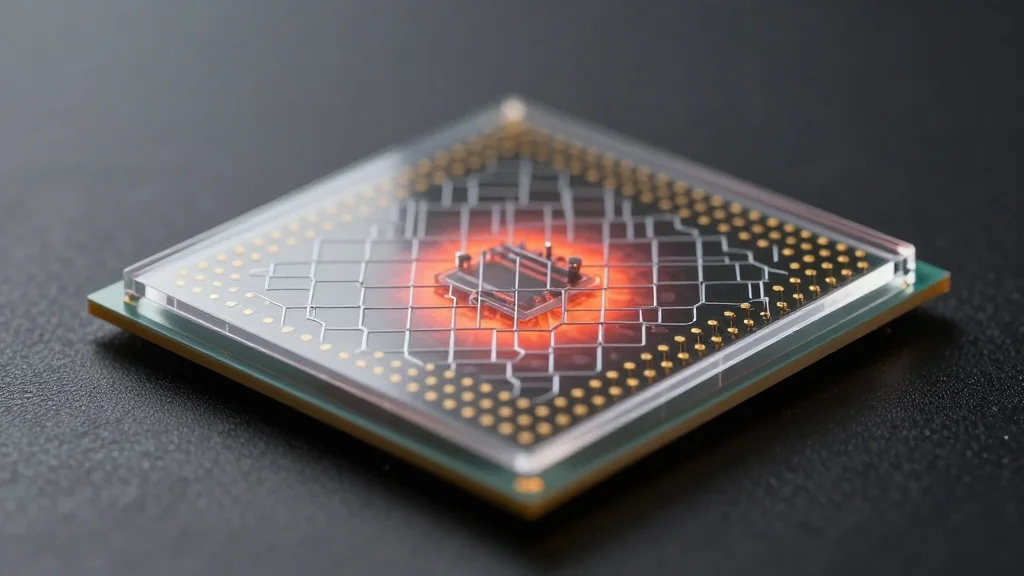
In Vitro Reconstruction of Axonal Heat Sensing with a Photothermal Nerve‐on‐a‐Chip
Why It Matters
The technology provides a high‑fidelity, in‑vitro model for studying axonal heat sensing, accelerating research into pain pathways, neurodegenerative disorders, and temperature‑targeted therapeutics.
Key Takeaways
- •Graphene heaters deliver sub‑second, localized axonal heating.
- •Simultaneous microelectrode recordings capture millisecond neural spikes.
- •Rat dorsal root ganglion axons show rapid desensitization.
- •Human iPSC sensory neurons exhibit delayed heat response.
- •Platform scalable for disease modeling and drug screening.
Pulse Analysis
Thermal perception begins at the axon, yet traditional methods have struggled to isolate the rapid, sub‑second dynamics of heat‑induced firing. Conventional heating approaches—such as bulk temperature ramps or infrared lamps—lack spatial precision and often introduce mechanical artifacts, obscuring the intrinsic behavior of temperature‑sensitive ion channels. By integrating graphene photothermal elements directly into microfluidic axon‑guiding channels, the new nerve‑on‑a‑chip delivers pinpoint heating with microsecond control, eliminating confounding variables and opening a window onto the earliest events of peripheral thermosensation.
The platform’s dual‑function architecture merges localized photothermal stimulation with high‑density microelectrode arrays, enabling simultaneous electrical readout of action potentials. In rat dorsal root ganglion cultures, researchers observed immediate spike bursts followed by rapid desensitization, a hallmark of thermoreceptor activation. Human iPSC‑derived sensory neurons, by contrast, displayed a delayed onset of firing, highlighting species‑specific or maturation‑related differences in heat response. These findings demonstrate the system’s capacity to resolve distinct temporal signatures across cell types, providing a quantitative benchmark for future studies of ion channel pharmacology and axonal pathophysiology.
Beyond basic science, the chip offers a versatile platform for drug discovery and disease modeling. Its scalability allows parallel testing of candidate compounds that modulate temperature‑gated channels implicated in chronic pain, neuropathy, and neurodegenerative conditions. By reproducing peripheral nerve environments in a controlled, high‑throughput format, the technology can accelerate screening pipelines and reduce reliance on animal models. As the field moves toward precision neuro‑therapeutics, tools that faithfully capture axonal heat coding will be essential for translating molecular insights into clinical interventions.
In Vitro Reconstruction of Axonal Heat Sensing with a Photothermal Nerve‐on‐a‐Chip
Comments
Want to join the conversation?
Loading comments...