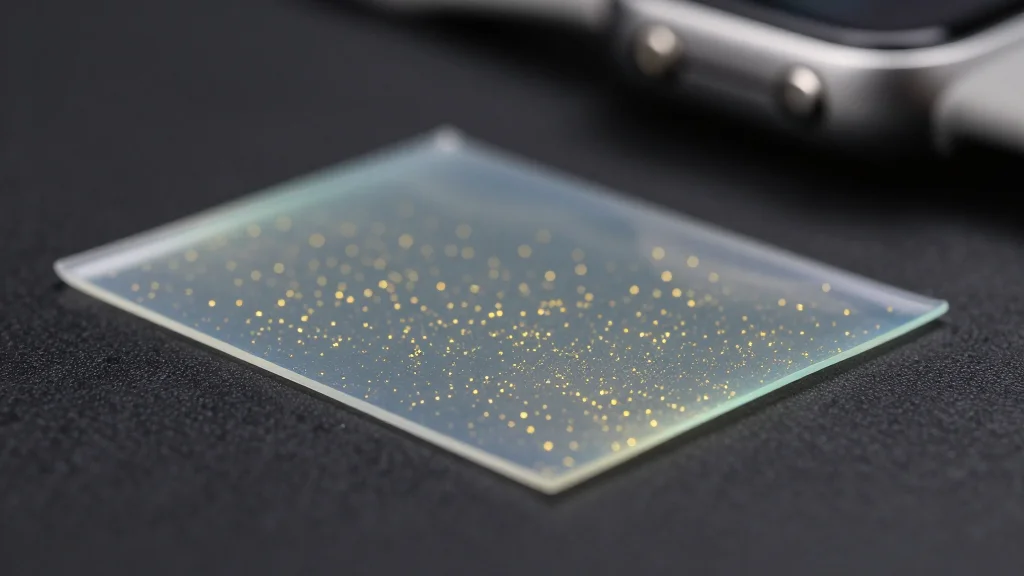
Indian Researchers Embed Nano‑Gold in Ultra‑Thin Films to Power Wearables

Why It Matters
Self‑powered wearables address a critical bottleneck: the need for frequent battery charging or replacement, which hampers user adoption and raises environmental concerns. By converting ambient heat into electricity, the nano‑gold‑enhanced PVDF film provides a route to truly autonomous devices, expanding the functional envelope of flexible electronics. Moreover, the research demonstrates that high‑performance nanomaterials can be realized in ultra‑thin, manufacturable formats, bridging the gap between laboratory breakthroughs and market‑ready products. The development also signals a shift in the global nanotech landscape, with Indian research institutions delivering innovations that compete on the world stage. This could attract further investment into India's advanced materials ecosystem, fostering collaborations that accelerate the commercialization of next‑generation energy‑harvesting technologies.
Key Takeaways
- •Gold nanoparticles embedded in <100 nm PVDF film boost pyroelectric output.
- •Device operates efficiently between 294 K and 301 K, matching body and room temperatures.
- •Demonstrated electrical generation from temperature changes as small as 0.5 K.
- •Potential to power low‑power wearables and IoT sensors without batteries.
- •Published in *Advanced Functional Materials*; pilot scale production planned.
Pulse Analysis
The nano‑gold‑PVDF breakthrough arrives at a moment when the wearable sector is grappling with power‑budget constraints. Traditional lithium‑ion cells add bulk, weight, and safety concerns, while energy‑harvesting approaches such as solar or kinetic have struggled to deliver consistent power in everyday settings. By leveraging the plasmonic properties of gold at the nanoscale, the INST team sidesteps these limitations, delivering a thin, flexible, and efficient energy source that can be laminated directly onto textiles or printed circuits.
Historically, pyroelectric harvesters required large temperature differentials—often only achievable in industrial or aerospace environments. The shift to ambient‑temperature operation expands the addressable market dramatically. Companies that have previously invested in flexible electronics, such as Flex Ltd. and Lumenetix, may now consider integrating this material to differentiate their product lines. However, scaling the low‑dose nanogold deposition process will be the decisive factor. If the technique can be adapted to roll‑to‑roll sputtering or inkjet printing, production costs could fall within the margins required for consumer wearables.
Looking ahead, the technology could catalyze a new class of dual‑modal sensors that harvest energy while simultaneously detecting thermal and optical cues. Such devices would be valuable in smart homes, health monitoring, and even defense applications where power autonomy is paramount. The Indian government's backing suggests that further funding and policy support may accelerate these pathways, positioning India as a hub for next‑generation nanomaterial commercialization.
Indian Researchers Embed Nano‑Gold in Ultra‑Thin Films to Power Wearables
Comments
Want to join the conversation?
Loading comments...