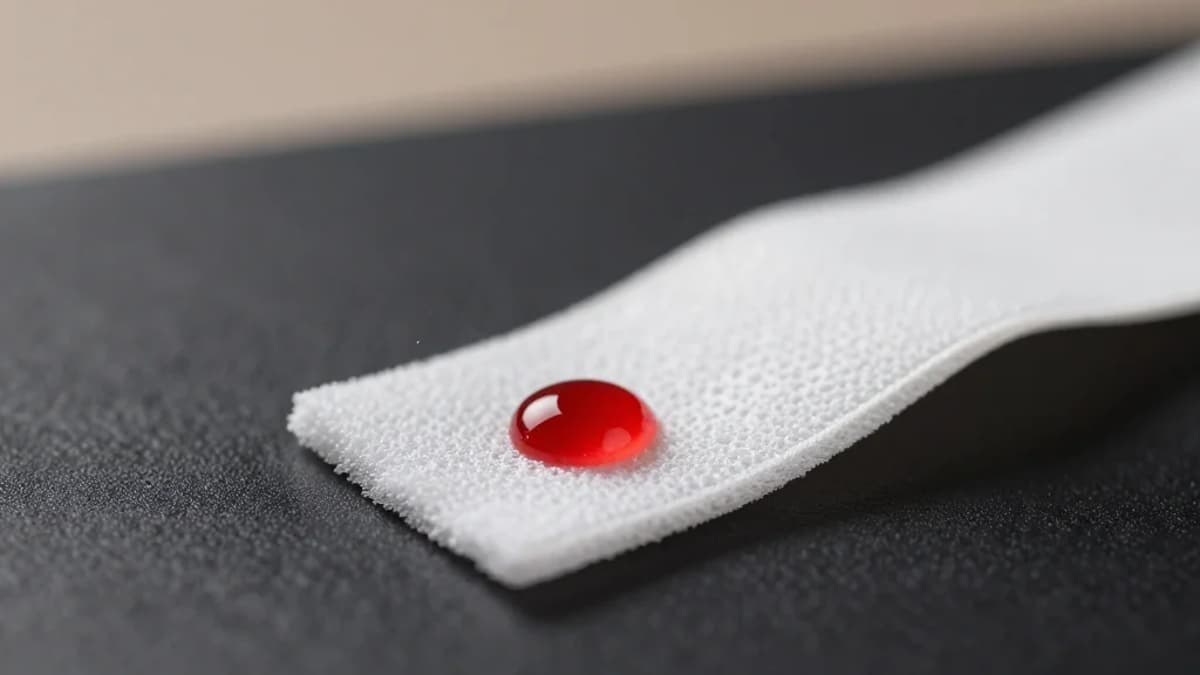
Injectable Nanocomposite Hemostat Speeds Blood Clotting for Trauma Care
•February 18, 2026
0
Why It Matters
Accelerating clotting saves lives in severe trauma, offering a portable solution for first‑responders and soldiers and potentially reducing hemorrhagic‑shock mortality by 30‑40%.
Key Takeaways
- •Injectable nanocomposite reduces clotting time to 1‑2 minutes
- •Bleeding duration cut by nearly 70% in animal models
- •Foam expands with body heat, sealing internal wounds
- •Micro‑ribbons curl, forming foam‑like clot barrier
- •Potential to extend golden hour for trauma patients
Pulse Analysis
Rapid hemostasis remains a bottleneck in trauma care, especially for internal injuries where direct pressure is ineffective. Conventional dressings rely on mechanical compression or topical agents that cannot reach deep vessels, leaving a critical gap during the "golden hour" after injury. The new nanocomposite leverages the intrinsic pro‑coagulant properties of nanosilicates—synthetic analogues of ancient clay hemostats—while embedding them in a smart matrix that activates at body temperature. This convergence of biomaterials science and thermal actuation addresses both delivery and retention challenges, ensuring the clotting agents stay localized.
The foam‑based system uses an expandable polyurethane scaffold that remains inert until injected, then swells to fill the wound cavity, physically trapping the nanosilicates and providing immediate mechanical closure. In parallel, the micro‑ribbon approach employs dual‑polymer ribbons that contract on one side, curling into a tangled, foam‑like mass that adheres to tissue. Both designs prevent particle migration, mitigating embolism risk, and simplify application—no tools or external power are required. By integrating shape‑memory behavior with biocompatible nanomaterials, the researchers have created a versatile platform adaptable to varied injury morphologies.
If translated to commercial products, these hemostats could reshape pre‑hospital protocols for civilian EMS, military medics, and remote disaster response teams. Their low‑cost, shelf‑stable formulation aligns with defense procurement priorities, while the clear mechanistic advantage may expedite FDA clearance under emergency use pathways. Market analysts project a multi‑billion‑dollar opportunity in the global trauma‑care sector, driven by rising demand for rapid, field‑deployable bleeding control. Continued testing in large‑animal models and human trials will be pivotal to validate safety, but the technology already signals a paradigm shift toward self‑applied, nanotechnology‑enhanced wound management.
Injectable nanocomposite hemostat speeds blood clotting for trauma care
0
Comments
Want to join the conversation?
Loading comments...