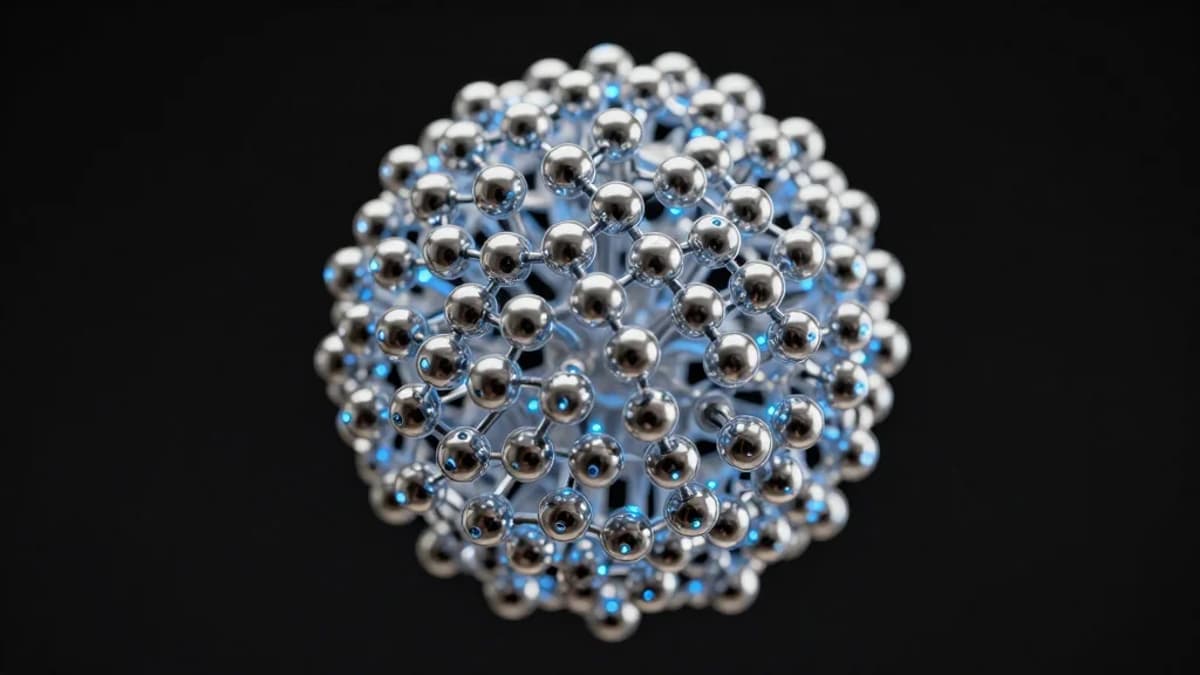
Interface Engineering Effected Charge Redistribution Within High Entropy Alloy‐Metal Heterostructured Catalyst Enables High Performance Anion Exchange Membrane Water Electrolysis (Small 5/2026)
•January 22, 2026
0
Why It Matters
Enhanced HER kinetics reduce the energy cost of green hydrogen, accelerating commercialization of AEM electrolyzers. The approach offers a scalable design principle for high‑performance, durable catalysts.
Key Takeaways
- •Mo atoms shift charge distribution in FeCoNiCuMo HEA.
- •Balanced H adsorption/desorption improves Volmer and Heyrovsky steps.
- •Catalyst lowers overpotential by ~150 mV at 10 mA cm⁻².
- •Demonstrates durable performance over 100 h continuous operation.
- •Interface engineering provides scalable route for AEM electrolyzers.
Pulse Analysis
The push toward carbon‑neutral energy systems has placed anion‑exchange‑membrane (AEM) water electrolysis at the forefront of green hydrogen production. Unlike acidic PEM cells, AEM electrolyzers operate with non‑precious‑metal catalysts and alkaline feedstocks, offering lower capital costs but demanding robust electrocatalysts that can drive both hydrogen and oxygen evolution efficiently. High‑entropy alloys (HEAs) have emerged as a versatile platform because their multi‑principal‑element composition creates tunable electronic structures and inherent structural stability. Leveraging these attributes, researchers are now exploring interface engineering to fine‑tune catalytic sites for optimal reaction pathways.
In the latest Small paper, Lin, Lu and colleagues introduced a Mo‑decorated FeCoNiCuMo HEA heterostructure that deliberately redistributes surface charge. Molybdenum’s strong affinity for hydroxide ions draws electron density toward the alloy surface, balancing hydrogen adsorption and desorption energies while simultaneously promoting water dissociation. This dual effect accelerates the Volmer step (hydrogen adsorption) and the Heyrovsky step (hydrogen desorption), resulting in a 150 mV reduction in overpotential at 10 mA cm⁻² compared with the undecorated alloy. The catalyst also retained activity for over 100 hours, underscoring its durability under alkaline conditions.
The study illustrates how precise interface manipulation can unlock the latent potential of HEAs for large‑scale AEM electrolyzers. By demonstrating a clear pathway to lower energy consumption and extended catalyst life, the work addresses two critical cost drivers for commercial green hydrogen. Moreover, the Mo‑decoration strategy is compatible with existing alloy synthesis routes, suggesting a scalable route to mass production. Future research will likely explore other transition‑metal modifiers and computational screening to further optimize charge distribution, paving the way for next‑generation electrolytic systems that meet both performance and economic targets.
Interface Engineering Effected Charge Redistribution within High Entropy Alloy‐Metal Heterostructured Catalyst Enables High Performance Anion Exchange Membrane Water Electrolysis (Small 5/2026)
0
Comments
Want to join the conversation?
Loading comments...