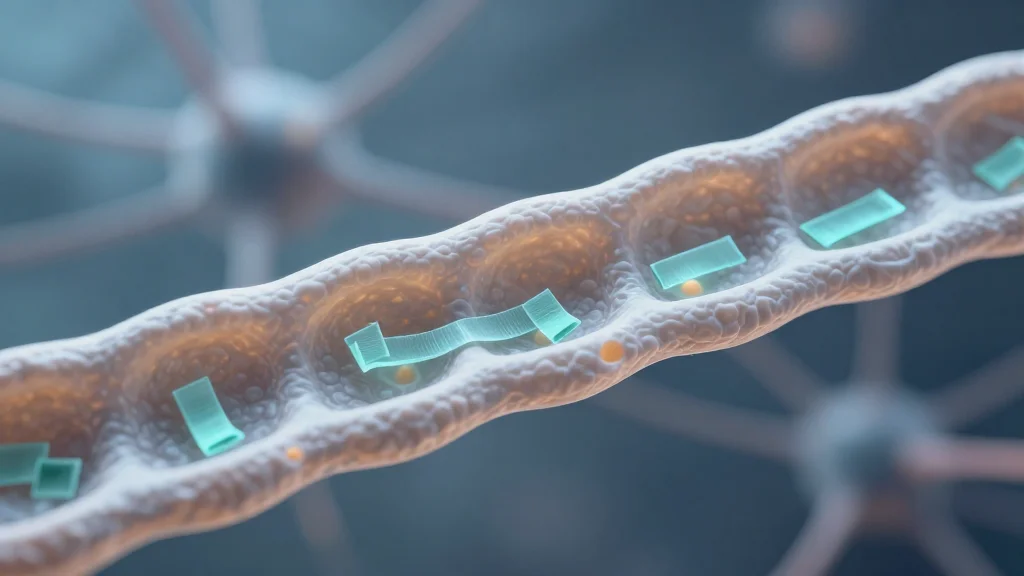
Intracellular Neuronal Recordings Across DNA Tiles
Why It Matters
The technology offers a non‑disruptive route to intracellular access, potentially transforming neural recording and precise pharmacological manipulation in both research and clinical settings.
Key Takeaways
- •DNA tiles form 0.8 nm pores with ~3 nS conductance
- •Pore resistance measured at ~500 MΩ, stable over minutes
- •Cholesterol tags halve insertion time versus tag‑free tiles
- •Tiles deliver QX‑314, silencing action potentials without membrane rupture
- •Quasi‑intracellular recordings match whole‑cell spikes after tile insertion
Pulse Analysis
DNA nanotechnology is reshaping how scientists probe neuronal activity. By designing 11‑nm‑long DNA duplex assemblies that self‑insert into lipid bilayers, researchers have created synthetic ion channels that mimic natural pores while avoiding the membrane damage typical of conventional patch‑clamp electrodes. The tiles’ central cavity, roughly 0.8 nm wide, yields a unitary conductance of about 3 nS, translating to a pore resistance of roughly 500 MΩ—values comparable to native ion channels. This level of control, confirmed through both electrophysiological recordings and all‑atom molecular dynamics simulations, opens a new class of minimally invasive intracellular interfaces.
Beyond electrical access, the DNA tiles serve as molecular conduits. Experiments demonstrated that the tiles transport the impermeable QX‑314 molecule into pyramidal neurons, effectively blocking voltage‑gated Na⁺ channels and silencing action potentials without breaching the membrane. This capability suggests a versatile platform for targeted drug delivery, enabling precise modulation of neuronal excitability in live tissue. The dual‑pipette configuration used to validate delivery also highlights the tiles’ compatibility with existing electrophysiology setups, facilitating adoption by labs familiar with standard patch‑clamp techniques.
The broader impact lies in the tiles’ scalability and adaptability. Cholesterol tags accelerate membrane insertion, yet even untagged tiles can embed via mechanical forces generated at the glass‑membrane interface, ensuring reliable performance across diverse experimental conditions. Stable quasi‑intracellular recordings achieved after tile insertion replicate whole‑cell spike waveforms, offering a repeatable, low‑damage alternative for long‑term monitoring of neuronal networks. As the field seeks tools that combine high‑resolution recording with minimal perturbation, DNA‑based nanopores could become a cornerstone technology for neuroscience research and therapeutic interventions.
Intracellular neuronal recordings across DNA tiles
Comments
Want to join the conversation?
Loading comments...