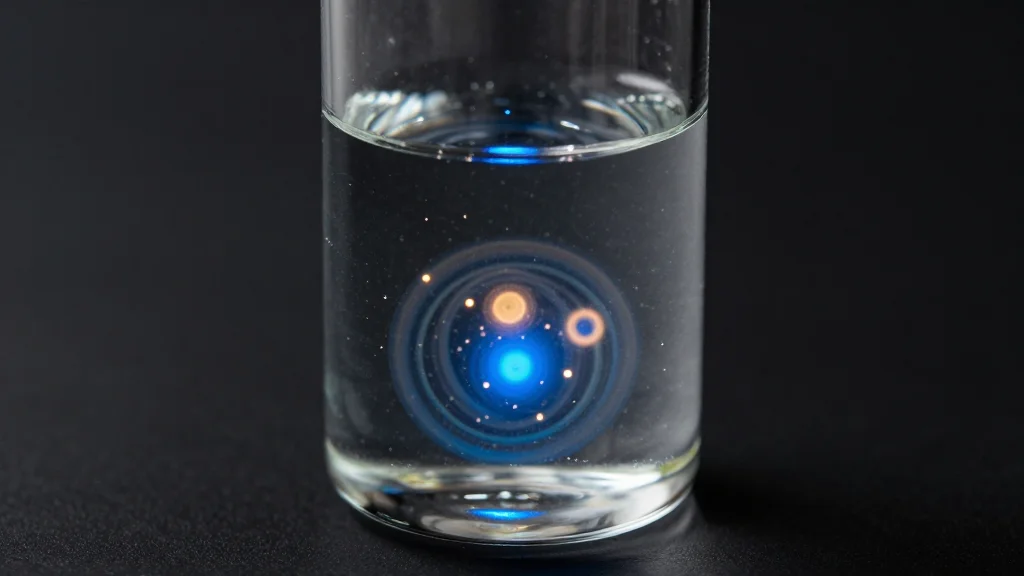
Intrinsically Chiral Excimers: Water‐Compatible Trityl‐Based Nanoparticles as Tailored Dual Emitters of Circularly Polarized Luminescence in the Vis or NIR Regions (Small 14/2026)
Why It Matters
Eliminating energy‑wasting filters makes CPL sources more efficient, accelerating their adoption in photonic devices and bio‑imaging applications.
Key Takeaways
- •Trityl radical nanoparticles work in aqueous environments
- •Emission tunable from visible to near‑infrared
- •Intrinsically chiral excimers generate CPL without filters
- •Concentration controls monomer vs excimer emission
- •Potential for low‑energy optical sensors and bioimaging
Pulse Analysis
Circularly polarized luminescence (CPL) has long been prized for its ability to encode information in light’s spin, yet commercial adoption has been hampered by reliance on bulky polarizing filters that squander energy. Traditional CPL emitters often require complex chiral synthesis or inorganic matrices, limiting scalability and biocompatibility. The market therefore seeks compact, efficient sources that can operate directly in aqueous environments, a demand driven by emerging sectors such as quantum communication, secure optical data transmission, and in‑vivo diagnostics.
The Small 2026 paper introduces a novel class of trityl‑based organic nanoparticles that meet these criteria. By incorporating a brominated trityl radical into a polymeric scaffold, the authors create water‑stable nanostructures that emit CPL intrinsically. Adjusting the radical loading shifts the photophysical landscape: low concentrations favor monomeric emission centered in the visible range, while higher loadings promote the formation of chiral excimers whose emission stretches into the near‑infrared (NIR). This concentration‑driven tunability provides a single material platform capable of covering multiple spectral windows without additional optical components.
From a business perspective, the technology promises to lower the total cost of ownership for CPL‑based devices. Industries ranging from display manufacturing to point‑of‑care imaging can benefit from reduced component counts, higher luminous efficiency, and compatibility with biological fluids. Moreover, the NIR‑active excimers enable deeper tissue penetration for biomedical imaging, aligning with the growing demand for non‑invasive diagnostic tools. As the field moves toward integrated photonic circuits and wearable health monitors, such dual‑band, filter‑free CPL emitters are poised to become a cornerstone of next‑generation optical solutions.
Intrinsically Chiral Excimers: Water‐Compatible Trityl‐Based Nanoparticles as Tailored Dual Emitters of Circularly Polarized Luminescence in the Vis or NIR Regions (Small 14/2026)
Comments
Want to join the conversation?
Loading comments...