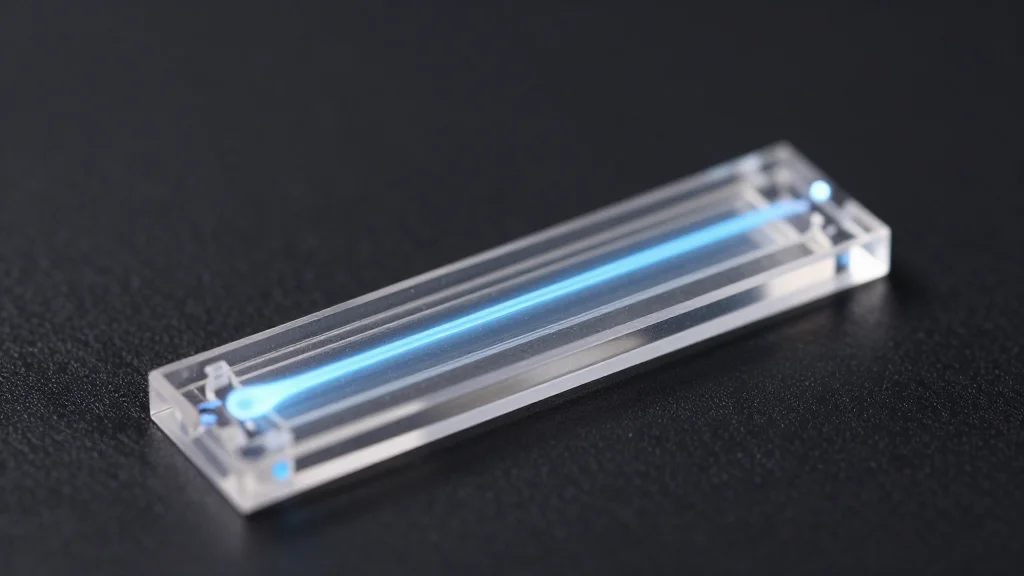
Investigating Quantum and Molecular Plumbing in Nanofluidics Research
Why It Matters
Linking fluid dynamics with quantum electronics could turn ubiquitous water flow into a new, ion‑free energy source, accelerating nanofluidic technologies for desalination, filtration and bio‑inspired computing.
Key Takeaways
- •Quantum friction creates hydro‑electronic drag in nanochannels
- •Water flow can induce measurable electric currents in solid walls
- •Potential to harvest hydraulic energy without dissolved ions
- •Scaling single nanochannels to chip‑scale networks remains a hurdle
- •Charge transfer at oil‑water interfaces explained by weak hydrogen bonds
Pulse Analysis
Nanofluidics sits at the intersection of fluid mechanics and condensed‑matter physics, where traditional hydrodynamic equations falter as channel dimensions approach a few nanometers. Recent experiments have shown water moving through carbon nanotubes at speeds far exceeding classical predictions, prompting researchers to probe the quantum interactions between water molecules and the electrons of the channel walls. By treating the liquid‑solid interface as a coupled quantum system, scientists are uncovering new frictional forces that reshape our understanding of nanoscale transport.
The most striking implication of this quantum friction is the emergence of hydro‑electronic drag: as water slides along the channel, it imparts momentum to wall electrons, generating a tiny electric current. This phenomenon offers a novel route to convert hydraulic energy directly into electricity without relying on ionic conduction, which could revolutionize energy recovery in membrane filtration, desalination, and even salinity‑gradient power generation. Moreover, the ability to harvest electrical signals from pure water flow opens possibilities for self‑powered sensors and nanoscale power supplies in biomedical devices.
Despite the promise, practical deployment faces formidable engineering challenges. Fabricating a single, defect‑free nanochannel is already demanding, and scaling to the millions of pores required for industrial throughput demands new manufacturing paradigms and robust theoretical models. EPFL’s Quantum Plumbing Lab is tackling both fronts—refining quantum‑sensing techniques to map electron‑liquid coupling and exploring modular architectures that could mimic biological ion channels. Success would not only enable ultra‑efficient artificial kidneys or brain‑inspired computing platforms but also cement nanofluidics as a cornerstone of next‑generation sustainable technologies.
Investigating quantum and molecular plumbing in nanofluidics research
Comments
Want to join the conversation?
Loading comments...