Jointly Enhanced Nitrate and Water Activation by Precisely Ligand Substituent Regulation in Bimetallic Cluster for Highly Efficient Ammonia Electrosynthesis
Why It Matters
The strategy provides a scalable pathway to convert nitrate‑laden waste streams into valuable ammonia, reducing reliance on energy‑intensive Haber‑Bosch processes and advancing sustainable fertilizer production.
Key Takeaways
- •CF3‑Cu4Pt2 reaches 91.8% Faradaic efficiency for NH3.
- •NH3 yield rate hits 13.65 mg NH3 mg⁻¹ cat h⁻¹ at –0.5 V.
- •Electron‑withdrawing CF3 ligands lower metal electron density, boosting NO3⁻ activation.
- •Dual Cu and Pt sites split nitrate reduction and water dissociation duties.
- •Ligand micro‑regulation offers a tunable platform for other complex electrocatalytic reactions.
Pulse Analysis
Nitrate reduction to ammonia (NO3RR) has emerged as a promising route to recycle nitrogen from agricultural runoff and industrial waste. Conventional approaches struggle with low selectivity and high overpotentials, making the process economically unattractive. By integrating electrocatalysis with precise molecular engineering, researchers can overcome kinetic barriers and steer reaction pathways toward ammonia, a cornerstone of modern agriculture and a potential energy carrier.
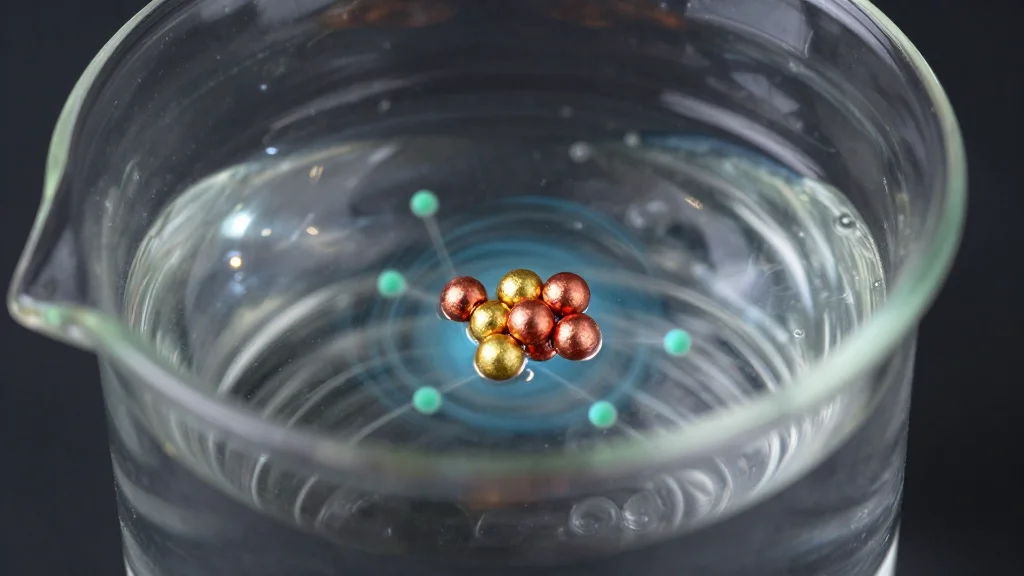
In the latest study, a series of Cu4Pt2 clusters were synthesized with four distinct aryl‑acetylene ligands (CF3, F, MeO). The Cu atoms serve as nitrate‑binding sites, while the Pt atoms catalyze water dissociation, continuously supplying surface hydrogen (*H). Adjusting the electron‑withdrawing strength of the ligand fine‑tunes the metal’s electronic density—a push‑and‑pull effect that simultaneously enhances nitrate adsorption and water activation. The CF3‑substituted cluster achieved a record 91.84% Faradaic efficiency and a 13.65 mg NH3 mg⁻¹ cat h⁻¹ yield at a modest –0.5 V vs RHE, outperforming its F and MeO counterparts.
The implications extend beyond a single reaction. Demonstrating that ligand micro‑regulation can orchestrate multi‑site catalysis opens a design paradigm for other complex electrosynthetic processes, such as CO2 reduction or nitrogen fixation. Scaling this approach could lower the carbon footprint of ammonia production, mitigate nitrate pollution, and enable decentralized fertilizer synthesis. Future work will likely explore larger‑scale electrode architectures, durability under real‑world feedstocks, and integration with renewable electricity to realize a circular nitrogen economy.
Jointly Enhanced Nitrate and Water Activation by Precisely Ligand Substituent Regulation in Bimetallic Cluster for Highly Efficient Ammonia Electrosynthesis
Comments
Want to join the conversation?
Loading comments...