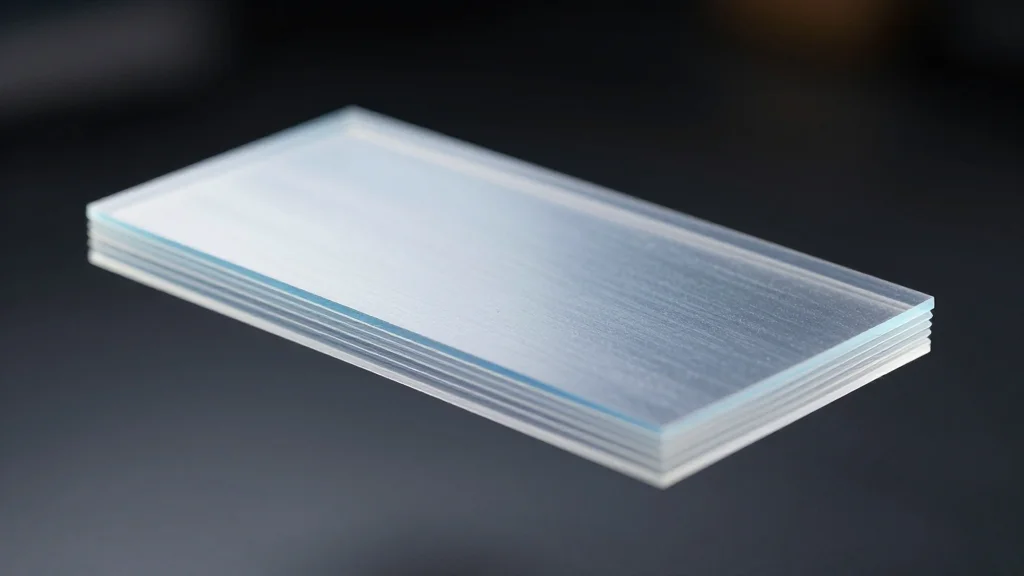
KAIST Unveils 2D Conductive MOF That Defies Performance Drop in Multilayer Stacks

Why It Matters
The ability to retain single‑layer electronic properties in a multilayer format removes a fundamental barrier to the mass adoption of 2D materials in nanoelectronics. By eliminating the need for delicate monolayer handling, manufacturers can lower production costs and improve yields, accelerating the rollout of faster, more energy‑efficient chips. Additionally, the undoped high conductivity simplifies device architecture, which could spur innovation in flexible electronics and quantum information platforms. Beyond immediate commercial impact, the angle‑engineered design principle may inspire a new class of engineered 2D heterostructures. Researchers can now consider stacking strategies that preserve desirable quantum phenomena, opening avenues for novel device concepts that were previously thought impractical due to interlayer interference.
Key Takeaways
- •KAIST and University of Oregon develop Ni₃(HITrip)₂, a 2D conductive MOF that retains single‑layer properties in bulk form.
- •Material achieves 0.58 S/cm conductivity without any doping, a record for multilayer 2D MOFs.
- •Angle‑engineered stacking reduces interlayer coupling, preserving Dirac Kagome lattice electronic structure.
- •Breakthrough could simplify wafer‑level deposition, cutting manufacturing costs for next‑gen chips.
- •Pilot production and industry partnerships are planned for early 2027.
Pulse Analysis
The KAIST breakthrough arrives at a pivotal moment when the semiconductor industry is grappling with the physical limits of silicon. While 2D materials have promised higher carrier mobility and lower power consumption, their integration has been hampered by the fragility of monolayers. By demonstrating that a bulk‑compatible MOF can maintain the coveted Dirac band structure, KAIST effectively bridges the gap between laboratory curiosity and manufacturable technology.
Historically, attempts to stack 2D layers have resulted in bandgap opening or carrier scattering, forcing engineers to resort to complex encapsulation or heterostructure designs. The angle‑twist approach mirrors strategies used in twisted bilayer graphene, where a ‘magic angle’ yields superconductivity. However, KAIST’s work generalizes the concept to a chemically tunable MOF platform, suggesting that a broader palette of electronic phases could be accessed through precise geometric control. This could catalyze a wave of research into other angle‑engineered frameworks, expanding the toolbox for quantum device engineers.
From a market perspective, the timing is advantageous. Major chipmakers have already earmarked billions for 2D material integration, yet progress has been incremental. A material that can be deposited in multiple layers without performance loss could dramatically shorten development cycles and reduce capital expenditures on specialized transfer equipment. If the upcoming pilot production validates scalability, we may see the first commercial chips leveraging this MOF within the next two years, potentially reshaping the competitive dynamics between traditional silicon fabs and emerging 2D‑focused startups.
KAIST Unveils 2D Conductive MOF That Defies Performance Drop in Multilayer Stacks
Comments
Want to join the conversation?
Loading comments...