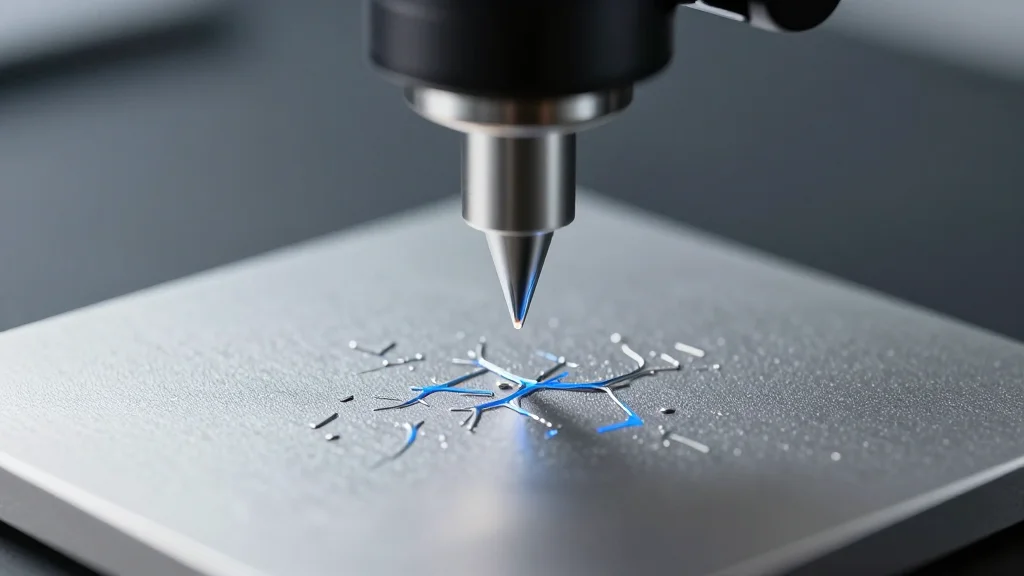
KAIST Uses In‑Situ EC‑AFM to Capture First Nano‑Scale View of Lithium‑Metal Battery Degradation

Why It Matters
Understanding the precise mechanisms that cause lithium‑metal batteries to lose capacity is essential for unlocking their theoretical energy density. The KAIST study provides the first direct visual evidence that surface roughness drives dead‑lithium formation, giving engineers a tangible design target. By addressing this root cause, battery manufacturers can develop cells that last longer, charge faster, and operate more safely—key factors for consumer acceptance of electric vehicles and for meeting global decarbonization goals. Beyond EVs, the findings have relevance for grid‑scale storage, aerospace, and portable electronics, where weight and energy density are premium. A reliable lithium‑metal platform could reduce the material footprint of large‑scale storage installations, lowering both capital and operational expenditures. The ability to monitor degradation in real time also offers a new diagnostic tool for warranty and service models, potentially reshaping how battery health is managed across industries.
Key Takeaways
- •KAIST researchers used in‑situ EC‑AFM to image lithium‑metal anode degradation at the nano level for the first time.
- •The study identified uneven lithium plating in porous, rough‑surface regions as the source of electrically isolated “dead lithium.”
- •Professor Hong Seung‑bum emphasized that the work provides a foundation for longer‑lasting, safer next‑generation batteries.
- •Findings were published as a cover article in ACS Energy Letters (Feb 24 2026).
- •KAIST aims to test surface‑treatment strategies and demonstrate a commercial‑grade lithium‑metal cell by 2028.
Pulse Analysis
The KAIST breakthrough arrives at a pivotal moment when the automotive sector is scrambling to meet aggressive EV adoption targets. Lithium‑metal anodes promise a leap in specific energy, but the technology has been hamstrung by rapid capacity fade and safety risks. By delivering the first in‑situ, nanoscale view of the degradation process, the research eliminates a major knowledge gap that has forced manufacturers to rely on indirect electrochemical metrics and costly trial‑and‑error approaches.
Historically, the industry has focused on macroscopic solutions—coatings, electrolyte additives, and pressure control—to mitigate dendrite growth. While these methods have yielded incremental gains, they have not addressed the underlying heterogeneity of lithium deposition. KAIST’s observation that surface morphology dictates where dead lithium forms reframes the problem as a materials‑engineering challenge rather than a purely electrochemical one. Companies that can translate this insight into scalable surface‑engineering processes will likely capture a first‑mover advantage, especially as OEMs tighten specifications for cycle life and safety.
Looking ahead, the real test will be whether the EC‑AFM technique can be integrated into high‑throughput manufacturing quality control. If successful, it could become a standard diagnostic for next‑generation cell validation, reducing development cycles and accelerating time‑to‑market. The collaboration roadmap outlined by KAIST—partnering with U.S. and European labs and targeting a 2028 commercial demo—suggests that the academic discovery is already being positioned for industrial uptake. Investors should watch for follow‑on funding rounds in companies that specialize in nanoscale surface modification and in‑situ metrology, as they are poised to benefit from the emerging demand for lithium‑metal solutions.
KAIST Uses In‑Situ EC‑AFM to Capture First Nano‑Scale View of Lithium‑Metal Battery Degradation
Comments
Want to join the conversation?
Loading comments...