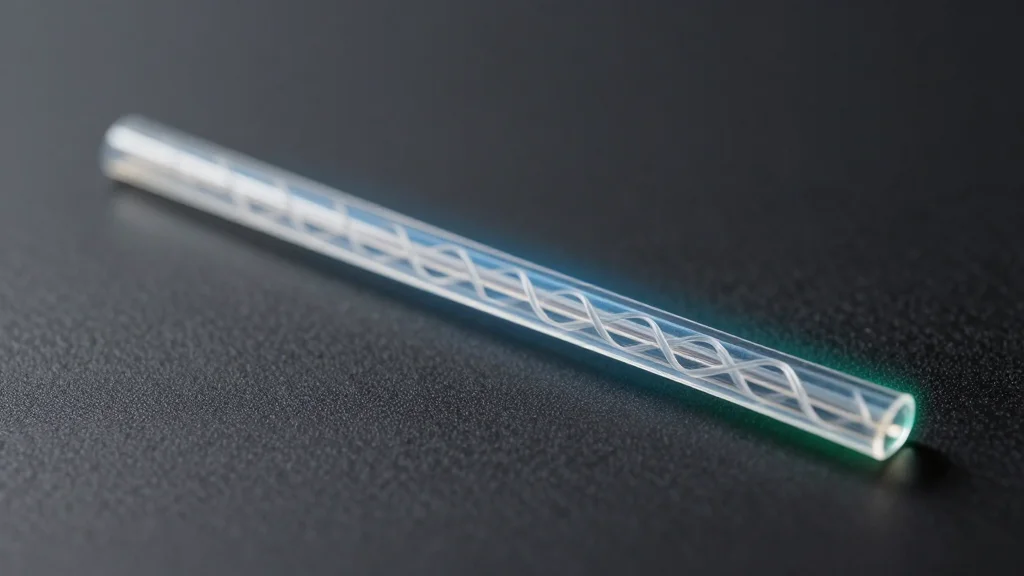
KIST Unveils Ultra-Thin Nanotube Shield Blocking Cosmic Radiation

Why It Matters
The development tackles a fundamental bottleneck in high‑risk environments: the need for protective materials that are both lightweight and multifunctional. By integrating electromagnetic and neutron shielding in a single nanostructured film, KIST’s breakthrough could reshape design constraints for spacecraft, nuclear facilities and advanced medical equipment, enabling more efficient use of mass and volume. Beyond immediate applications, the work demonstrates the viability of 3D‑printed nanotube composites for large‑scale manufacturing. If the technology can be industrialized, it may open pathways for customized shielding solutions across a spectrum of industries, accelerating the adoption of nanotech‑based protective materials worldwide.
Key Takeaways
- •KIST team creates a composite thinner than a human hair that blocks both EM waves and neutron radiation.
- •Material combines carbon nanotubes, boron‑nitride nanotubes and PDMS polymer via direct‑ink‑writing 3D printing.
- •Performance stable from –196 °C to 250 °C and after repeated deformation.
- •Potential weight reduction for spacecraft shielding could lower launch costs by up to 15% (estimates).
- •Field trials on the International Space Station planned for later 2026.
Pulse Analysis
KIST’s nanocomposite arrives at a moment when the economics of spaceflight are under intense pressure to cut mass. Historically, radiation shielding has been a trade‑off: heavy lead or polyethylene layers protect hardware but eat into payload capacity. By delivering comparable attenuation in a micrometre‑scale film, the new material could shift the cost curve, especially for constellations of small satellites where every gram counts. The use of 3D printing also sidesteps the supply‑chain constraints that have hampered traditional composite fabrication, allowing rapid iteration of geometry to target specific frequency bands or neutron fluxes.
From a competitive standpoint, the breakthrough positions South Korea as a serious contender in the niche of multifunctional nanomaterials. While U.S. and European labs have reported separate CNT‑based EM shields and BNNT neutron absorbers, KIST’s integration of both in a single printable ink is unique. This could attract strategic partnerships with firms like SpaceX, Blue Origin, or nuclear equipment manufacturers seeking to differentiate their products through weight savings and design flexibility. However, scaling the process from lab‑scale prints to industrial volumes will be the decisive hurdle; the cost of high‑purity CNTs and BNNTs remains high, and reproducibility across large areas must be proven.
If KIST can secure the necessary capital and forge commercial alliances, the shield could become a platform technology, spawning derivative products such as wearable radiation garments for medical staff or protective casings for quantum computing hardware, which is highly sensitive to EM interference. The broader implication is a validation of nanotechnology’s promise to consolidate multiple protective functions into a single, lightweight layer—an outcome that could accelerate the convergence of aerospace, energy and health sectors around a common materials foundation.
KIST Unveils Ultra-Thin Nanotube Shield Blocking Cosmic Radiation
Comments
Want to join the conversation?
Loading comments...