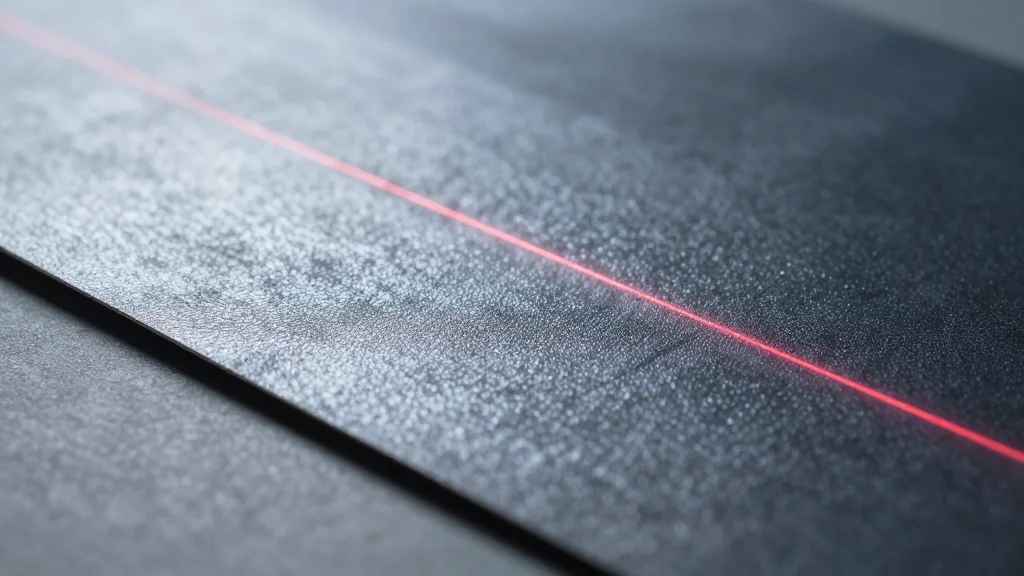
Laser‐Assisted In Situ Fabrication of rGO/Bi2O3 Nanocomposites for Heavy Metal Sensing
Why It Matters
The breakthrough enables affordable, high‑sensitivity heavy‑metal sensors that can be mass‑produced, addressing critical gaps in field‑ready water safety monitoring and supporting tighter regulatory compliance.
Key Takeaways
- •CO2 laser creates rGO/Bi2O3 nanocomposite in one step
- •Nanoplatelets embed uniformly, enhancing electron transport
- •Detection limits: 5.3 ppb Pb, 11.6 ppb Cd, 1.6 ppb Cu
- •Flexible electrodes enable on‑site water monitoring
- •Process promises low‑cost, scalable sensor production
Pulse Analysis
The growing presence of lead, cadmium and copper in drinking water has intensified demand for rapid, on‑site analytical tools. Conventional laboratory techniques such as atomic absorption spectroscopy deliver high accuracy but require bulky equipment, skilled operators, and lengthy sample preparation, limiting their usefulness for field deployments. Electrochemical stripping voltammetry offers a compelling alternative because of its low cost, portability, and ability to reach sub‑ppb detection levels. However, the performance of these sensors hinges on the electrode material, which must combine high conductivity with abundant active sites for metal ion adsorption.
The study introduces a single‑step CO₂ laser photothermal method that simultaneously reduces graphene oxide to conductive rGO and decomposes bismuth nitrate into Bi₂O₃ nanoplatelets. The rapid laser pulse creates a homogeneous rGO/Bi₂O₃ network where the oxide platelets are interspersed within the carbon matrix, fostering efficient electron pathways and plentiful redox‑active sites. Stripping voltammetry tests reveal linear responses for Pb²⁺, Cd²⁺ and Cu²⁺ with detection limits of 5.3 ppb, 11.6 ppb and 1.6 ppb respectively—metrics that rival or surpass many laboratory‑grade systems. Moreover, the process is mask‑free, waste‑light, and compatible with flexible substrates, enabling roll‑to‑roll fabrication of disposable sensors.
From a commercial perspective, the laser‑engineered approach addresses two critical barriers: cost and scalability. By eliminating multiple chemical reduction steps and using a readily available CO₂ laser, manufacturers can produce large volumes of uniform electrodes with minimal environmental footprint. This opens pathways for integrating the sensors into portable water‑quality monitors, smart‑city infrastructure, and point‑of‑use filtration devices. As regulatory agencies tighten permissible limits for heavy metals, demand for reliable, low‑cost detection will surge, positioning rGO/Bi₂O₃‑based sensors as a strategic asset for environmental monitoring firms and municipal utilities alike.
Laser‐Assisted In Situ Fabrication of rGO/Bi2O3 Nanocomposites for Heavy Metal Sensing
Comments
Want to join the conversation?
Loading comments...